Definition
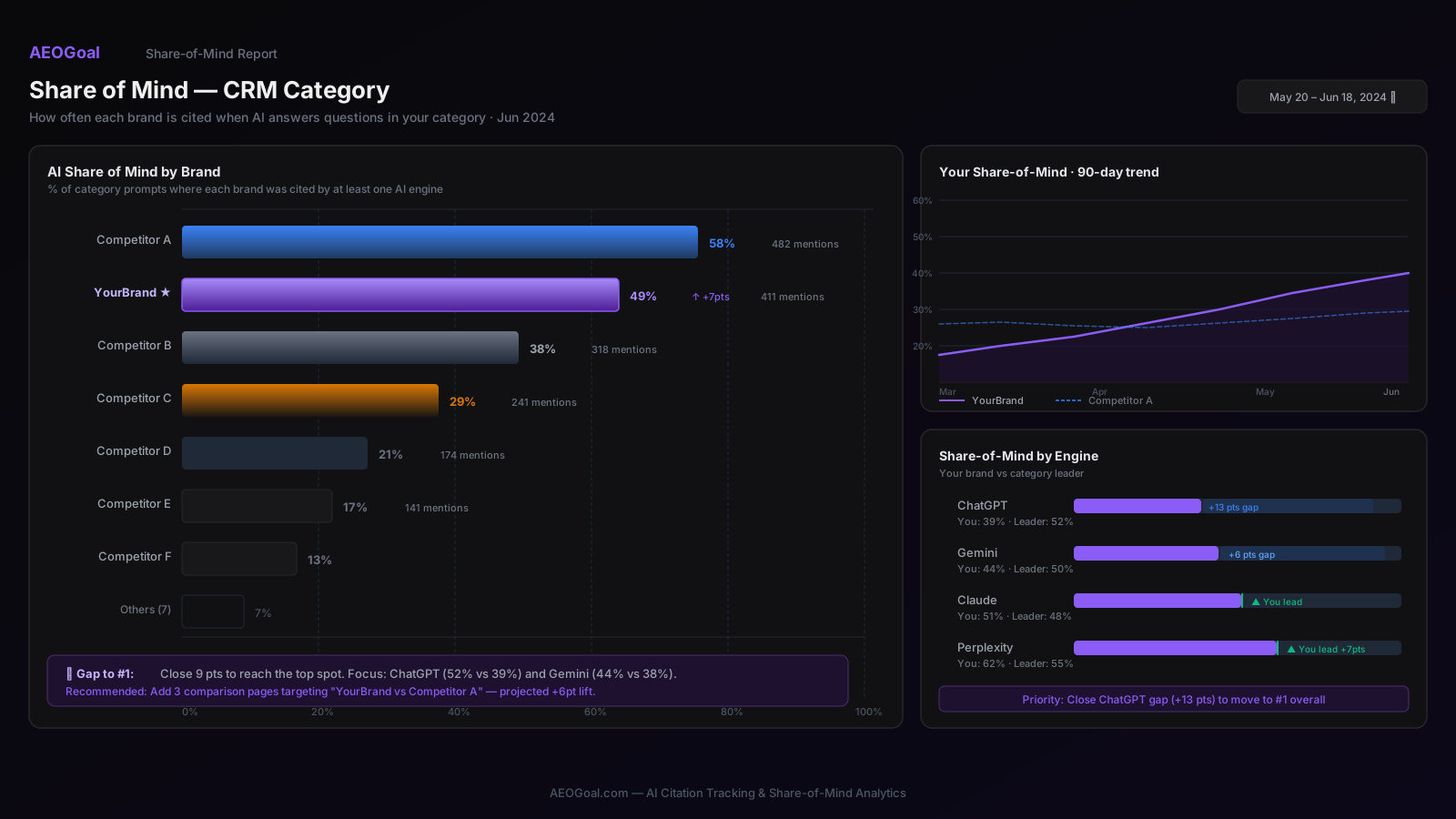
Share of Model is the percentage of relevant AI-generated answers that mention a brand, measured against competitors across a fixed prompt set and a fixed set of engines. It is the AI-answer analog of share of voice: instead of counting ad impressions or rankings, it counts presence inside the answers systems like ChatGPT, Gemini, Claude, and Perplexity actually give buyers. The metric was previously called share of mind, and some tools still use that older label for the same measurement.
How Share of Model Is Calculated
The computation is a ratio over a controlled sample. Define a prompt set (the questions buyers ask in your category), a competitor set (the brands you expect to contend with), and the engines to test. Run every prompt against every engine on a cadence, record which brands each answer names, and compute:
Share of Model = answers mentioning the brand / total relevant answers tested
The inputs are lower-level signals: an AI mention when the brand is named in the answer text, an AI citation when an owned page is attached as a source, and competitor mentions in the same answers. Some implementations weight mentions by prominence (first-named versus listed fifth) or report a competitive variant: your mentions as a share of all tracked-brand mentions, so the whole competitor set sums to 100 percent. Whichever variant is used, the number is only comparable over time if the prompt set, competitor set, and engines are held stable between runs.
A Worked Example
A hypothetical illustration: a project-management vendor tracks 50 buyer prompts across four engines, which yields 200 answers per run. In this month’s run its brand is named in 46 of them, so its Share of Model is 23 percent. Competitor A appears in 88 answers (44 percent) and Competitor B in 30 (15 percent). Drilling in shows the vendor trails Competitor A almost entirely on Perplexity and on prompts about integrations. That decomposition is the point of the metric: the headline number says where the category conversation stands, and the per-engine, per-prompt breakdown says exactly where to work.
Why This Is Important
A single answer is too noisy to act on; a model might omit a brand for phrasing reasons that do not generalize. Share of Model aggregates enough samples to show whether presence is genuinely rising or falling, and against whom. It is important commercially because AI answers usually name only a few options, so presence is winner-take-most: brands inside the answer get considered, and everyone else is invisible regardless of classic rankings. It is also the number executives grasp immediately, which makes it the natural headline for AI visibility reporting, part of the broader shift described in AEO versus traditional SEO.
How To Measure It In Practice
Build the prompt set from real buying and research questions, not vanity phrasings; include comparison, alternative, and “best X for Y” prompts. Run on a fixed cadence, record mentions, citations, cited URLs, and framing per answer, and report trends rather than isolated screenshots. When the number moves, attribute it: which prompts flipped, on which engine, and what shipped in between. In AEO Goal this is what competitor AI visibility computes continuously, with the measurement method documented in the AI visibility tracking methodology.
Share of Model vs Adjacent Terms
vs mention rate. Mention rate is a single brand’s presence percentage; Share of Model is inherently comparative, always read against a competitor set.
vs citation rate. Citation rate counts answers that reference an owned URL as a source. A brand can hold strong Share of Model through third-party mentions while earning few citations, and each gap implies a different fix.
vs share of voice. Classic share of voice measures paid and earned media presence. Share of Model applies the same competitive logic to AI answers, where the sample is a prompt set rather than ad impressions.
Related Terms
Related terms include AI visibility, AI mention, AI citation, share of voice, and answer engine optimization.