AI content optimization that gets your pages cited
AI content optimization is how you turn pages you already have into pages that AI answer engines actually retrieve, extract, and cite. It is not about chasing a readability score or hitting a keyword density target. It is about a specific, measurable outcome: when a buyer asks ChatGPT, Claude, Gemini, or Perplexity a question in your category, your page is the source the answer is built on.
Most content tools stop at generic advice - add more words, use the keyword, improve readability. AEO Goal is built as an AEO agent, not a checklist. It grounds every recommendation in live AI visibility data - which pages are cited, for which prompts, and why - then ships each finding as a concrete rewrite brief and re-checks whether the edit moved your citations. That is the difference between a content grader and software that changes the outcome.
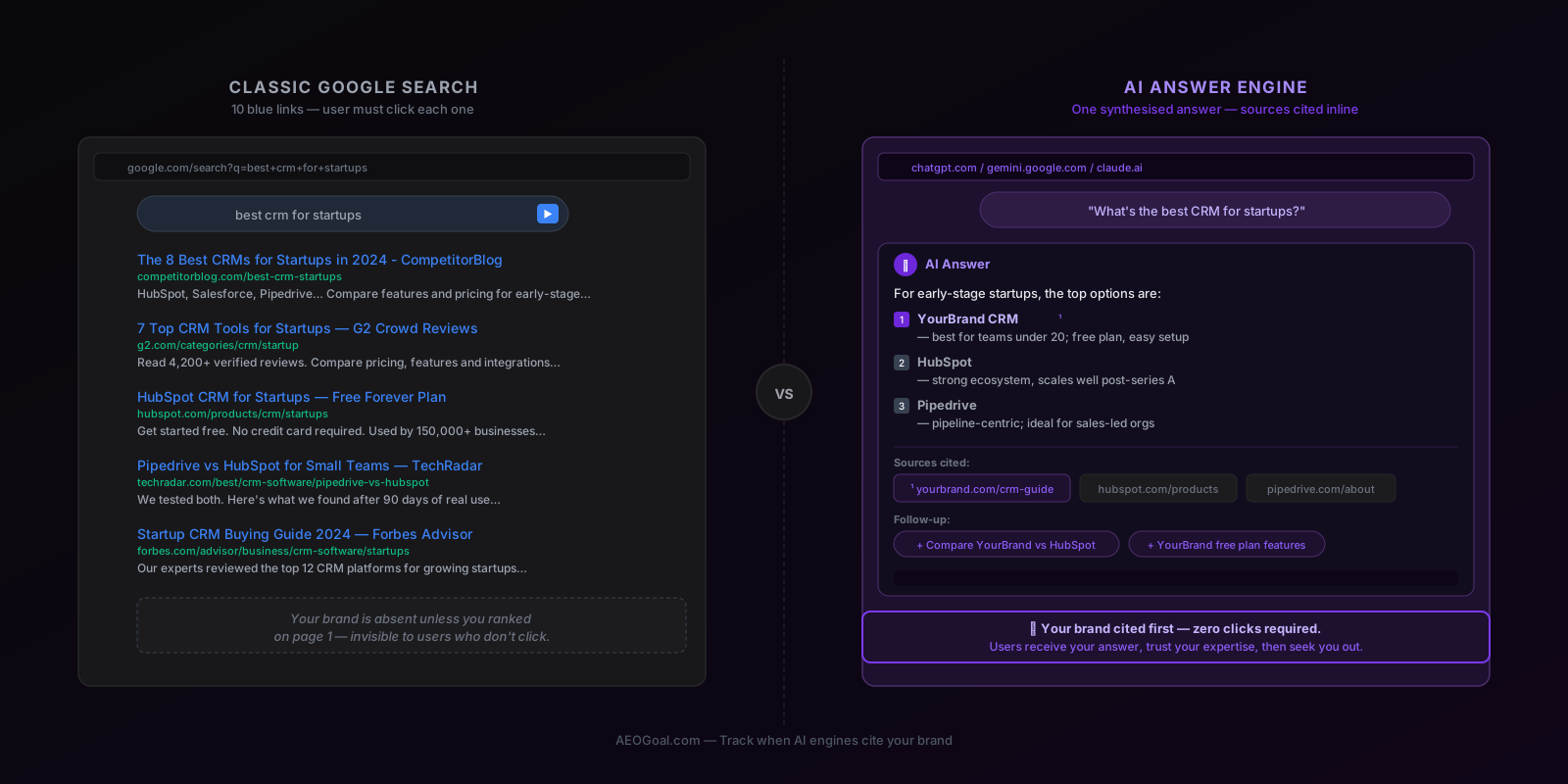
Most content tools optimize for readability. AEO Goal optimizes for citation.
Here is the gap in the market. Traditional content optimizers were built for a world of ranked links: they score reading level, keyword coverage, and heading counts, and assume that a “better” page ranks higher and earns the click. But an AI answer engine does not rank your page and wait for a click. It reads your content, decides whether it can extract a trustworthy, self-contained answer, and either cites you or cites a competitor.
That changes what “optimized” means. A page can score perfectly on a classic content grader and still be invisible in AI answers because:
- The direct answer is buried three paragraphs down instead of stated up front.
- The entities are ambiguous, so the model cannot confidently connect the page to your brand or product.
- The claims have no visible proof, so the model treats a competitor’s better-supported page as the safer source.
- The structure and schema make the key facts hard to extract cleanly.
AEO Goal optimizes for the thing that actually decides visibility now: whether an answer engine can lift a correct, attributable answer straight from your page. Readability still counts, but it is a means, not the goal.
What AEO Goal actually checks on a page
“Make this page better” is not a plan. AEO Goal turns it into a specific, prioritized list of edits by analyzing the page against how AI systems really read it - and against the competitor pages those engines already cite:
- Answer coverage. Does the page answer the exact prompts buyers ask, near the top, in an extractable form - or does it circle the topic without stating the answer?
- Entity clarity. Are your brand, product, and key concepts named and disambiguated so a model can connect them confidently, instead of guessing?
- Proof and support. Are claims backed by specifics - numbers, sources, examples - that make your page the safer citation than a thinner competitor page?
- Structure and extractability. Headings, lists, and sections that let an engine isolate a clean answer, plus valid structured data (schema, metadata) that reinforces the facts.
- Retrieval readiness. Whether AI crawlers can actually reach and parse the page - robots.txt across AI agents, llms.txt, sitemap, and canonicals - because a page an engine cannot fetch is a page it cannot cite.
- Gap versus cited competitors. For the prompts where a competitor is cited and you are not, what their page does that yours does not.
Because the analysis is grounded in real prompts and real citation patterns - not a generic best-practices template - the recommendations are specific to the pages and queries that actually move your visibility.
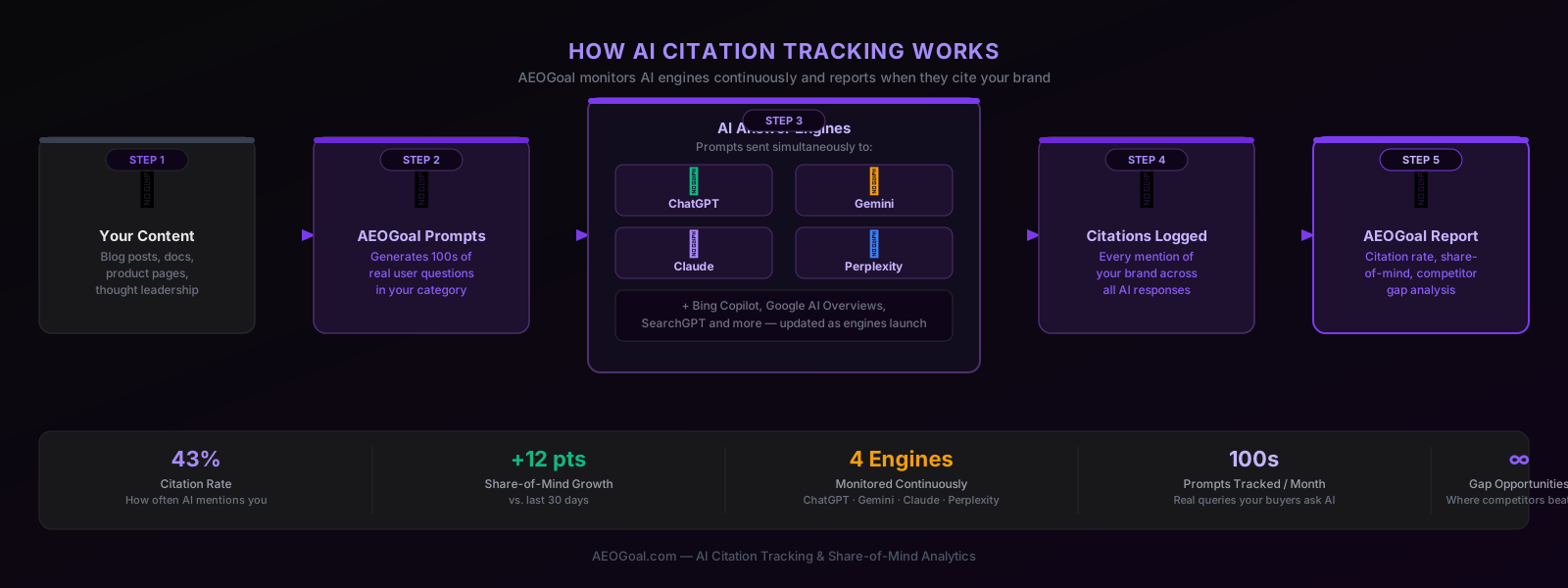
From findings to a rewrite brief - the agent layer
Analysis is only useful if it changes the page. This is where AEO Goal separates from optimization tools that hand you a score and walk away. Every finding is written to be executed - a writer or editor can pick it up and ship it without translating a chart into a task.
For example: suppose Perplexity and ChatGPT both cite a competitor for “best [category] for small teams” and never mention you, even though you have a page targeting that exact query. AEO Goal does not just flag the miss. It shows the prompt, the competitor URL the engines cited, and the likely reason yours was skipped - say, the answer is buried under a long intro, the “small teams” use case is never stated plainly, and there is no comparison proof. Then it generates a rewrite brief: lead with the direct answer, add an explicit “for teams under 20” section, cite the supporting numbers, and add the schema the competitor’s page carries. On the next scan, it shows whether your updated page started getting cited.
Findings become work, and work becomes measurable movement - the same loop that powers the rest of the platform.
Optimization vs generation - and why you need both
AI content generation and AI content optimization solve different halves of the problem, and conflating them is a common mistake.
- Generation produces new drafts - useful when a topic has no page at all, or when a whole cluster is missing.
- Optimization improves live pages that are already indexed - usually the faster path to more citations, because you are strengthening assets the engines can already find.
SEO writing AI and content generators are good at the first draft. Content optimization is about what happens next: making sure the page can actually be retrieved, extracted, and cited. AEO Goal focuses on the optimization loop and produces concrete briefs a writer or editor can execute, so AI content generation and optimization reinforce each other instead of overlapping. In practice, most teams optimize their highest-intent existing pages first, then generate new pages only where a real gap exists.
Content optimization is one surface, not the whole program
Content does not live in isolation. A page rebuilt to be citable in AI answers is usually the same page that earns rankings and backlinks, so AEO Goal treats content optimization as one loop inside the broader AI SEO program: measure AI visibility, find the gaps, optimize the pages that matter, and prove what moved - alongside keyword research, rank tracking, and backlink analysis in the same workspace. That means a single content investment can pay off on both surfaces at once, and you work one prioritized backlog instead of stitching a content tool to an SEO tool to a tracker.
A workflow for optimizing content
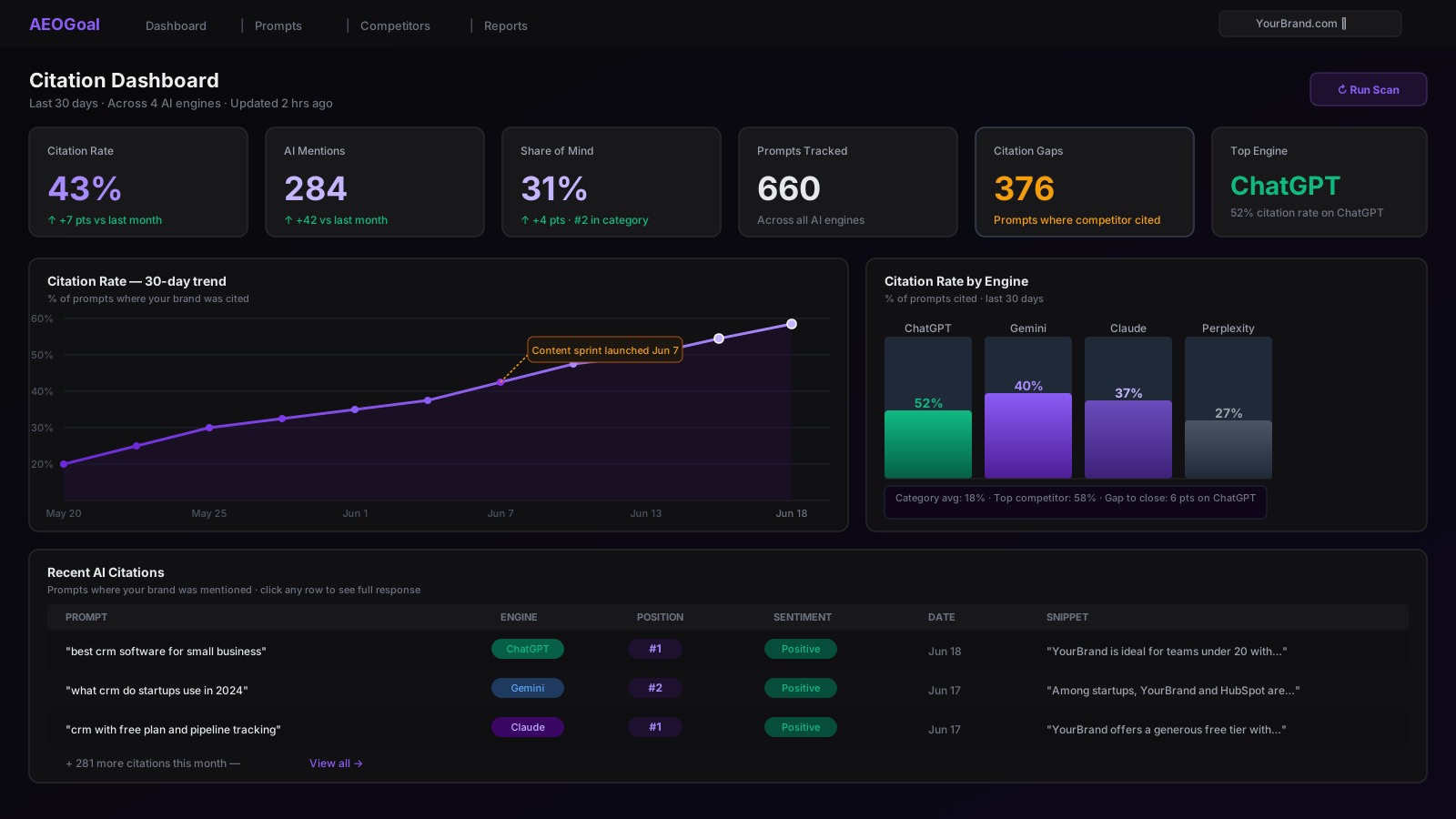
AEO Goal runs content optimization as a repeatable loop rather than a one-off edit:
- Scan. Run a free AI visibility scan to see which pages answer engines cite, mention, or skip, and how you compare to competitors.
- Diagnose. Identify the answer, entity, structure, proof, and retrieval gaps on your highest-impact pages.
- Optimize. Apply the rewrite brief: direct answers near the top, clear headings, entity clarity, visible proof, internal links, and valid schema.
- Monitor. Track whether AI systems begin citing the updated pages over time, and feed the next round of briefs.
Run it once and you get an audit. Run it on a cadence and you get a compounding program, because each cycle turns last month’s rewrites into this month’s citations.
Who AI content optimization is for
Content optimization earns its place for any team that already publishes but is not sure whether that content is working in AI answers - which, for most content and SEO teams, is exactly the blind spot.
- Content and SEO teams get a prioritized, page-level list of exactly what to rewrite and why, instead of guessing which pages matter or rewriting on instinct.
- Marketing leaders get content work tied to a measurable outcome - citations and share of model - rather than word counts shipped.
- Agencies get a repeatable optimization program they can run and report across every client’s existing library.
If you have a library of pages that rank but never show up in AI answers, content optimization is how you find out why and fix it - page by page, with proof.
New to the category? Start with what is AEO. Ready to see your own pages? Run a free AI visibility scan to find which of your pages get cited, which get skipped, and what to rewrite first.