Backlink analysis that connects authority to AI citations
AEO Goal’s backlink checker reports which external sites link to your domain, from how many unique referring domains, with what anchor text, and with how much authority behind each link. It runs inside the app alongside AI citation tracking, so you can see the full picture in one workspace: where your authority stands, where competitors are stronger, and which link gaps explain why certain prompts cite a competitor’s page instead of yours.
That connection between link authority and AI citations is the part most backlink tools leave you to figure out yourself. AEO Goal surfaces it directly: when a competitor ranks higher in link authority on a topic you should own, it shows up alongside the citation data for that topic - so the fix path is clear, not guessed.
Run a free AI visibility scan right now to see how AI crawlers currently see your domain. Then the full backlink picture is available inside the app with a free trial.
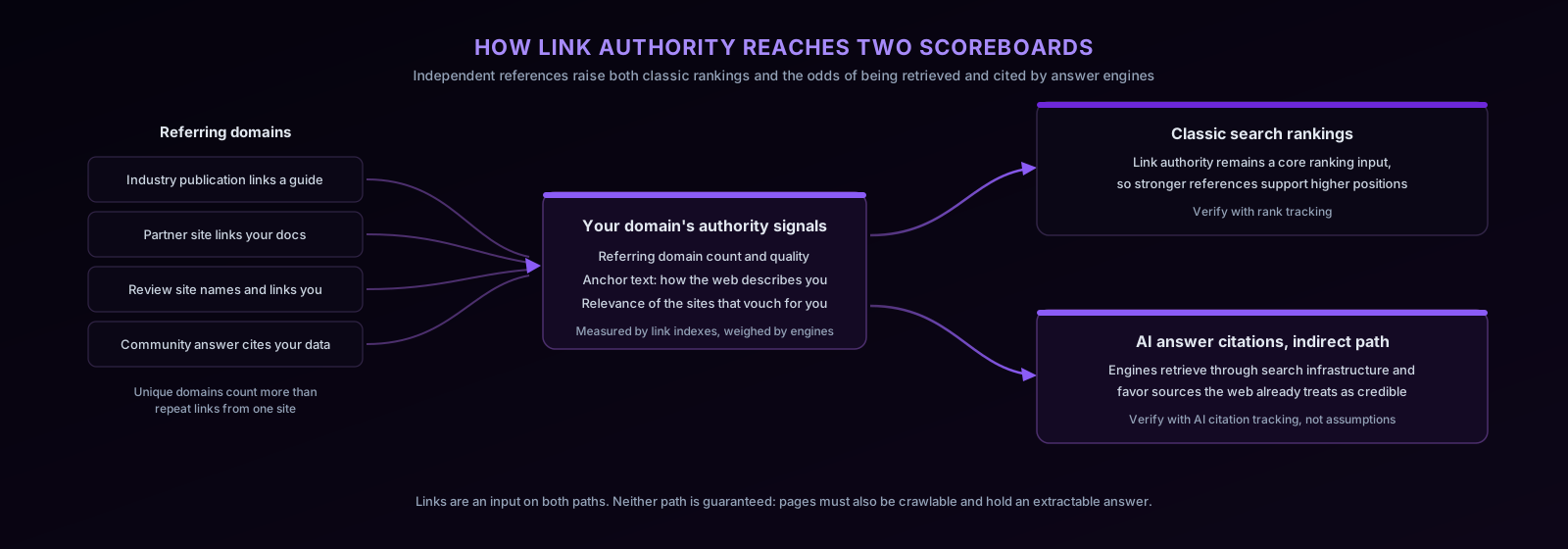
What the backlink checker reports
Inside AEO Goal, the backlink tool gives you:
- Total backlinks and unique referring domains. Referring domains is the number that matters; raw link counts inflate when one site links to you from every page.
- Domain rating (0 to 100). A comparative authority score within the index, used to prioritize which link opportunities are worth effort.
- Rating of each referring domain. Separates real authority from directory noise at a glance.
- New and lost links over time. Shows momentum and decay - a lost high-value link is often the cheapest fix on the report.
- Follow vs nofollow filtering. Weighs a link’s authority value; nofollow links still drive traffic and brand awareness.
- Anchor text breakdown. Checks whether the web describes you the way you want to be known.
- Competitor link gap opportunities. Domains that link to rivals but not to you - your ranked outreach shortlist, already qualified by category intent.
How to read each metric
| Metric | What a bad result means | Decision it supports |
|---|---|---|
| Referring domains flat or falling | No new sites are endorsing your content | Chase new domain-level links before building more raw links |
| Total backlinks growing, domains flat | Accumulating sitewide links, not authority | Diversify sources instead |
| Low-rating referring domains | Links come from thin directories | Deprioritize volume and focus on quality outreach |
| New/lost trend showing recent losses | High-value link was dropped or broke | Reclaim it - the site already chose to link once |
| Nofollow-heavy profile | Limited authority signal passing | Target editorial (follow) placements alongside branded mentions |
| Anchor text mismatch | The web frames you differently than you want | Address on landing pages and outreach briefs |
| Competitor gaps populated | Rivals receive links you do not | Prioritized outreach list with proven category intent |
Why backlinks matter for AI citations
Answer engines with live retrieval lean on search infrastructure to decide what to read, and that infrastructure weighs link authority. Models also favor sources the wider web already treats as credible - a page with strong independent references is more likely to be retrieved, and more likely to be selected as the cited source, than an isolated page making the same claim.
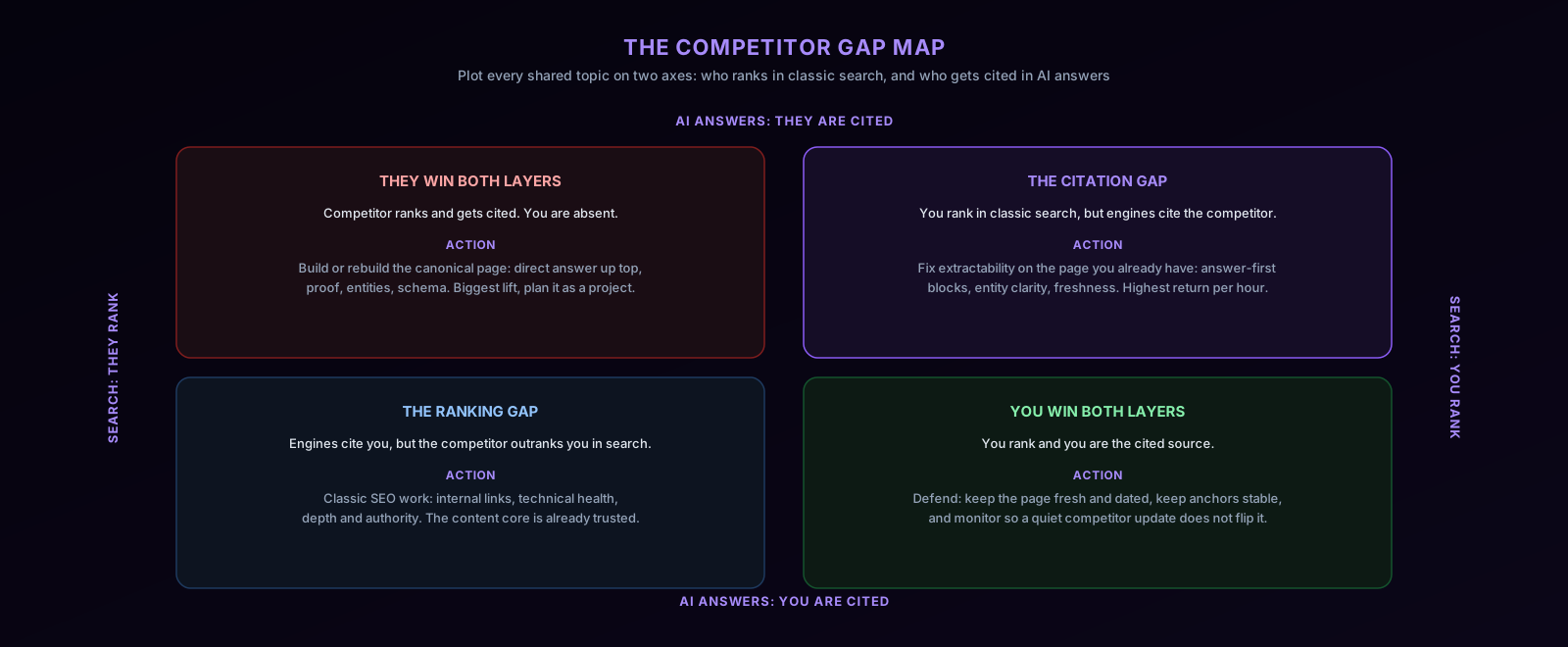
What makes AEO Goal different from a standalone backlink tool is the connection it draws. When AI citation tracking shows a competitor being cited on a high-intent prompt you should own, the backlink view in the same workspace shows whether that competitor’s advantage is content, authority, or both. That diagnosis saves weeks of guessing: a page passed over because its domain lacks authority needs a different fix than a page passed over because its content is thin.
The full citation picture across up to nine AI answer engines - ChatGPT, Claude, Gemini, Perplexity, Google AI Overviews, Microsoft Copilot, Grok, Meta AI, and DeepSeek - is what turns backlink data from a vanity metric into a prioritized action queue.
Five decision rules for acting on a backlink report
- Diversity before volume. If referring domains are flat while total backlinks grow, you are accumulating sitewide links, not authority. Chase new domains.
- Reclaim before you build. Lost links from strong domains are the cheapest wins on the report: the site already chose to link once. Fix the broken target or ask for the update.
- Convert unlinked mentions. Sites already naming your brand without linking have done the hard part. A short outreach request converts a mention into a referring domain.
- Mine competitor gaps by intent. A domain linking to two of your competitors has demonstrated it links out in your category. Those are warm outreach targets, not cold lists.
- Point authority at pages that can use it. Before campaigning for links to a page, confirm the page passes technical checks with the technical SEO audit. Links into blocked, noindexed, or broken pages are wasted.
Common mistakes
Panicking over every spammy link. Low-quality links accrue to every visible site; search engines largely ignore them. Investigate patterns, not individual junk links.
Buying links at scale. Paid link schemes violate search engine policies and produce exactly the anchor and velocity patterns those systems are built to detect.
Treating domain rating as the goal. It is a proxy score inside one index. The goals are rankings, traffic, and citations - rating movement is only interesting when they move with it.
Comparing your tool’s numbers to a competitor’s screenshot from a different tool. Different index, different count, meaningless comparison.
Building links to content nobody would cite. Outreach fails when the target page is thin. Strengthen the page with the content optimizer first; link earning follows citable content.
AEO Goal’s backlink tool in context
Inside AEO Goal, the backlink checker sits in the same workspace as AI citation tracking, AI visibility tracking, keyword research, and technical audits. That single workspace is more useful than it sounds: when a citation gap sits next to the keyword, ranking, and backlink context for the same page, you can tell whether you are being skipped because the content is weak, the domain lacks authority, or an AI crawler simply cannot reach the page. Three different problems with three different fixes - a citation-only tool leaves you guessing between them.
For link strategy depth, the link building strategies guide is free. To compare AEO Goal with other platforms, see best AI SEO tools. To start right now with no account, run the free AI visibility scan to see which signals are blocking your pages from being cited.