AI SEO software that acts - not just watches
AEO Goal is AI SEO software built for a search world that now runs on answers, not just links. It shows exactly how up to nine AI answer engines - ChatGPT, Claude, Gemini, Perplexity, Google AI Overviews, Microsoft Copilot, Grok, Meta AI, and DeepSeek - find, mention, and cite your brand, then does the part most tools skip: it tells you precisely what to change, across both AI answers and traditional search, and checks whether the change worked.
Think of it as an AEO agent, not a dashboard. Most products in this category are trackers - they report a citation rate and hand the hard part back to you. AEO Goal closes the loop. Every gap it surfaces ships with a fix path: a content brief, a schema change, a crawler-access fix, or a specific page to publish. And it does this for both surfaces that decide whether buyers find you - AI-generated answers and Google rankings - in one workspace, on one prioritized backlog.
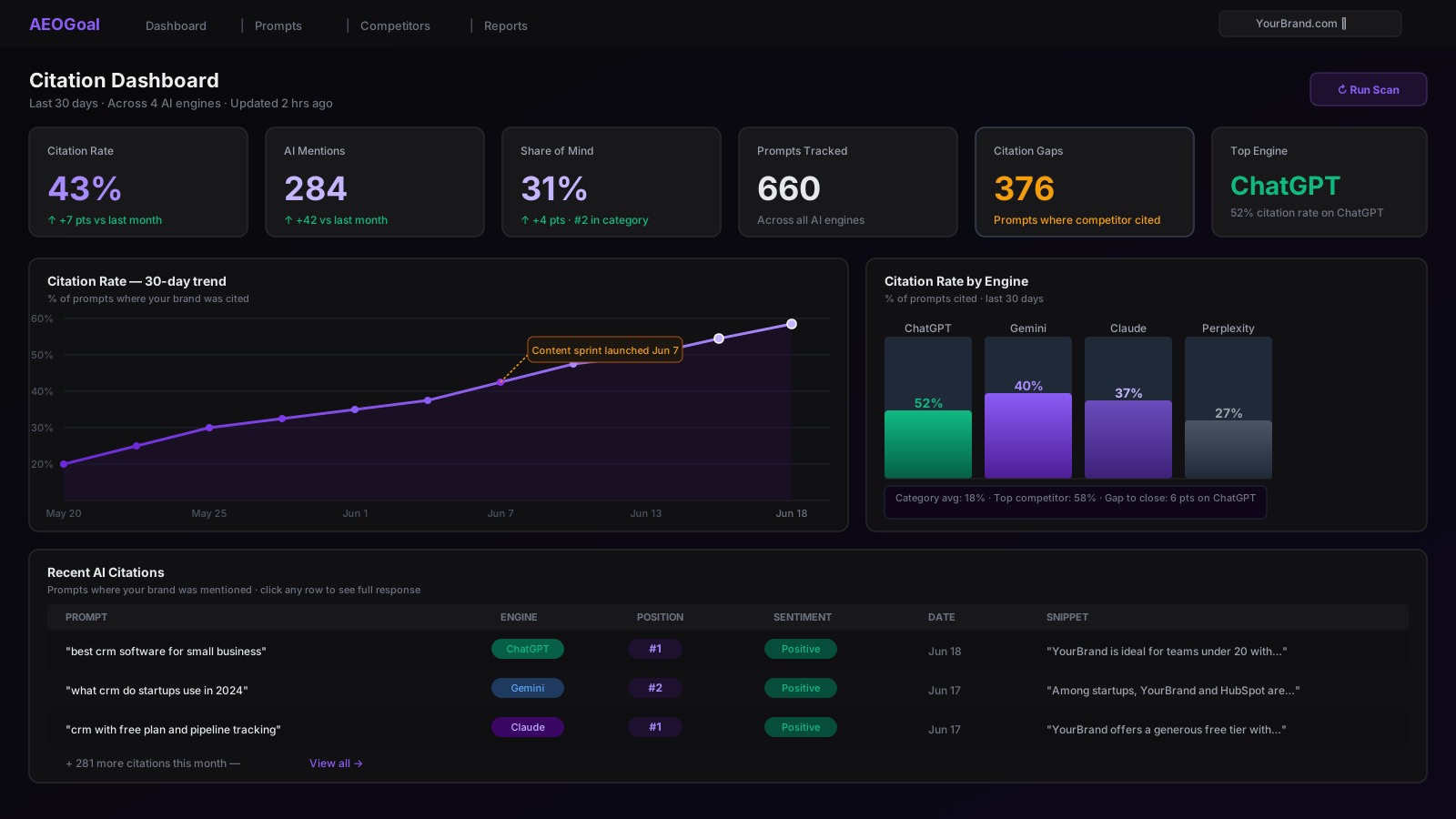
Most AI SEO tools stop at tracking. AEO Goal ships the fix.
Here is the gap in the market. Tracking tools answer one question - “am I cited?” - and stop. That is fine for a weekly screenshot, but it never moves the number. Teams end up staring at a citation-rate chart with no idea which prompt to target, which page to fix, or whether last month’s work actually helped.
AEO Goal is different because it is actionable end to end:
- It finds the gap. Which prompts cite a competitor and skip you, on which engine, and how often.
- It explains the cause. Missing entity signals, weak answer structure, a blocked AI crawler, thin proof, or no citable source page.
- It hands you the fix. A concrete next action - an answer-first brief, a schema recommendation, an llms.txt or robots.txt fix, or a page to publish - prioritized by impact.
- It re-checks. On the next scan it shows whether the fix moved citations, share of model, or rankings.
Concretely: if a competitor is cited for “best [category] for teams” across ChatGPT and Perplexity and you are not, AEO Goal surfaces the exact prompt, the competitor URL the engines cited, and the reason you were skipped - then generates an answer-first brief to close it and tracks whether your page starts getting cited on the next run. That is the difference between a tracker and an agent: you are not buying another chart, you are buying the work that changes the chart.
What AEO Goal measures across every AI answer engine
AEO Goal runs your priority prompts against the major answer engines on a schedule and parses each generated answer for the signals that matter - not vanity metrics, but the ones that predict whether buyers meet your brand:
- AI citation tracking. Every brand mention and cited source URL, with position and sentiment, per engine, over time - so you see not just that you were mentioned, but whether you were the cited source and how you were framed.
- Share-of-mind analytics. The percentage of category answers that mention you versus each named competitor, per engine and as a trend, so you know whether you are gaining or losing ground in the answers people actually read.
- Competitor visibility. The exact prompts where a competitor wins and you are absent - your highest-value content targets, ranked by opportunity, not a generic keyword list.
- Sentiment and framing. How engines describe you, so you can fix a misleading or outdated narrative, not just an absence.
Because the data is captured per prompt and per engine, you can slice it the way your team actually works: by product line, by buyer question, by competitor, or by the specific engine your market prefers.
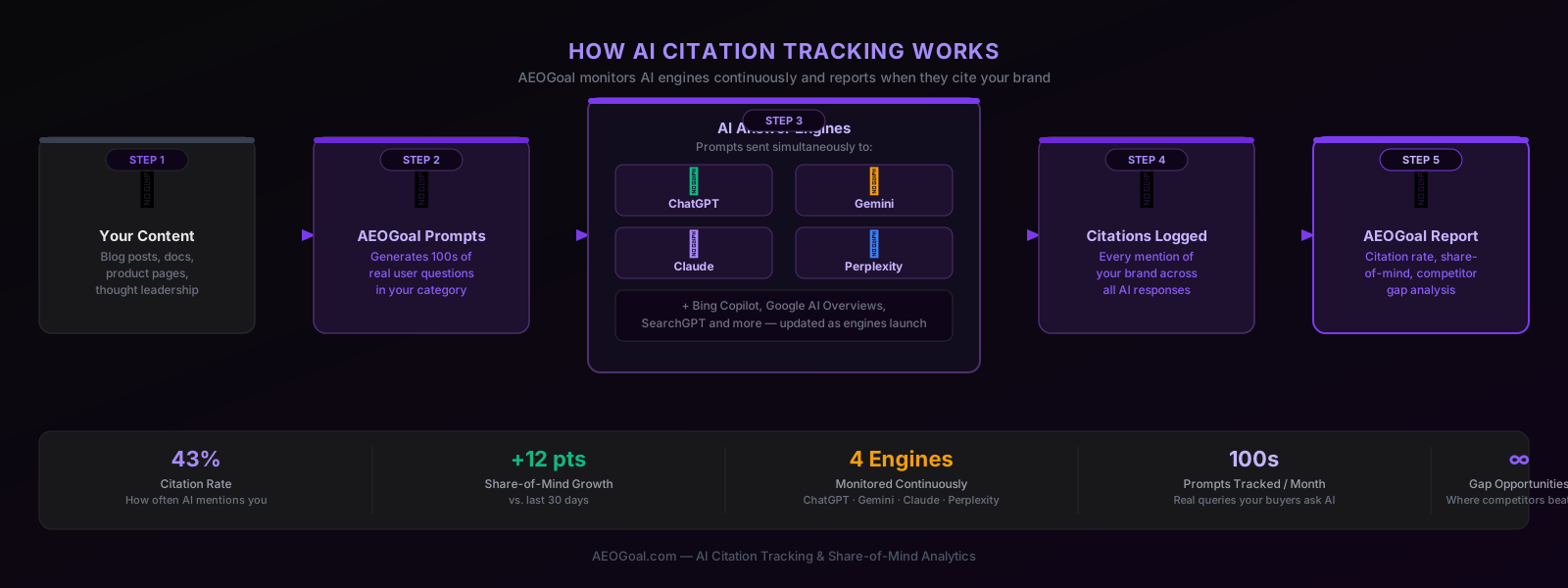
What AEO Goal does about it - the agent layer
Measurement is table stakes. The value is what happens next, and this is where AEO Goal separates itself from tracking-only software.
- Free AI visibility scan. A live, server-side pass over your domain checks AI-crawler access (robots.txt across 16 AI agents, plus llms.txt), sitemap, JSON-LD structured data, metadata, and target-entity salience, then scores AEO readiness - no signup required.
- Fix paths, not just findings. Every issue is mapped to a specific remediation and ranked by impact, with free fixes surfaced first, so teams can close critical holes before they spend.
- Answer-first content workflows. Turn citation gaps into structured briefs and pages engineered to be retrieved, extracted, and cited - direct answers near the top, clear entities, proof, and schema - not generic AI copy.
- Autopilot cadence. Re-scan and re-measure on a schedule, so visibility becomes a monitored trend with alerts, not a one-time audit that goes stale.
Every finding is written to be executed: a writer, an engineer, or an SEO can pick it up and ship it without translating a chart into a task.
One platform for AEO and traditional SEO
Buyers do not split their research between “AI search” and “Google,” and your software should not force you to either. AEO Goal pairs its answer-engine capabilities with the full classic SEO stack, in the same workspace:
- Keyword research - volume, difficulty, and SERP features for the queries and clusters worth targeting.
- Rank tracking - scheduled Google positions and SERP features for your priority keywords and competitors.
- Backlinks and authority - referring domains, anchors, and toxic-link analysis, scored with a DR-weighted Domain Score and our AI-citation AEO Rank, which measures authority among the domains AI engines actually cite.
- Technical and on-page audits - crawlability, structured data, metadata, and answer-extractability, feeding the same fix queue as your AEO findings.
The result is one source of truth: findings on both AEO and SEO, one prioritized backlog, and one report that a stakeholder can read without a glossary.
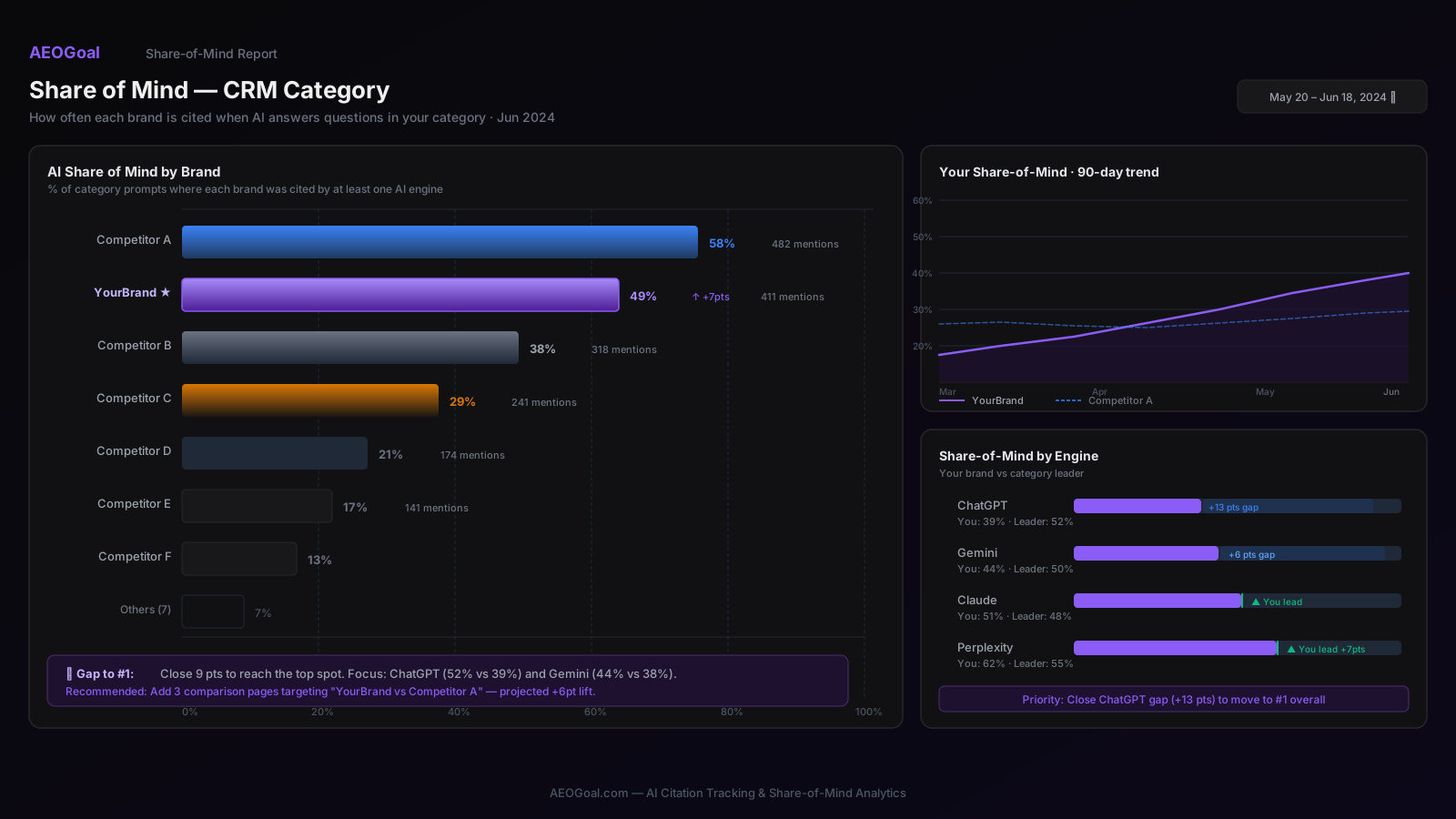
How AI SEO optimization works in AEO Goal
AEO Goal runs AI SEO optimization as a repeatable loop, not a one-off report:
- Scan your domain for crawler access, structured data, metadata, and entity salience, and baseline your citations, mentions, and rankings.
- Map the prompts, competitors, and content gaps that shape your category’s AI answers.
- Fix the highest-impact gaps - each finding ships with a concrete next action across content, technical, and entity work.
- Monitor citations, share of model, competitor overlap, and rankings, and prove what actually moved.
Run it once and you get an audit. Run it on a cadence and you get a compounding program, because each cycle turns last month’s fixes into this month’s proof.
What you can finally answer
- Are AI answer engines recommending us, a competitor, or no one for our highest-intent prompts?
- Which specific pages are being cited, and which of our pages should be but are not?
- Where are we losing share of model, on which engine, and to whom?
- What is the single highest-impact fix we can ship this week - and did last week’s fix work?
- How do our AI-answer visibility and our Google rankings move together over time?
Why teams choose AEO Goal over tracking-only tools
- It is an agent, not a dashboard - findings come with fixes, and fixes come with re-checks.
- It covers both surfaces - AI answers and traditional search, so you are not stitching together two tools and two reports.
- It is honest - measured signals only, no fabricated AI-response simulations, no invented reviews or ratings.
- It is fast to value - start with a free scan and see real gaps before you pay a cent.
Start with a free AI visibility scan to see where AI answer engines cite you, where they skip you, and what to fix first. For the broader category, see AI SEO; to compare vendors, see the best AI SEO tools; and for how AI SEO relates to classic search, see AEO vs traditional SEO.