Search engine optimization for a world of two surfaces
Search engine optimization is the practice of improving how a website is discovered, ranked, and understood by search systems. The fundamentals have not changed: technical accessibility, strong content, credible links, and clear entities still decide whether a page earns visibility. What changed is the number of surfaces a page has to win. A modern SEO program is judged not only by where it ranks in Google, but by whether AI answer engines like ChatGPT, Claude, Gemini, Perplexity, Google AI Overviews, Microsoft Copilot, Grok, Meta AI, and DeepSeek surface and cite the brand.
Most tools cover one surface or the other, and most only report. AEO Goal covers both surfaces in one platform - and it is built as an AEO agent, not a dashboard, so it does not just tell you where you stand, it ships the fix and confirms whether it worked. The underlying work overlaps, because the same page often has to satisfy a ranked list and a synthesized answer at the same time.
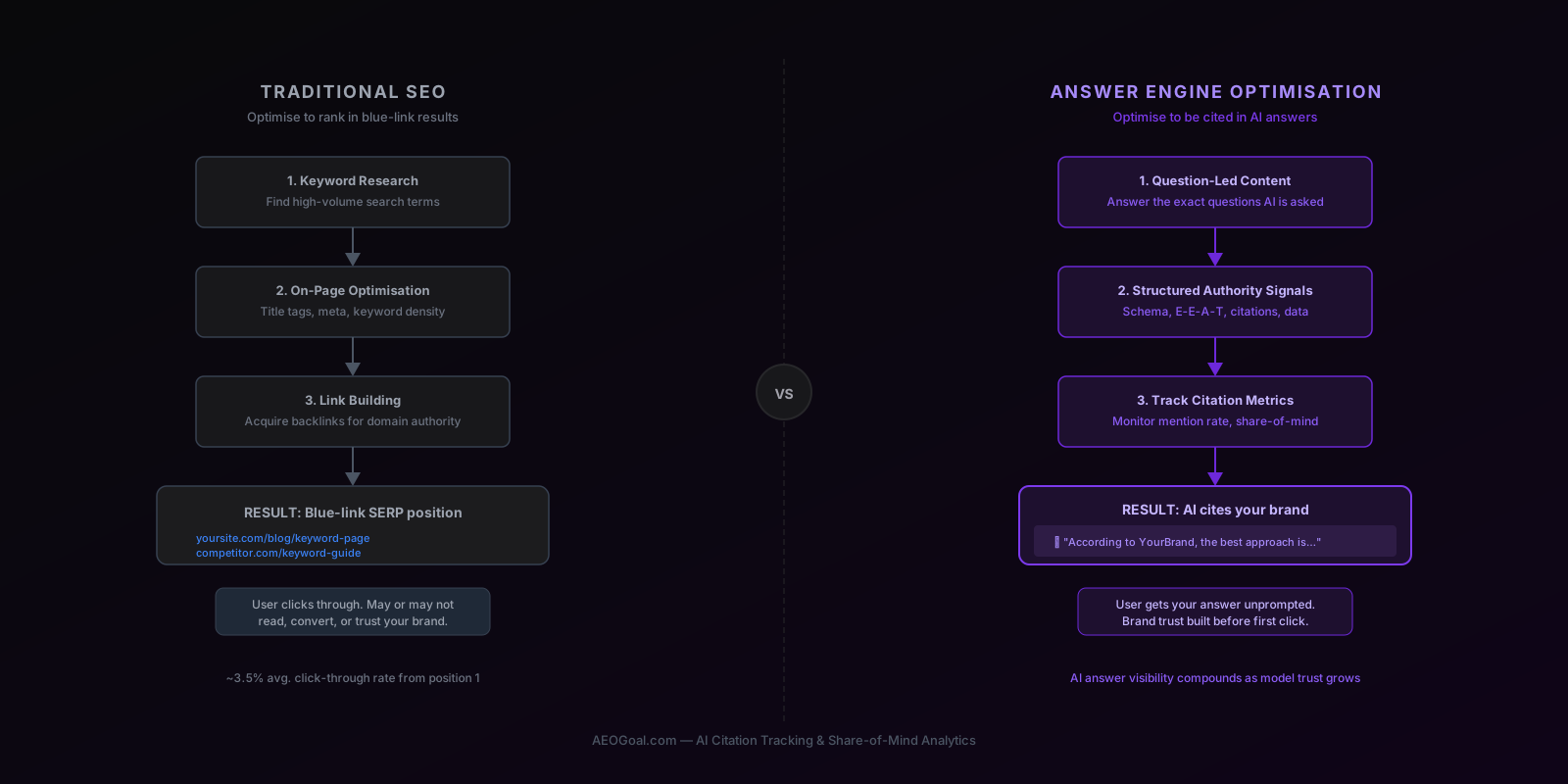
One platform, both surfaces - and it acts
Here is the problem with running search and AI answers as two separate tools. Your rankings live in one report, your AI visibility in another (if you measure it at all), and the fix for a given page - clearer answer, better schema, crawler access - lives in a third place, or in someone’s head. Work falls through the cracks, and nobody can say whether last month’s effort actually moved anything.
AEO Goal collapses that into one workspace and one prioritized backlog. Rankings, backlinks, technical health, and AI-answer citations sit together, so you can see a page that ranks but is never cited, or a technical fix that lifted both surfaces at once. And because every finding ships with a concrete next action and a re-check, the platform closes the loop that report-only SEO tools leave open. That is the difference between watching your SEO and operating it.
Consolidating also removes a quieter cost: tool sprawl. Teams that run a rank tracker, a technical crawler, a backlink tool, and - lately - a separate AI-visibility tracker end up paying four subscriptions, reconciling four exports, and still missing the connections between them. When a competitor pulls ahead, they cannot tell whether it is a backlink gap, a technical regression, or an AI-answer shift, because the evidence lives in four places. AEO Goal is designed to be the single source of truth for search visibility, so the question stops being “which tool do I check?” and becomes “what is the highest-impact fix this week, across every surface?”
What AEO Goal does as an SEO platform
On the traditional side, AEO Goal gives a team the full SEO workflow rather than a single metric:
- Keyword rank tracking - scheduled Google positions and SERP features across the queries that matter to the business and your competitors.
- Backlink analysis - referring domains, anchors, and toxic-link review, scored with a DR-weighted Domain Score and our AI-citation AEO Rank, which measures authority among the domains AI engines actually cite.
- Technical SEO audits that separate crawl facts from AI-inferred recommendations, so a team can see why a fix was suggested before acting on it.
- On-page and content optimization to improve topical coverage and answer-first structure - the same edits that help a page rank also help it get cited.
These map directly to our technical SEO audit, keyword research, and backlink checker tools, and they feed the same reporting layer used for AI visibility - so a finding on either surface lands in one backlog and one report.
Crucially, the technical audit distinguishes crawl facts from AI-inferred recommendations. A crawl fact - a 404, a blocked resource, a missing canonical - is objective and safe to act on immediately. An AI-inferred suggestion is a judgment call, and AEO Goal labels it as such, with the reasoning attached, so a team never ships a change it does not understand or cannot defend in a review. That transparency is what lets an enterprise team move quickly without abandoning its change-control discipline.
Where SEO meets answer engine optimization
The reason to run both in one platform is that they share inputs. A page that is crawlable, well-structured, and cited by credible sources tends to rank and tends to be quoted inside AI answers. AEO Goal measures the AI side with the same rigor it applies to rankings: which prompts mention the brand, which source URLs models cite, where competitors win instead, and how you are framed. The measurement approach is documented in our AI citation tracking methodology, and the contrast between the two disciplines is covered in AEO versus traditional SEO.
That shared foundation is also why AI SEO is not a separate budget line fighting your existing SEO spend. The crawlability, internal linking, and topical depth you invest in for rankings are the same signals that make a page easy for a language model to retrieve and trust, so one content investment can pay off on both surfaces at once.
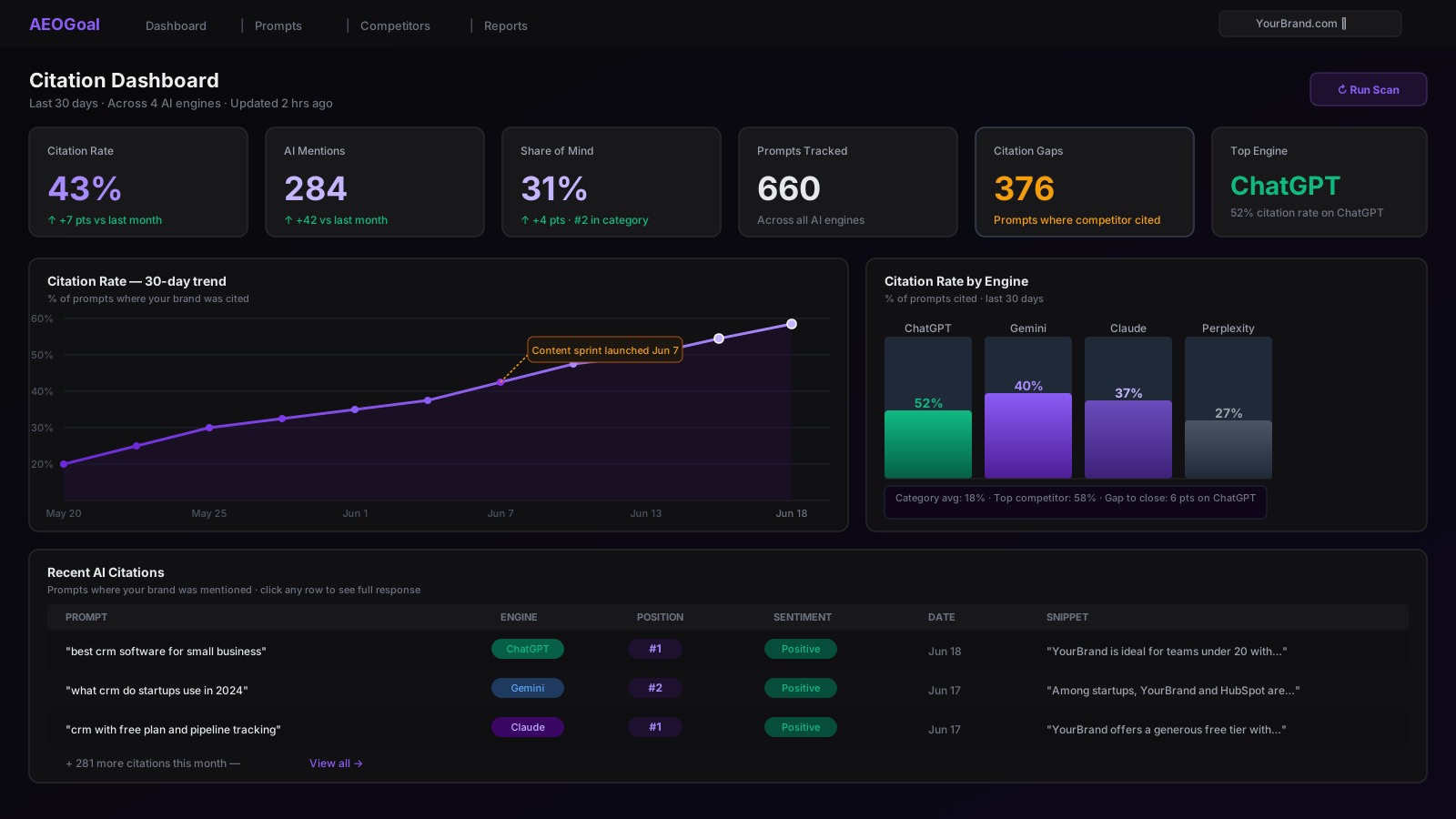
From audit to fix - the agent layer
A finding you cannot act on is a cost. This is where AEO Goal separates from a traditional SEO suite: every issue it surfaces, on either surface, ships with a specific remediation and a re-check.
For example: suppose a priority page ranks on page one of Google but never appears in the ChatGPT or Perplexity answer for the same question. A report-only tool leaves you to guess why. AEO Goal diagnoses the likely cause - the answer is buried, the key claim lacks proof, the schema does not match the visible content, or an AI crawler is blocked - hands you the brief or technical fix, and on the next scan shows whether the page started getting cited. The ranking and the citation are worked from one backlog, so you are not choosing which surface to serve; you are serving both with one edit.
An SEO workflow that compounds
AEO Goal runs search engine optimization as a repeatable loop, not a one-off audit:
- Scan your domain for crawler access, structured data, metadata, and entity signals, and baseline rankings, backlinks, and AI citations.
- Map the keywords, prompts, competitors, and content gaps that shape both your rankings and your AI-answer presence.
- Fix the highest-impact gaps - each finding ships with a concrete action across content, technical, and entity work.
- Monitor rankings, citations, share of model, and authority, and prove what actually moved.
Run it once and you get an audit. Run it on a cadence and you get a compounding program, because each cycle turns last month’s fixes into this month’s proof.
What you can finally answer
- Where do we rank on Google for our priority queries, and how is that trending?
- Which of our pages are cited in AI answers, and which rank well but are never cited?
- Where are competitors winning - in the rankings, in the AI answers, or both?
- What is the single highest-impact fix this week, and did last week’s fix move anything?
- How healthy is our technical foundation, and which issues actually affect visibility?
These questions used to require stitching several tools together and reconciling their exports by hand. In AEO Goal they are one workspace and one report a stakeholder can read without a glossary.
Who it is for
- In-house SEO teams who want rankings, backlinks, technical health, and AI visibility in one place instead of three tools and three reports.
- Marketing leaders who need a single view of whether the brand is winning across both search results and AI answers.
- Agencies who want a repeatable, reportable program - baseline, fix, re-measure - they can run across every client.
If you already do SEO and want to extend it to the AI answers your buyers now read first, this is the platform that covers both without abandoning the fundamentals.
If your priority is the AI surface, start with AI visibility tracking and AI citation tracking. For the combined platform view, see AI SEO software and our overview of the best AI SEO tools, or run a free AI visibility scan to see where you stand today.