Quick Answer
AEO and traditional SEO are complementary, not competing. SEO optimizes for ranked search results; AEO optimizes for whether AI answer engines retrieve, summarize, and cite your brand. Most teams need both: SEO captures search traffic while AEO protects visibility inside AI-generated answers from ChatGPT, Perplexity, Claude, and Google AI Overviews.
The two disciplines share one foundation - crawlable, well-structured, trustworthy content - and then diverge in what they optimize and how they measure success. This page explains the differences, where they overlap, and how to run both as a single program. For the category definition, start with what is answer engine optimization, or see the broader practice of AI SEO.
AEO vs SEO at a glance
The fastest way to see the difference: SEO competes for a position in a list of links, while AEO competes to be the source a generated answer quotes. The table below contrasts them across the dimensions that matter most.
| Factor | Traditional SEO | AEO |
|---|---|---|
| Goal | Rank pages in search results | Get cited in AI-generated answers |
| Main visibility unit | Blue link, snippet, SERP feature | Mention, citation, source link, summarized answer |
| Optimization focus | Keywords, rankings, backlinks, technical SEO | Entities, answer clarity, citations, prompts, source-worthiness |
| Measurement | Rankings, clicks, CTR, organic traffic | AI visibility, share of voice, citations, sentiment, answer accuracy |
| Content format | Search landing pages and blog posts | Extractable answers, FAQs, comparison blocks, evidence-led pages |
| Best used for | Organic search growth | AI search visibility and brand authority |
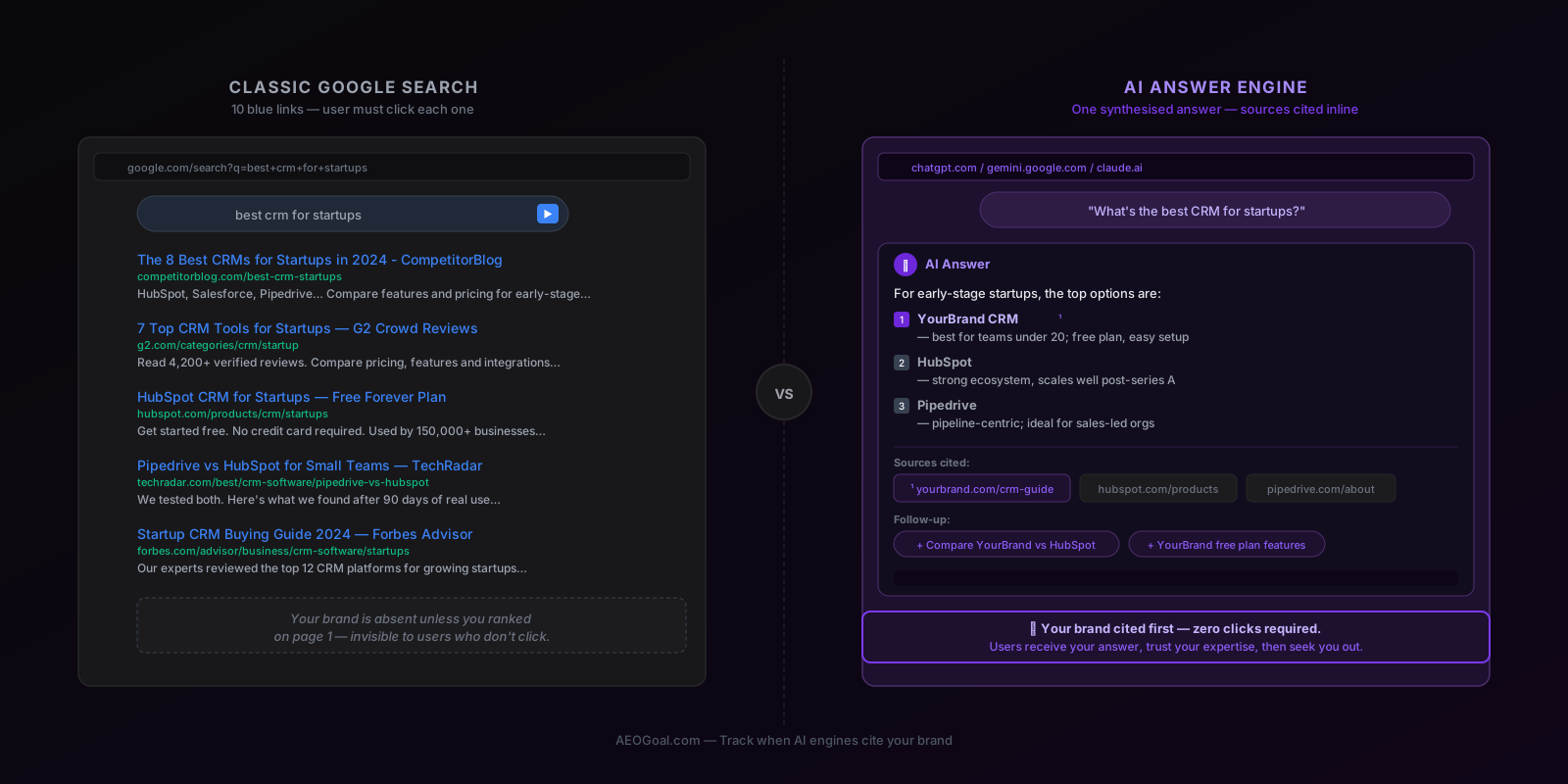
The visual difference is the whole point. A classic SERP hands the user a ranked list of links to choose from; an AI answer engine composes a single response and cites only the few sources it trusted - so being on page one is no longer the same as being in the answer.
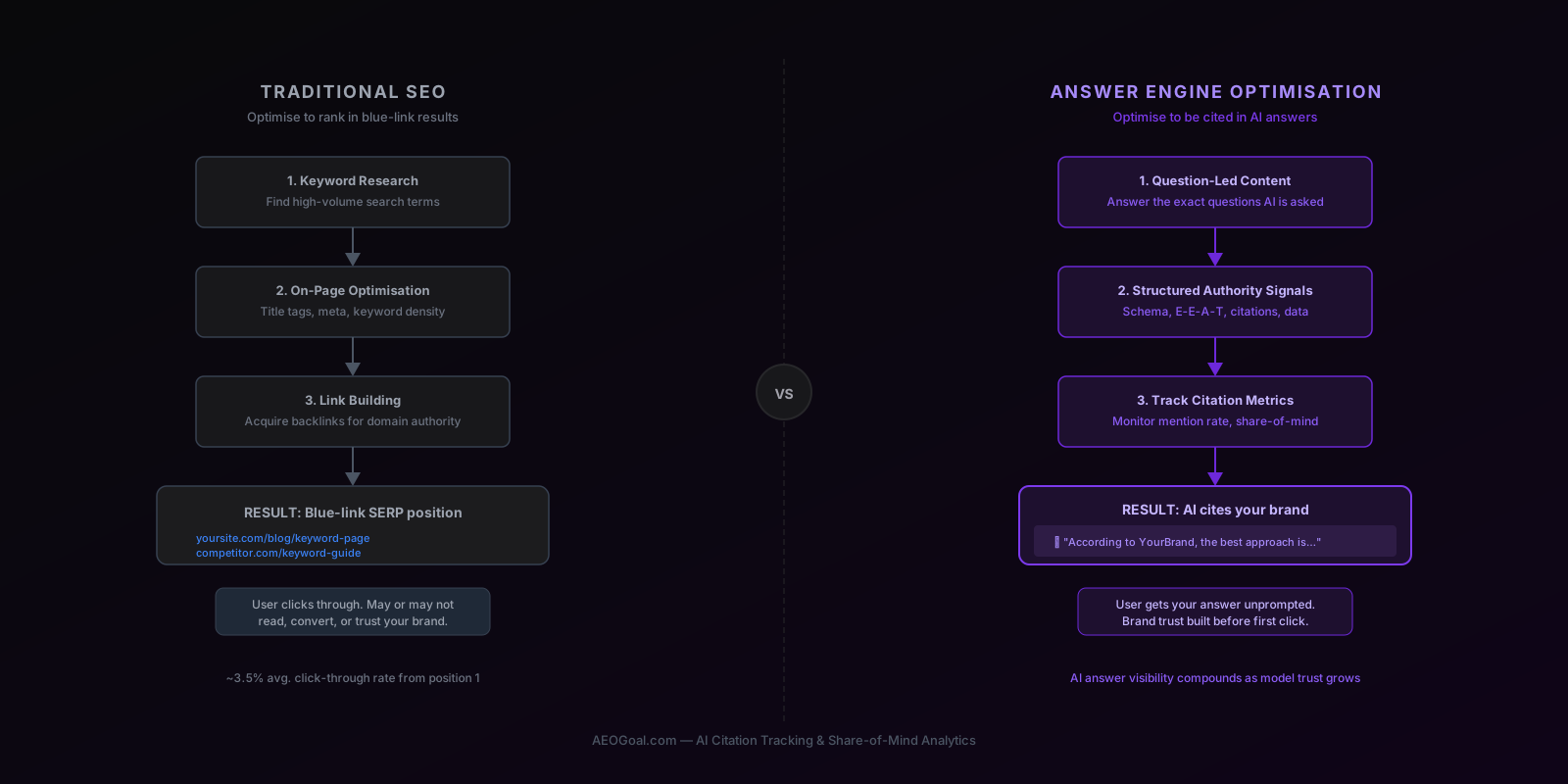
Both columns depend on the same base - indexable, useful, internally linked content. AEO adds entity clarity, direct answers, and prompt-level measurement on top of that base.
Does AEO replace SEO?
No. AEO extends SEO; it does not replace it. Google’s traditional search still sends the majority of web traffic for most categories, and AI answer engines rely on the same crawlable, trustworthy content that good SEO produces. Treating AEO as a replacement risks abandoning the channel that still drives most measurable revenue.
The more accurate framing is layering. SEO keeps you eligible and visible in ranked results; AEO determines whether the AI layer on top of search - Google AI Overviews, AI Mode, and standalone assistants - mentions you when it composes an answer. A brand that ranks well but is never cited in AI answers is losing visibility with every query that ends in a generated response instead of a click.
Can you do AEO and SEO together?
Yes - and you should run them as one content program measured on two scoreboards, not two separate teams. The same answer-first, entity-clear, well-structured page can rank in search and be citable in AI answers. You write once, then measure rankings and clicks for SEO and citations and share of model for AEO.
Here is a practical workflow for optimizing a single SaaS page for both at the same time:
- Pick the target query and its fan-out. Identify the primary query and the related questions an AI would search while answering it (pricing, alternatives, “is it worth it”, integrations).
- Lead with a 40-60 word direct answer. Put the answer under the H1 and open each H2 with one or two direct sentences before the detail.
- Make the entity unambiguous. State what the product is, its category, who it serves, and how it differs - consistently, and backed by accurate
Organization/SoftwareApplicationstructured data. - Add extractable structure. Use clear H2/H3 questions, a comparison table, and an FAQ block so both Google and AI engines can lift clean passages.
- Fix the technical base. Confirm crawler access (robots.txt, sitemap, llms.txt), indexability, and internal links from related pages.
- Measure on both scoreboards. Track rankings and clicks for SEO, and use AI citation tracking to see whether the page starts getting cited in AI answers after each change.
AEO vs GEO vs SEO
In practice, AEO and GEO describe the same work, and both extend SEO. SEO targets ranked search results. AEO (answer engine optimization) targets being cited inside AI answers. GEO (generative engine optimization) is a near-synonym for AEO that emphasizes generative surfaces specifically. The distinction between AEO and GEO is mostly terminology; the distinction from SEO is real.
If you are choosing language for your team, pick one of AEO or GEO and use it consistently for entity clarity, and treat SEO as the foundational layer underneath. For a deeper breakdown, see generative engine optimization.
How do you measure AEO performance?
AEO is measured by whether AI answers mention and cite you, not by rankings. Because answer engines synthesize responses instead of returning a ranked list, traditional rank tracking misses the signal entirely. AEO uses a different, complementary metric set.
Track these signals over time and per engine:
- AI citation count - how often owned URLs are cited as sources in AI answers.
- Brand mention frequency - how often the brand is named, with or without a link.
- Competitor share of voice - your mentions versus competitors for the same prompts.
- Prompt-level visibility - which specific buyer prompts surface you, and which do not.
- Sentiment of AI answers - whether the framing of your brand is accurate and favorable.
- Source / citation URLs - exactly which pages engines rely on as evidence.
- Engine breakdown - separate results for ChatGPT, Gemini, Perplexity, Claude, and Google AI Overviews, since retrieval patterns differ.
- Change over time - movement after each content, schema, or technical fix.
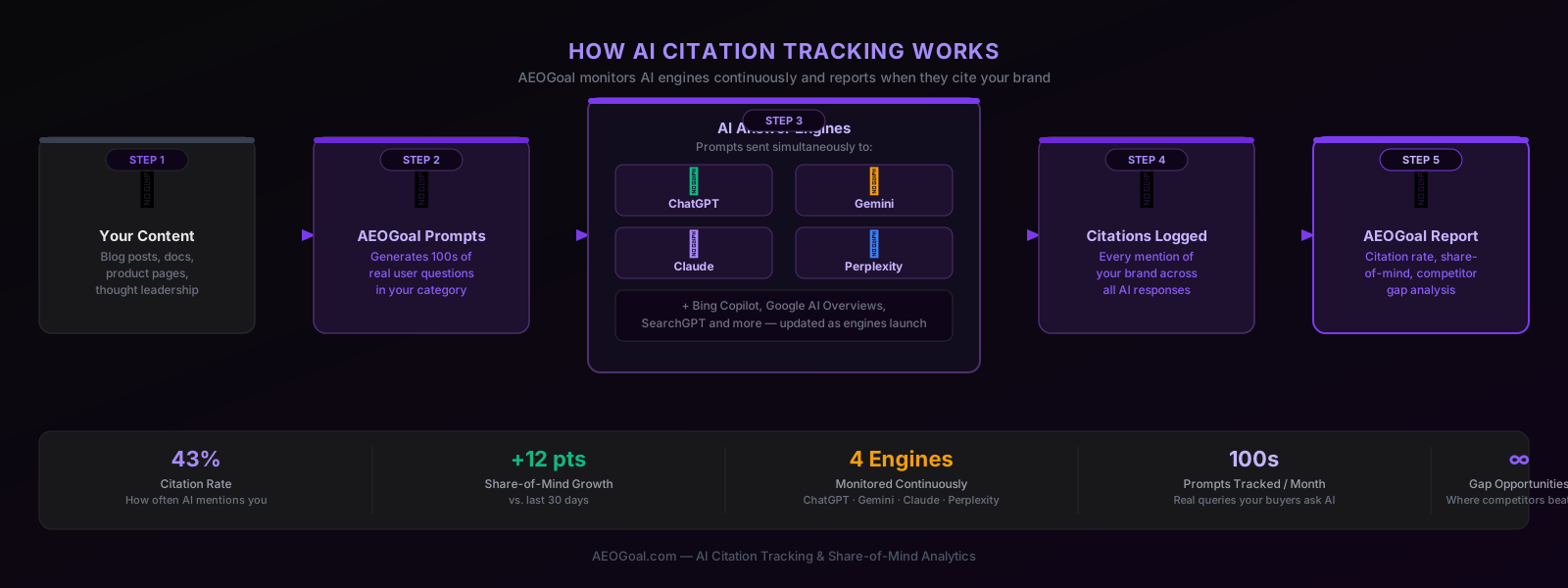
This is what AI visibility tracking and AI citation tracking monitor across engines; the AI citation tracking methodology explains exactly how each metric is calculated.
AEO tools vs SEO tools
AEO tools and SEO tools answer different questions, which is why most teams end up using both. Traditional SEO tools (rank trackers, backlink and keyword tools) tell you where you rank and why. AEO tools tell you whether AI answers cite you, which sources they use, and how you compare to competitors inside generated answers.
Some platforms now claim both, but coverage varies widely - especially for citation tracking across multiple engines and for turning findings into content actions. For a structured comparison of the landscape, see the difference between AEO tools and SEO tools.
AEO Goal is one platform that does both sides of this comparison: keyword research with volume and difficulty, daily Google rank tracking, backlink analysis with a DR-weighted Domain Score, and technical site audits, alongside AI citation tracking, brand mention tracking, share of model, competitor AI visibility, and answer-first content briefs across ChatGPT, Claude, Gemini, Perplexity, and Google AI Overviews.
Which should you prioritize?
Prioritize by where your foundation and your buyers are. If your site lacks indexation basics or you are early, fix SEO fundamentals first - they are the prerequisite for both. If your foundation is solid and buyers research your category through AI assistants, prioritize AEO, because ranking alone no longer guarantees a mention.
A common SaaS scenario: the brand ranks on page one for its category term but never appears when a buyer asks ChatGPT or Google AI Overviews for “the best tools for X.” The SEO work is done; the AEO gap is open. The fix is not more backlinks - it is answer-first content, clearer entity signals, and measuring citations until the brand starts appearing in the generated answer.
Before / after: a weak vs optimized answer block
Illustrative example - not a customer result. It shows formatting, not measured outcomes.
Before (hard for an AI to cite): “Our platform has many powerful features that help modern teams achieve their goals and stay ahead in a competitive landscape, and we have been helping companies for years to do more.”
After (answer-first and citable): “AEO Goal is AI SEO software that runs both scoreboards: keyword research, daily Google rank tracking, backlink analysis with a DR-weighted Domain Score, and technical site audits, plus citation tracking, share of model, and competitor visibility across ChatGPT, Claude, Gemini, Perplexity, and Google AI Overviews. It is built for SEO and content teams measuring rankings and AI visibility together.”
The “after” version names the entity, states the category, and gives a direct, quotable answer in under 60 words - the structure AI engines extract cleanly.
Editorial note from the AEO Goal team
We see AEO framed as the death of SEO constantly, and it is wrong. Every AI answer is still assembled from crawlable, trustworthy web content - the exact thing SEO produces. What has changed is the final surface: increasingly the answer is generated, not clicked. So the durable strategy is not to abandon SEO for AEO; it is to keep your SEO foundation strong and add the AEO layer that decides whether the generated answer mentions you. Run one content program, measure it on two scoreboards.