What an SEO consultant does
An SEO consultant is an advisor who diagnoses why a website underperforms in search and translates that into a prioritized plan a team can actually execute. The value is judgment: knowing which of a hundred possible issues will move the needle, and in what order. A good consultant leaves a client with a sequenced roadmap, not a list of everything that is theoretically wrong.
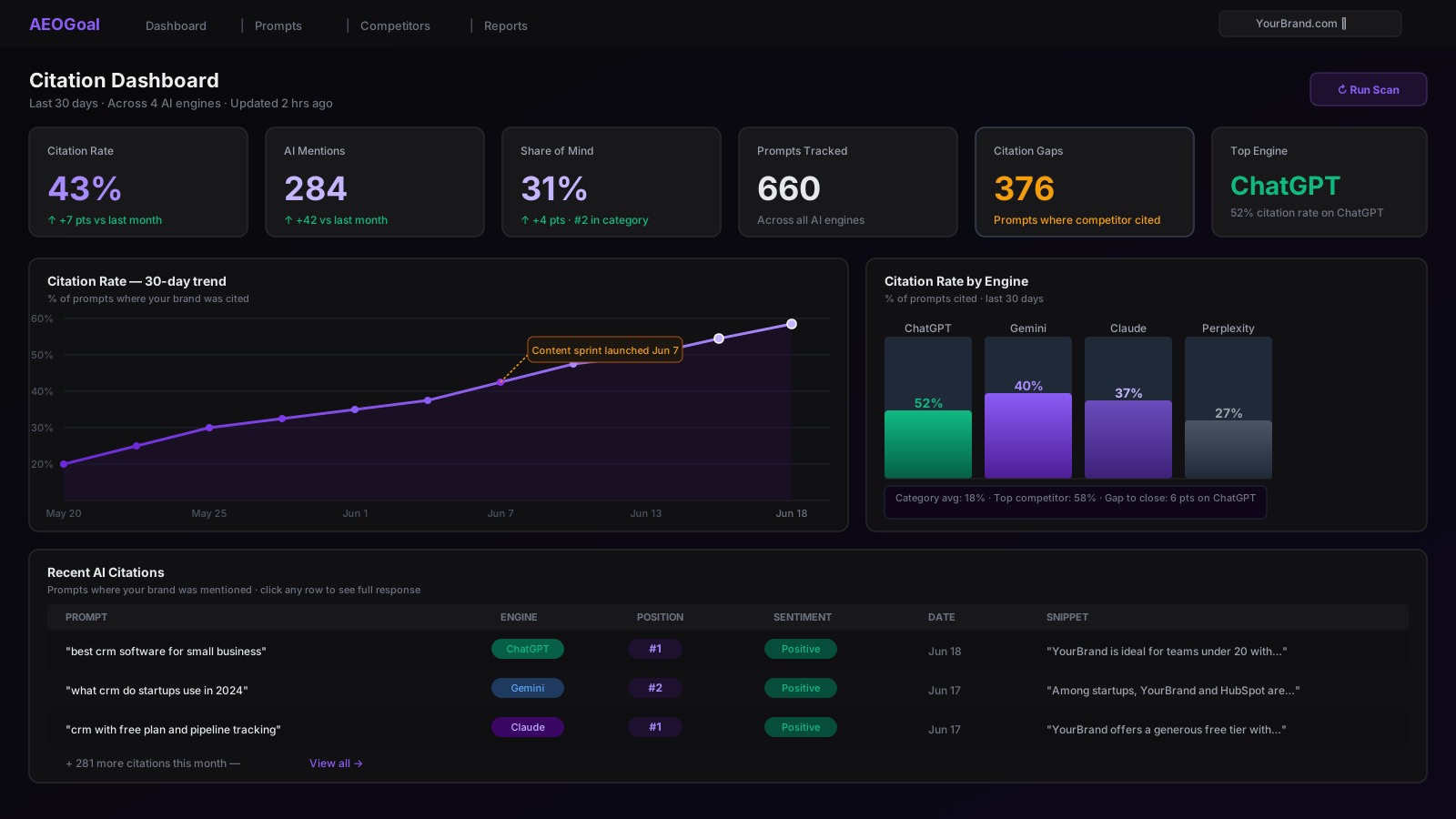
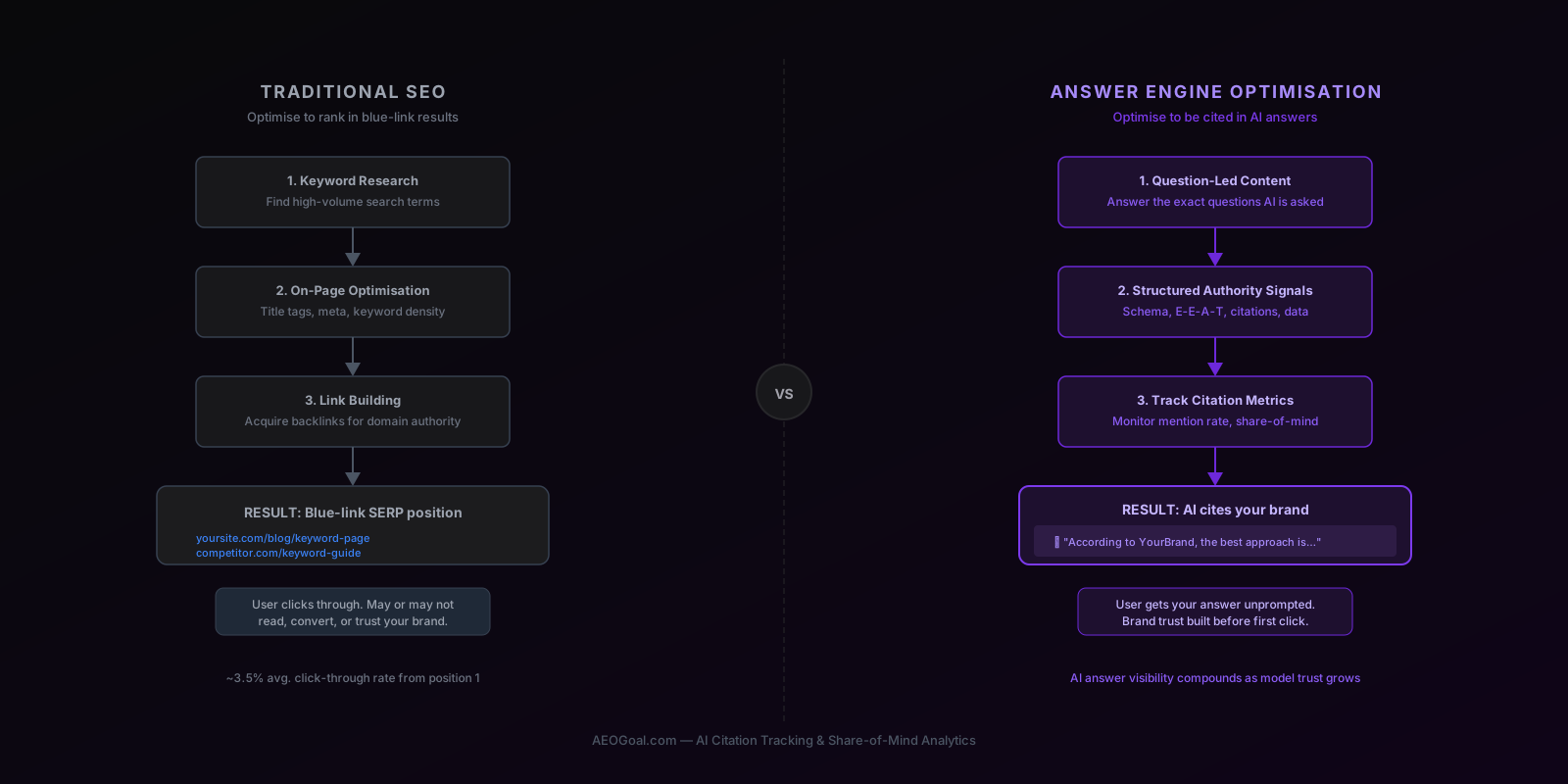
The role has widened. A credible consultant now audits not only Google rankings and technical health, but also whether AI answer engines like ChatGPT, Claude, Gemini, Perplexity, Google AI Overviews, Microsoft Copilot, Grok, Meta AI, and DeepSeek surface and cite the brand. That second surface is where much of the current advisory value sits, because most organizations have no visibility into how they appear inside generated answers. AEO Goal is built to give a consultant that visibility as hard evidence - and, because it is an AEO agent, it maps each finding to a specific fix, so the roadmap is grounded in observed behavior rather than opinion.
This is a meaningful shift in what a consultant can offer. For years the deliverable was largely the consultant’s expertise, communicated as a document; the client had to take the prioritization on faith. Grounding that same expertise in measured evidence - real rankings, real citations, real competitor gaps - does not replace the judgment, it makes the judgment defensible. The consultant still decides what counts and in what order, but now every call in the roadmap points back to something observed rather than asserted.
Why a consultant is only as good as their evidence
A consultant’s product is a recommendation, and a recommendation is only as persuasive as the evidence behind it. The classic failure mode is the opinion-based audit: a long document of best practices with no way to show which issues actually cost the client visibility or which fix will pay off first. Skeptical stakeholders discount that kind of advice, and rightly so.
An evidence layer changes the dynamic. When a consultant can show the exact prompts where a competitor is cited and the client is absent, trace each to a root cause, and attach a specific fix, the roadmap stops being an opinion and becomes a diagnosis. That is far easier to defend to a CFO who wants to know why a line item is important, and far easier to prioritize honestly, because the leverage of each fix is visible rather than asserted. AEO Goal exists to give consultants exactly that evidence base across both search and AI answers.
The AI-answer surface is where this is most important right now, because it is where clients have the least visibility and the most anxiety. A leadership team that has watched a competitor get named in ChatGPT while they are absent does not want reassurance; they want a diagnosis and a plan. A consultant who can walk in, show exactly which prompts the competitor wins, explain why, and hand over a sequenced roadmap is delivering something almost no in-house team can produce on its own - which is precisely the kind of high-value, hard-to-commoditize advisory work that commands premium rates.
What to expect from an engagement
A modern consulting engagement usually moves through a predictable arc: scope the market and priority competitors, baseline current visibility across search and AI, diagnose each gap to a root cause, prioritize fixes by leverage, and re-measure on a cadence. Those mechanics are the core of an SEO consulting engagement.
- Scope. Define the market, the real competitors, and the questions buyers actually ask.
- Baseline. Measure rankings, technical health, backlinks, and AI-answer presence together.
- Diagnose. Trace each gap to a specific cause - crawlability, thin content, weak entity signals, or missing structured data.
- Prioritize. Sequence fixes by leverage and effort into a roadmap the team can execute.
- Re-measure. Confirm on a cadence whether rankings, citations, and share of model moved.
The most important thing to expect is honesty about control. A consultant can influence the website, its content, its structured data, and its entity signals - all of which they can control. Whether a search engine ranks a page or a model cites it is influenced but never guaranteed, so the credible promise is risk reduction and an improving trend, not a fixed outcome.
Setting that expectation early is itself a mark of a good consultant. The advisors who lose clients are the ones who promise positions they cannot control and then have to explain a miss; the ones who retain clients frame the engagement around inputs they own and a trend they can prove. Having measurement that shows the trend - honestly, both the gains and the gaps - is what lets a consultant hold that line without sounding evasive, because the data does the reassuring instead of the promises.
How AEO Goal supports consultants
AEO Goal gives a consultant the evidence layer an audit needs. Instead of opinion-based recommendations, the consultant hands the client a roadmap backed by observed behavior: measured keyword rankings, backlink and technical findings, and a record of which prompts mention the brand, which sources models cite, and where competitors win instead. Each gap maps to a specific, recommendable fix, and re-measurement shows whether the work moved rankings, citations, and share of model.
That evidence base is what lets a consultant defend a roadmap to a skeptical stakeholder, and it is measured with the same approach documented in our AI citation tracking methodology. It also scales a solo consultant’s reach: the measurement and monitoring that would take days of manual checking runs on a schedule, freeing the consultant to spend their time on the judgment work clients actually pay for.
That leverage is what lets an independent consultant compete with a full agency. The bottleneck for a solo practitioner is hours, and manual AI-answer checking across engines and prompts is exactly the kind of repetitive work that eats them. Automating the baseline and the re-measurement lets one person credibly run evidence-backed programs for several clients at once, delivering the depth of analysis a larger team would, without the overhead that forces a consultant to either raise rates or cut corners.
A worked example
Suppose a client hires a consultant because organic traffic is flat and leadership has started asking why ChatGPT never mentions them. The consultant uses AEO Goal to baseline both surfaces and finds the real story: rankings are fine, but the brand’s entity is described inconsistently across the site and its comparison pages bury the answer, so AI engines cite a competitor instead. The roadmap writes itself - fix the entity signals, restructure three pages to lead with the answer, add schema - and each item carries the evidence for why it is important. On re-measurement, the consultant shows the client exactly which prompts began including them, turning a vague worry into a demonstrated result.
That arc - worry, evidence, roadmap, demonstrated result - is the entire value of a modern SEO consultant compressed into one engagement. The consultant did not promise a ranking; they diagnosed a real cause, prescribed a specific fix, and proved the effect. That is a far more durable basis for a client relationship, and a far more repeatable one, than a guarantee no honest advisor can make.
What you can finally answer
With the evidence layer in place, a consultant can answer the questions clients actually care about, with measured data behind each one:
- Why is this client underperforming - in rankings, in AI answers, or both?
- Which fixes, in what order, will move the needle fastest?
- Which competitor is winning the answers this client wants, and why?
- Did the roadmap we recommended actually improve visibility?
Who it is for
- Independent and fractional SEO consultants who need enterprise-grade evidence without building measurement themselves.
- Consultants expanding into AEO who want to audit AI-answer presence alongside classic SEO.
- Advisors reporting to skeptical stakeholders who need a defensible, evidence-backed roadmap.
To see how the AI surface is measured, review AI visibility tracking, use AEO versus traditional SEO to frame the two surfaces for stakeholders, or run a free AI visibility scan to baseline a client.