Small business SEO is about leverage, not volume
Small business SEO is the work of getting a small company found by the nearby, ready-to-buy customers who are already searching for it. The constraint that defines it is not knowledge, it is leverage: a small team has limited time and budget, so the goal is to spend both on the few things that move revenue rather than a long checklist that never ends.
The good news is that small businesses often compete on a smaller field. A local service business does not need to outrank the whole internet, only the handful of nearby competitors that show up for the same searches - in both the results page and, increasingly, in the answers an assistant gives to a local question. AEO Goal is built for exactly that focus: it is an AEO agent that returns a short, prioritized list of what to fix and, unlike a generic audit tool, ties every item to a specific action and re-checks whether it worked, so a busy owner never wonders what to do next.
That focus is the entire point for a small business. The failure mode is not a lack of things to do - it is drowning in them. A typical SEO audit spits out two hundred issues with no sense of which three actually matter, and an owner with a business to run either freezes or burns a weekend on cosmetic fixes that change nothing. A tool that ruthlessly prioritizes, and is honest that most of the list can wait, is worth far more to a small team than one that is exhaustive. Leverage means doing the few things that move revenue and confidently ignoring the rest.
The highest-leverage work
For most small businesses, four areas return the most for the least effort:
- Local presence. Accurate business information, a complete profile, and genuine reviews. This is usually the single fastest lever, covered in depth on local SEO.
- Technical basics. A site that loads, is crawlable, and works on mobile. Our technical SEO audit flags the issues that actually matter and skips the noise.
- A few strong pages. One substantive page per core service beats a dozen thin ones, for both search and AI systems that need something real to cite.
- AI visibility check. A quick look at whether assistants already recommend the business or a competitor for common local questions.
The discipline is to do these in order and resist the temptation to chase everything at once. A small business that nails local presence and ships three genuinely useful service pages will usually outperform a competitor who spreads the same effort across twenty thin pages and a dozen half-finished tactics.
There is a real advantage hiding in the constraint. A small business cannot outspend a national competitor on content volume or link building, but it does not have to - in a local or niche market, the field is small and the winning move is depth, not scale. Genuinely knowing your customers’ questions and answering them clearly is something a big, distant competitor often does worse, because their content is generic. Playing to that strength, rather than trying to win a volume game you will lose, is the core of a smart small-business strategy.
Why “a few strong pages” beats “a lot of pages” for AI
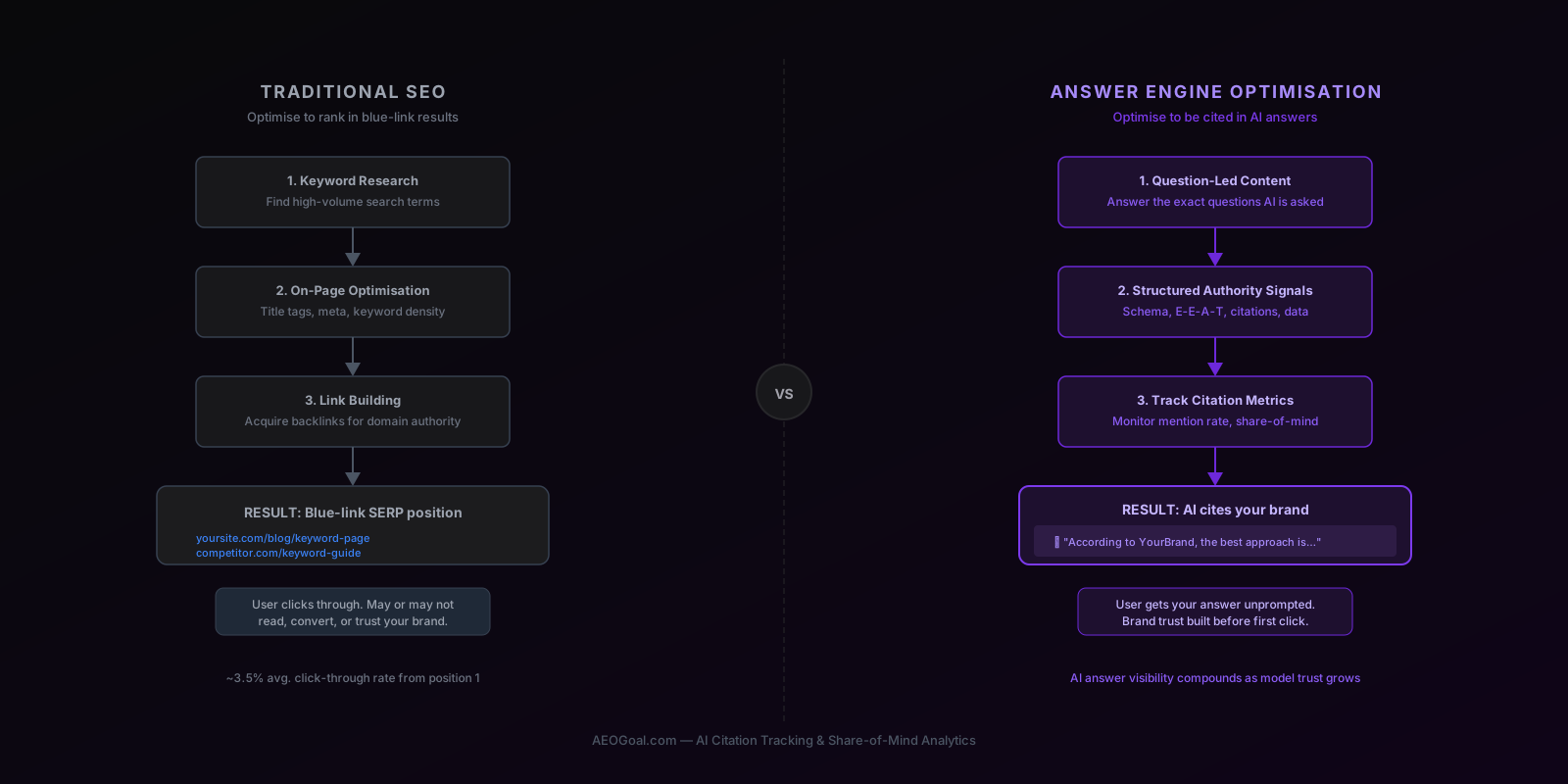
The old small-business instinct was to publish volume - a page for every keyword variation - in the hope that something ranks. AI answers punish that approach specifically. An assistant looking for a source to cite wants one page that answers the question directly and credibly; ten thin pages give it nothing to trust and often compete with each other. For a small team, this is actually good news, because it means the winning strategy is the affordable one: concentrate your limited time into a small number of substantive pages rather than a content treadmill you cannot sustain.
AEO Goal reinforces that discipline by showing which questions actually matter and whether your existing pages are strong enough to be cited. Instead of guessing which of twenty topics to write next, you see the handful where an assistant recommends a competitor and you are absent - and you invest there, where the return is real.
This also changes how a small business should think about AI answers versus rankings. Chasing rankings can feel like an arms race against bigger budgets; the AI-answer surface is newer, less crowded, and often winnable with a single strong page on a question competitors have not bothered to answer well. For an owner deciding where a limited content budget goes, that is a genuinely useful signal - it points at the openings where a small, focused effort can still land the recommendation, rather than the saturated terms where it cannot.
How AEO Goal helps a small team
AEO Goal is built to keep a small team focused. It tracks the handful of keywords that matter, audits the site and returns a prioritized list rather than an overwhelming one, and measures whether AI engines mention the business for its key local questions. Each finding ties to a specific fix, so a busy owner can work top-down and stop when the return drops off.
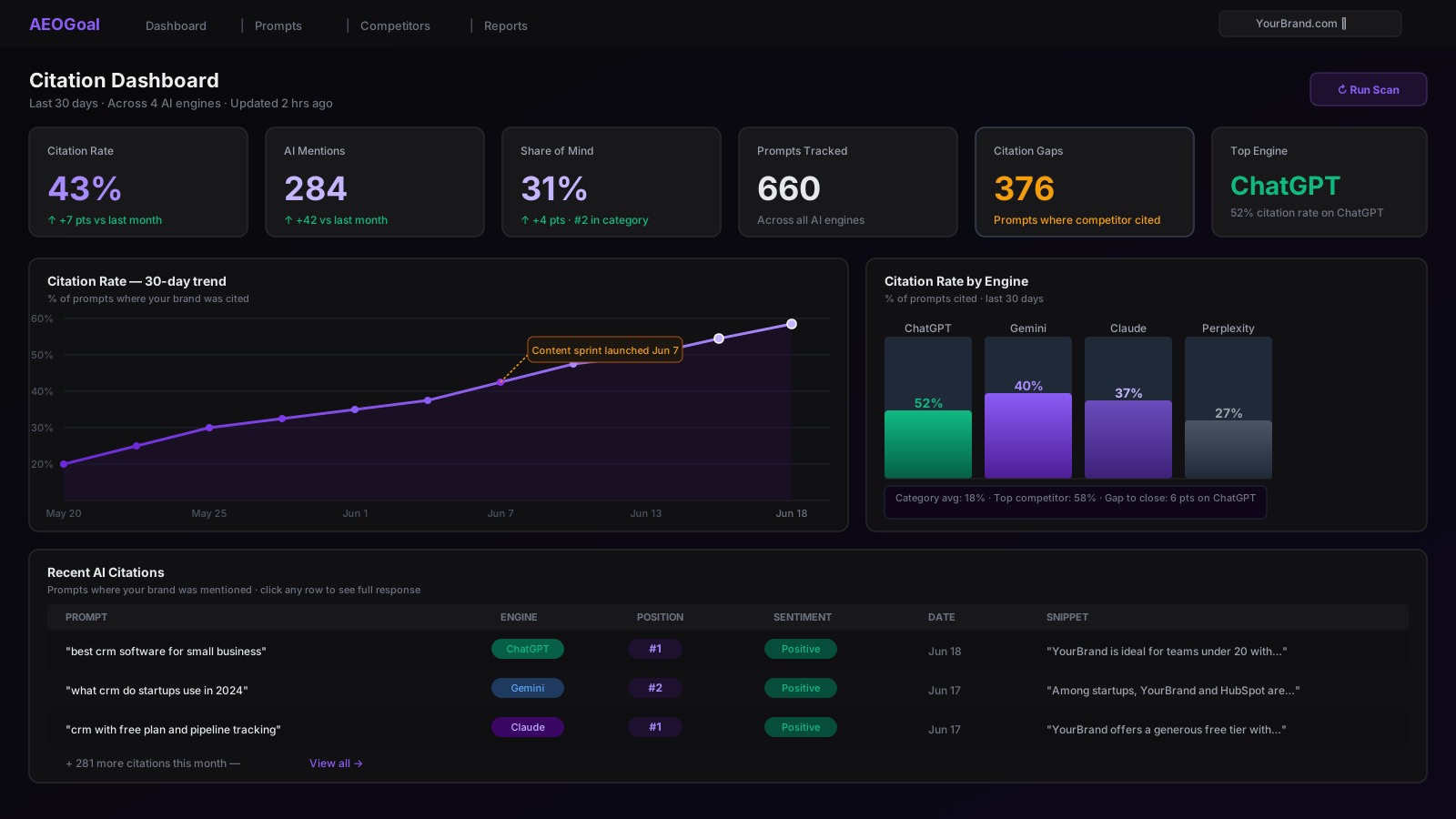
The honest framing counts most for a small budget: no tool can guarantee a ranking or an AI recommendation, because those are decided by search engines and models. What AEO Goal can do is show whether the trend is moving in the right direction, so the owner spends money on what works and stops what does not. And because it starts with a free scan, a small business can see its real gaps before committing any budget at all.
That free starting point is more important than it sounds for a cautious owner. SEO has a long history of vague retainers with unclear returns, and small businesses have been burned by it. Being able to run a scan, see concretely where you stand in both search and AI answers, and get a prioritized list before spending a cent flips that dynamic: you make an informed decision about whether the return justifies the effort, rather than signing up on faith. Honesty about what is and is not worth doing is, in the long run, what earns a small business’s trust.
A worked example
Suppose the owner of a local HVAC company is spending on ads but has never looked at AI answers. A free scan shows that when people ask an assistant “who is a reliable HVAC company in [town],” a competitor is named and they are not, because the competitor has a clear, reviewed profile and a real page on emergency repair while the owner has a single generic homepage. The prioritized fix is small and concrete: strengthen the profile, publish one substantive emergency-repair page, and re-check. That is a weekend of work aimed at a specific, revenue-driving gap - exactly the kind of leverage a small business needs.
What you can finally answer
None of this is useful as a vanity dashboard; the point is to answer the handful of questions a small-business owner actually loses sleep over, in plain, decision-ready terms:
- For the searches that actually drive our revenue, do we show up or does a competitor?
- Do assistants recommend us for common local questions in our area?
- What are the two or three fixes that will win us the most searches and AI recommendations right now?
- Is our SEO spending actually working, or should we redirect it?
Who it is for
- Owner-operators who need SEO to pay for itself and cannot afford a long, unfocused program.
- Small local and service businesses competing against a handful of nearby rivals.
- One-person marketing teams who need a prioritized list, not an overwhelming audit.
Start with local SEO, the fastest win for most small businesses. If you are a specific type of practice, see law firm SEO, and use AEO versus traditional SEO to understand the AI answer surface - or run a free AI visibility scan to see your gaps before spending a cent.