Definition
An AI citation is a source reference that an AI answer engine displays or relies on when it generates an answer, linking a claim in the generated text back to a specific web page or document. When Perplexity numbers its sources, when ChatGPT links a page while browsing, or when Google AI Overviews attributes a passage, each attached URL is an AI citation.
How Engines Select Sources To Cite
Answer engines do not cite from a fixed ranking. When a prompt triggers retrieval, the engine issues queries against an index, fetches candidate pages, extracts passages, and evaluates them for relevance to the specific question. The model then synthesizes an answer and attaches sources to the claims it kept. Pages tend to win the citation slot when they are crawlable by the relevant AI user agents, return stable server-rendered HTML, answer the question directly near the top, name entities consistently, and contain evidence the model cannot get from general web consensus: original data, a documented method, a concrete comparison. Login-gated, JavaScript-only, or internally contradictory pages are hard to retrieve or hard to attribute, and quietly drop out of contention.
Because selection happens per prompt and per engine, citation behavior differs across systems: the same question can cite your methodology page on Perplexity, a review site on ChatGPT, and nothing at all on Gemini.
Citation vs Mention
A citation is not the same as an AI mention. A mention names a brand inside the answer text; a citation attaches a source URL to a claim. A brand can be mentioned without being cited, cited via a page that never names it in the prose, or both at once. The distinction is important because the fixes differ: low mentions point to an entity and coverage problem (engines do not associate the brand with the category), while low citations point to a source problem (engines do not treat the brand’s pages as evidence). Tracking them separately is what makes AI visibility reporting actionable.
A Worked Example
A hypothetical example: a security vendor tracks 40 prompts across four engines, 160 answers per run. Owned pages are cited in 14 answers, a citation rate of about 9 percent, and 11 of those 14 citations go to a single technical guide. Meanwhile “best X for Y” prompts overwhelmingly cite two review roundups where the vendor is listed but weakly described. The data yields three concrete moves: replicate what the winning guide does (direct answer up top, original data) on the commercial pages that never get cited, improve the vendor’s entry in the two roundups engines already trust, and investigate why one engine cites nothing, which usually traces to a blocked crawler or rendering issue.
How Citation Tracking Works In Practice
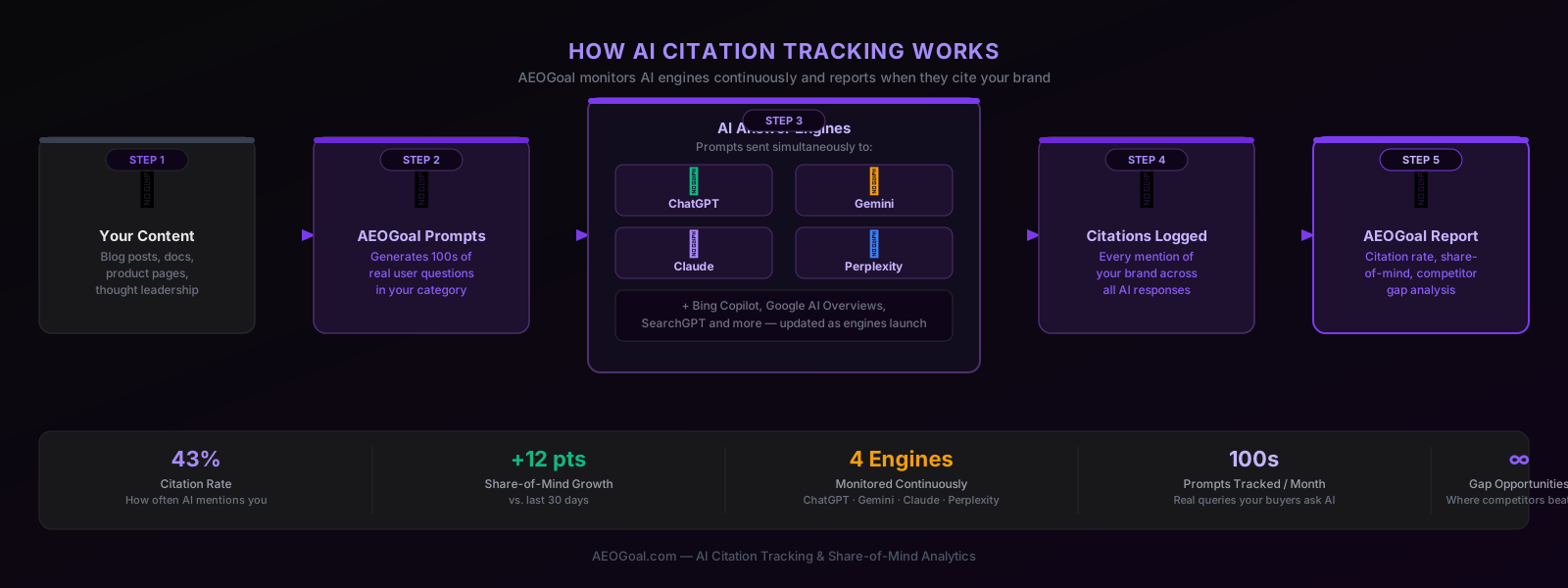
Citation tracking runs a stable prompt set against each engine on a cadence, parses every generated answer, and records the cited source URLs: which are owned, which are third-party, which belong to competitors, and which claims they were attached to. The headline metric is citation rate (answers citing an owned URL divided by answers tested), reported per engine and per prompt group, alongside the list of winning URLs. Trends matter more than snapshots, because a single response is one sample from a variable process. The full method is documented in the AI citation tracking methodology; in AEO Goal, AI citation tracking automates the runs, maps each uncited prompt to the reason and the fix, and re-checks the prompt after the fix ships.
How To Improve Citation Coverage
Make candidate pages crawlable by AI user agents, put the direct answer near the top, structure the page with descriptive headings, and expose visible proof: definitions, methodology, first-party data, specific comparisons. Keep structured data accurate and matched to visible content; it clarifies attribution but does not substitute for evidence. Consolidate thin variants into one strong canonical page instead of one page per phrasing, then re-test the prompts that matter to confirm the right URL gets selected.
Where It Fits In An AEO Program
Citations are the trust signal of answer engine optimization: mentions show engines know the brand, citations show they treat its pages as evidence. Aggregated against competitors, citation and mention data roll up into Share of Model, and the shift they represent from rank-based measurement is covered in AEO versus traditional SEO.
Related Terms
Related terms include AI mention, AI visibility, Share of Model, cited source URLs, and answer engine optimization.