B2B SEO services in the AI search era
B2B SEO services are the strategy, content, and technical work that help a business-to-business company get found by the right buyers through search - and increasingly through AI-generated answers. B2B SEO differs from consumer SEO because the audience is small and specialized, the sales cycle is long and committee-driven, and a single qualified lead can be worth far more than high traffic. The work is judged on pipeline influence, not pageviews.
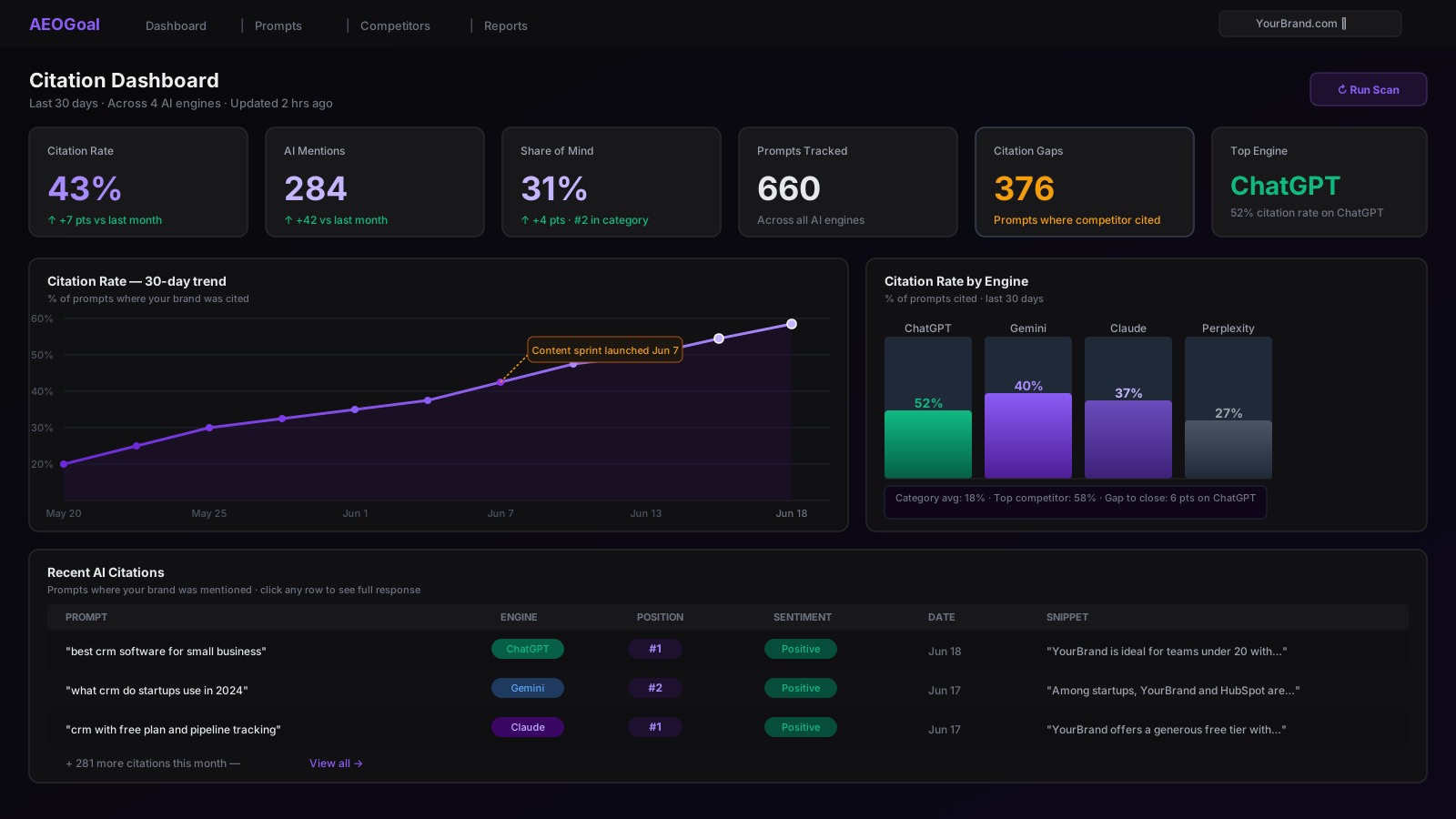
What has changed is the surface. B2B buyers now research vendors by asking AI assistants like ChatGPT and reading Google AI Overviews before they ever fill out a form. So modern B2B SEO services have to cover both classic organic search and answer engine optimization - the practice of being surfaced and cited inside AI answers. A service that only tracks keyword rankings is now measuring half the funnel. AEO Goal is built to measure and act on that other half: it is an AEO agent, so it does not just report whether AI answers name you, it ships the fix for each gap and re-checks whether it moved.
Why B2B SEO is different from B2C SEO
The core difference is intent and economics. B2C SEO usually optimizes for volume - many low-value transactions - while B2B SEO optimizes for a narrow set of high-value, high-consideration purchases. That reshapes the keyword strategy toward problem-aware, solution-aware, and comparison queries, and it puts a premium on content that earns trust with technical and economic buyers rather than content that simply attracts clicks.
It also changes how you weigh AI visibility. In a long B2B sales cycle, an AI assistant that names three vendors for a category question is effectively building the buyer’s shortlist. Being on or off that list has outsized impact relative to the click volume involved - a single high-intent comparison prompt can shape a six- or seven-figure deal. For a structured view of how optimizing for AI answers compares with classic rankings, see AEO versus traditional SEO.
This is why traffic is a misleading north star for B2B. A page that draws thousands of top-of-funnel visitors can matter far less than a single comparison answer that reaches a handful of in-market buyers at the moment they are building a shortlist. B2B SEO services earn their keep by winning the low-volume, high-intent surfaces - and in the AI era, a growing share of those surfaces are synthesized answers rather than ranked pages. Measuring them is no longer optional if the goal is pipeline rather than pageviews.
Why the buying committee makes AI answers matter more in B2B
B2B purchases are rarely one person’s decision. A champion, an economic buyer, a technical evaluator, and procurement each research differently, and each increasingly opens an AI assistant to do it. The champion asks for the category leaders; the technical buyer asks how the product handles a specific requirement; procurement asks for alternatives to an incumbent. If the brand is missing from any of those answers, it is quietly dropped from that stakeholder’s view before a sales conversation ever begins.
That distributed research is exactly why measuring AI answers per prompt is so important in B2B. It is not enough to know you have “decent AI visibility”; you need to know whether you show up for the specific questions each member of the committee asks. AEO Goal maps those buyer-intent prompts and shows where you are present and where you are absent, so a B2B program can defend the exact answers that influence the deal.
It also gives the marketing team a language executives accept. “We rank third for a mid-funnel keyword” rarely survives a pipeline review; “we are named in the AI answer for the two comparison questions our enterprise buyers ask, and we are absent from the third” connects directly to revenue risk. Framing AI visibility per buyer question, per committee role, is what turns an SEO program from a cost center defending its budget into a demand function defending pipeline - a distinction that is more important in B2B than anywhere else.
What B2B SEO services should include today
A complete B2B program covers four areas:
- Technical SEO. The site is crawlable, fast, and machine-readable, so both search and AI systems can reach it.
- Content and topical authority. The depth that buyers and AI systems both reward, built around the committee’s real questions.
- Entity and brand clarity. Unambiguous signals about what the company does and where it fits in its category.
- AI answer measurement. Tracking whether the brand is mentioned and cited across AI surfaces for the questions buyers actually ask.
The fourth area is the newest and most often missing. Without it, a team can do excellent traditional SEO and still be invisible in the AI answers that increasingly precede a click. Connecting content work to AI visibility tracking closes that gap by showing which buyer questions the brand wins or loses in AI answers, and AI citation tracking records which exact URLs the models pulled. Teams comparing tools for this layer can review the AI SEO tool landscape.
How AEO Goal supports B2B SEO programs
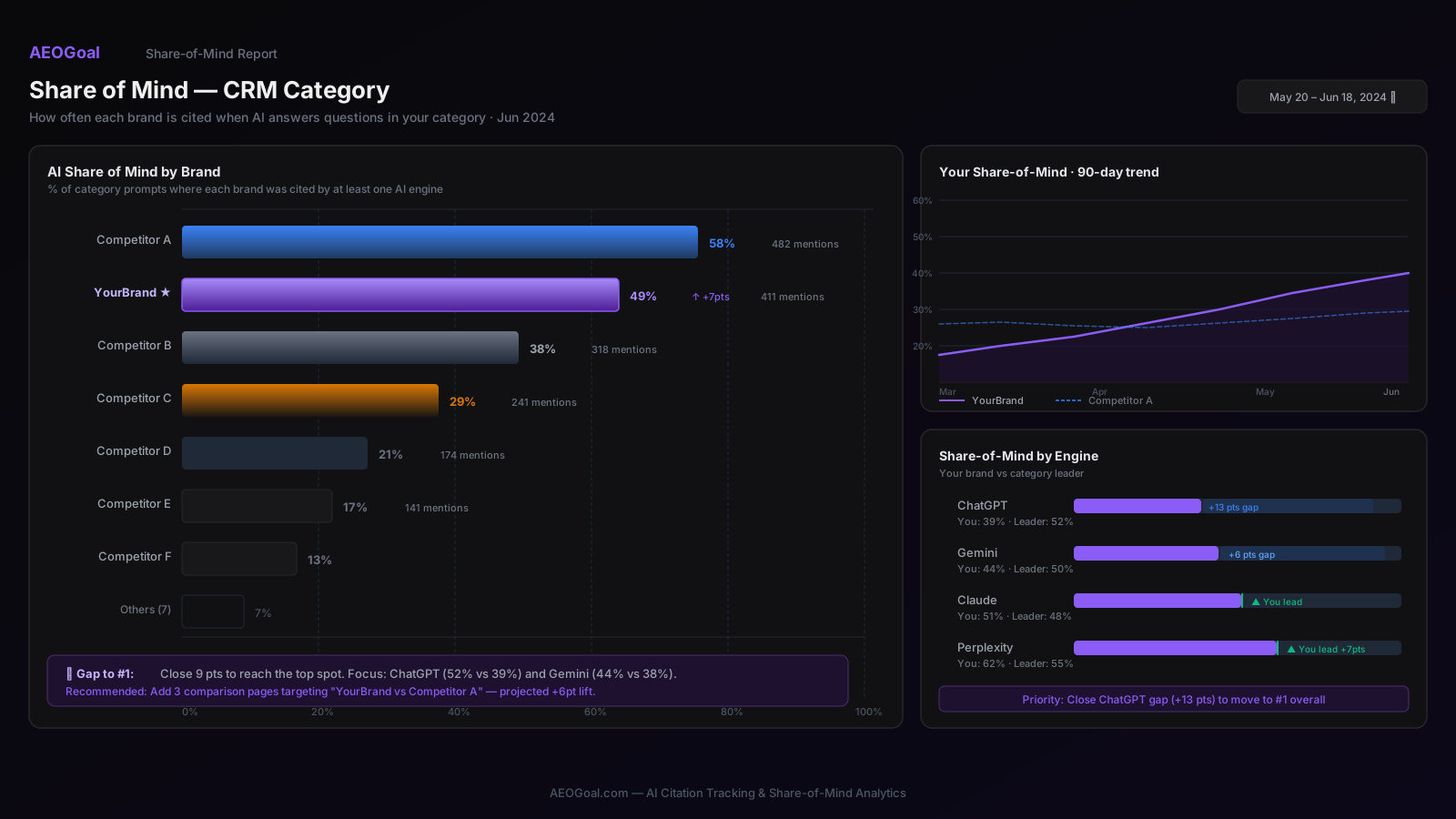
AEO Goal is a measurement and optimization layer rather than a done-for-you agency service. It is built to run both sides of a B2B SEO program: it tracks keyword rankings, backlinks, and technical health, monitors a defined set of buyer-intent prompts across AI systems, records mentions and AI citations, captures which competitors appear, and turns gaps into answer-first content briefs. That gives an in-house team or an agency the data to prioritize work and report results to stakeholders - and because each gap ships with a fix, the program moves from insight to action without a translation step.
A clear honesty note: AEO Goal does not guarantee rankings or AI citations, and it is not a substitute for the strategic and creative work a strong B2B program requires. AI platforms control their own answers, and that is outside any tool’s reach. What the platform offers is reliable measurement of AI visibility and a structured loop to verify whether changes moved the metrics that matter.
A workflow for a modern B2B SEO engagement
Begin by mapping the buying committee and the questions each role asks across the funnel - from problem-aware research to vendor comparison. Translate those into a prompt set and baseline both classic rankings and AI answer presence: who is mentioned, who is cited, and how the brand is framed.
From there, prioritize fixes by pipeline impact rather than raw volume: comparison and high-intent questions usually outrank top-of-funnel terms for a B2B company. Address technical prerequisites, strengthen entity clarity, and publish answer-first content for the questions where the brand is absent. Then re-run on a cadence and report movement to stakeholders.
For example: a B2B team might find that for “best [category] tools for enterprise,” an AI assistant names two competitors and omits them entirely, trace it to a thin comparison page, and rebuild that page around a direct, well-structured answer with real proof. The work targets the exact prompt that shapes the shortlist. When it is time to weigh ongoing investment, the pricing options lay out how the measurement layer fits a program’s budget.
What you can finally answer
- For each role on the buying committee, do AI assistants surface our brand or a competitor?
- Which high-intent comparison prompts are we absent from, and which page should fix that?
- Are we improving on the questions that actually influence pipeline, not just traffic?
- Did last quarter’s content and technical work move our AI-answer presence?
Who it is for
- B2B marketing and demand-gen leaders who need AI-answer presence measured against pipeline-influencing questions.
- In-house B2B SEO teams extending a ranking-based program to the AI surface.
- Agencies serving B2B clients who need per-account measurement and stakeholder-ready reporting.
To see where you stand on your category’s buyer prompts, run a free AI visibility scan from the homepage.