AI visibility tracking that turns findings into fixes
AI visibility tracking is how you see whether AI answer engines mention your brand, cite your pages, recommend a competitor, or leave you out of the answer entirely. It is the measurement layer of modern AI SEO - and with buyers increasingly starting research inside ChatGPT, Claude, Gemini, and Perplexity, it is the difference between knowing your position in the market and guessing at it.
AEO Goal’s AI visibility tracking does what most tools do - and then keeps going. It does not just report a citation rate; it explains why you are cited or skipped and ships the specific fix. That is the difference between a monitoring chart and an operating system for your AI visibility.
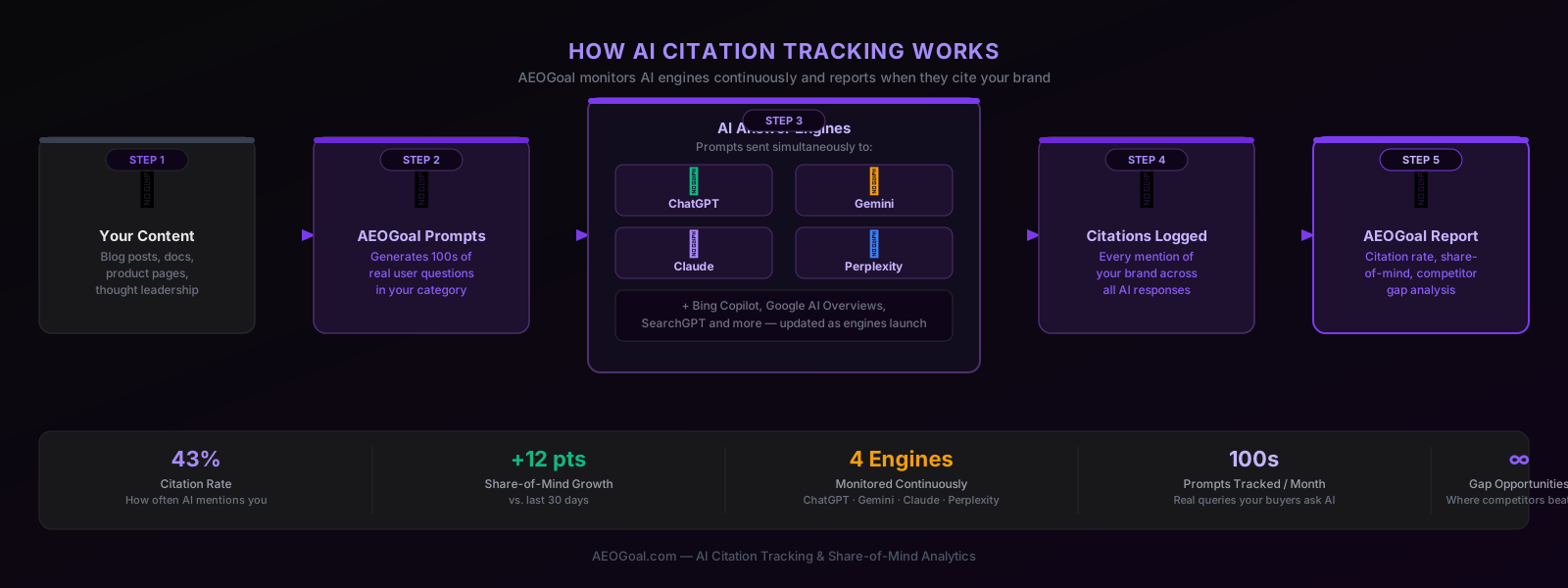
What AI visibility tracking measures
AEO Goal runs your priority prompts against the major answer engines on a schedule and parses each generated answer for the signals that decide whether a buyer meets your brand:
- Mentions and citations. Whether the brand is named, and whether one of your pages is the cited source - two different signals that most teams conflate.
- Position and sentiment. Where in the answer you appear and how you are framed, not just a yes/no.
- Share of Model. The percentage of category answers that mention you versus each named competitor, per engine and as a trend.
- Competitor overlap. The exact prompts where a competitor is recommended and you are absent - your clearest content opportunities.
- Per-engine breakdown. ChatGPT, Claude, Gemini, Perplexity, and Google AI Overviews behave differently; AEO Goal reports each so you can prioritize the engines your market actually uses.
Because every data point is captured per prompt and per engine, you can slice visibility by product line, buyer question, competitor, or engine - and hand a stakeholder a report they can read without a glossary. That granularity counts: “our citation rate is 40%” is a vanity number until you can see it is 70% on the prompts that drive pipeline and 10% on the ones a competitor owns. AI visibility tracking exists to turn a single headline metric into the specific, prioritized picture a team can act on.
Why a snapshot is not enough
AI answers shift as models update, retrieval indexes refresh, and prompts vary. A single check is a snapshot; it cannot tell you whether you are trending up or down, or whether last month’s work helped. AI visibility tracking turns that snapshot into a time series: the same prompt set, on a cadence, across engines, so signal separates from noise and progress becomes provable.
It also protects you from false conclusions. One-off checks are noisy - an engine can name you today and omit you tomorrow for reasons that have nothing to do with your content. Tracking the same prompts repeatedly smooths that noise into a trend, so you act on a real decline or a real gain instead of reacting to a single lucky or unlucky generation. That reliability is what makes AI visibility a metric leadership can plan around.
From tracking to action - the agent layer
This is where AEO Goal separates from tracking-only software. Measurement is only useful if it changes what you do next, so every finding is wired to a fix:
- It explains the cause. Missing entity signals, weak answer structure, a blocked AI crawler, thin proof, or no citable source page.
- It hands you the fix. A concrete next action - an answer-first brief, a schema recommendation, an llms.txt or robots.txt fix, or a page to publish - prioritized by impact.
- It re-checks. On the next scan, it shows whether the fix moved citations, mentions, or share of model.
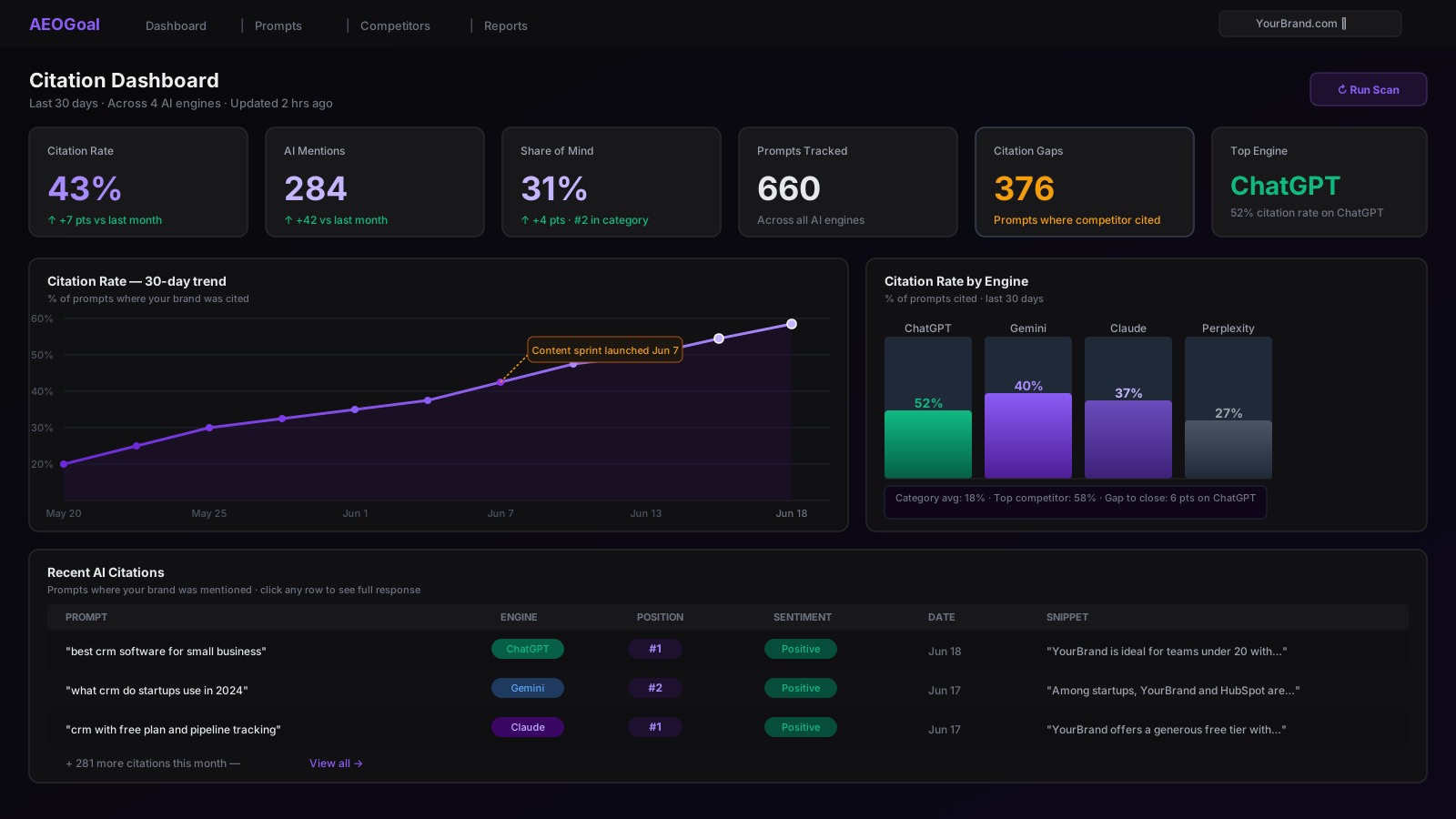
For example, if tracking shows your share of model on ChatGPT slipping for a high-intent prompt over two consecutive runs while a competitor climbs, AEO Goal surfaces the competitor pages being cited, diagnoses why yours is not - a thin answer, a missing schema type, a page an AI crawler cannot reach - and generates the brief to fix it, then confirms on the next run whether your share recovered. That is the loop most tools leave unfinished.
You are not buying another chart to screenshot; you are buying the loop that moves the chart.
What you can finally answer
- Are AI answer engines recommending us, a competitor, or no one for our highest-intent prompts?
- Which of our pages are actually cited, and which should be but are not?
- Where are we losing share of model, on which engine, and to whom?
- Did last month’s content and technical fixes actually improve our AI visibility?
How AEO Goal handles AI visibility tracking
Define the brand, the real competitors, and a prompt set that mirrors how buyers research. AEO Goal baselines mentions, citations, competitor overlap, and framing across each engine, then re-runs on a schedule so the data becomes a trend rather than a one-time reading. When tracking surfaces a gap or a drop, it diagnoses the likely cause and routes it to the right fix - a missing page, a crawlability problem, weak entity clarity, or a competitor pulling ahead - and confirms on the next run whether the change held. You control the inputs that make the data trustworthy: the prompts that represent real buyer questions, the competitors you actually compete with, and the cadence you run on. AEO Goal handles the execution - querying each engine, parsing every answer for mentions and cited source URLs, scoring position and sentiment, and rolling it all into per-engine trends and a single share-of-mind view. Because the same prompt set runs each cycle, the numbers stay comparable over time, which is exactly what makes them safe to report upward and to act on with confidence rather than second-guess. The measurement approach and its limits are documented in the AI visibility tracking methodology.
AI visibility tracking plus traditional SEO
AI visibility does not live in isolation. AEO Goal pairs it with the classic SEO stack - keyword research, daily rank tracking, and backlink analysis with a DR-weighted Domain Score and our AI-citation AEO Rank - so you can see how your AI-answer presence and your Google rankings move together, on one prioritized backlog. This pairing is important because the fixes overlap: a page rebuilt to be citable in an AI answer is usually the same page that earns rankings and backlinks, so a single content investment pays off on both surfaces at once. Seeing AI visibility and classic search side by side stops the two from competing for budget and lets you sequence the work that moves both together. See the full platform on AI SEO software, and the citation-specific view on AI citation tracking.
A workflow for tracking and acting
- Baseline mentions, citations, competitor overlap, and framing across each AI engine.
- Schedule recurring runs so the data becomes a monitored trend with alerts.
- Diagnose each gap or drop to a root cause - content, technical, or entity.
- Fix and re-measure to confirm whether the change improved presence.
Who AI visibility tracking is for
AI visibility tracking earns its place for any team whose buyers now research through AI assistants before they ever reach a website - which, in most considered-purchase categories, is already most of them.
- Marketing and SEO leaders get a defensible answer to “are we present in AI answers, and are we gaining or losing?” - a board-ready metric, not a vibe.
- Content teams get a prioritized list of the exact prompts and pages to work on, instead of guessing which topics matter.
- Competitive and product-marketing teams get an early-warning system when a competitor starts winning the answers that shape your category.
- Agencies get a per-client program they can baseline, improve, and report on a schedule.
If a wrong or missing AI answer would cost you a deal, AI visibility tracking is how you find out before the buyer does - and, in AEO Goal, how you fix it.
An honest boundary
AEO Goal cannot make an AI system mention or cite a brand - those platforms control their own answers entirely, and no tool changes that. What AI visibility tracking provides is reliable measurement of the current state and a clear, prioritized path to improve the inputs you control. If the underlying concepts are new to your team, start with what is AEO; when you are ready to see your own numbers, run a free AI visibility scan from the homepage.