AI citation tracking that turns citations into fixes
AI citation tracking shows when AI-generated answers cite your brand, your website, your content, or a competitor - and, crucially, which page the engine actually used as its source. It is the evidence layer of answer engine optimization: not just whether you were mentioned, but which URL an answer engine drew from to build its answer.
Most tools in this category stop there - they show you a citation rate and hand the hard part back to you. AEO Goal is built as an AEO agent, not a dashboard. It tracks every citation across ChatGPT, Claude, Gemini, and Perplexity, and then does the part trackers skip: it explains why a page was or was not cited, ships a concrete fix, and re-checks on the next run whether the citation was earned. That is the difference between watching your citations and moving them.
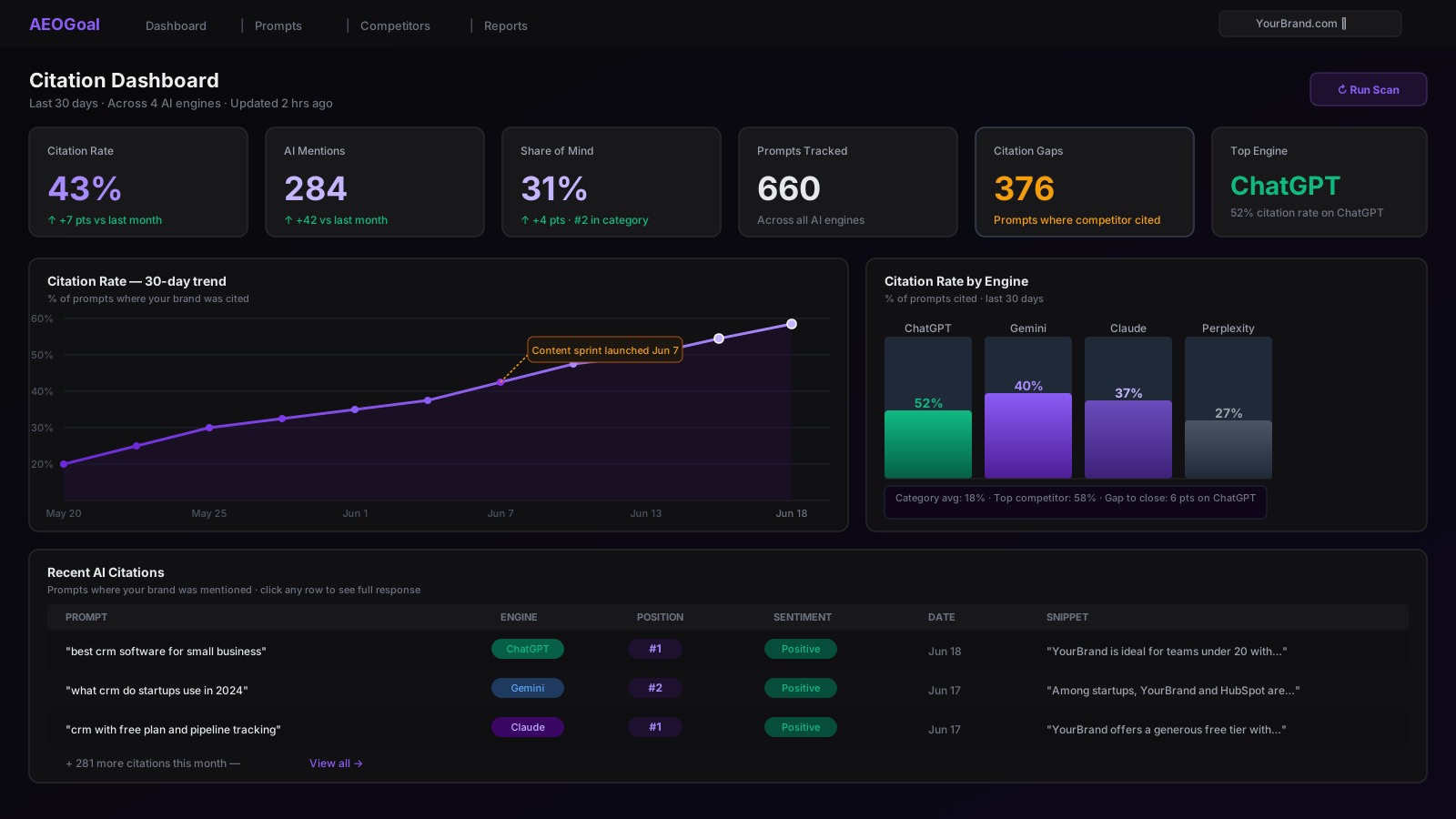
Mentioned vs cited - the distinction most tools blur
An AI citation is a source reference, link, brand mention, or evidence pattern an answer engine uses to support what it generates. The subtlety that trips up most tracking tools is that a mention and a citation are not the same thing:
- A brand can be cited as evidence without being named - the engine pulls a fact from your page but does not say your name.
- A brand can be named without being cited - the engine mentions you but builds the answer from a third-party or competitor page.
Some systems, such as Perplexity and Google AI Overviews, expose citations directly. Others, including many ChatGPT answers, reference sources indirectly. Honest citation tracking has to account for both patterns, because conflating them gives you a flattering number that does not reflect whether your own content is doing the work. AEO Goal separates the two, so you know not just that you appeared, but whether your page was the source - the signal that actually compounds.
What AEO Goal tracks
AEO Goal runs your priority prompts against the major answer engines on a schedule and records the evidence signals that decide whether your content is doing the work - not vanity mention counts:
- Cited owned URLs. Which of your pages AI systems actually use as evidence, per engine, over time.
- Third-party and competitor citations. Which external and competitor pages shape the answer and crowd you out.
- Citation gaps. The prompts that discuss your category but omit your brand as a source - your clearest opportunities.
- Source freshness. Whether your cited pages are current enough to keep their placement, so you can defend citations you already hold.
- Citation movement. Whether an edit or a new page changed the evidence an engine uses - the proof that a fix worked.
- Position and sentiment. Where you appear in the answer and how you are framed, not just a yes or no.
Because every data point is captured per prompt and per engine, you can slice citations by product line, buyer question, competitor, or the specific engine your market prefers.
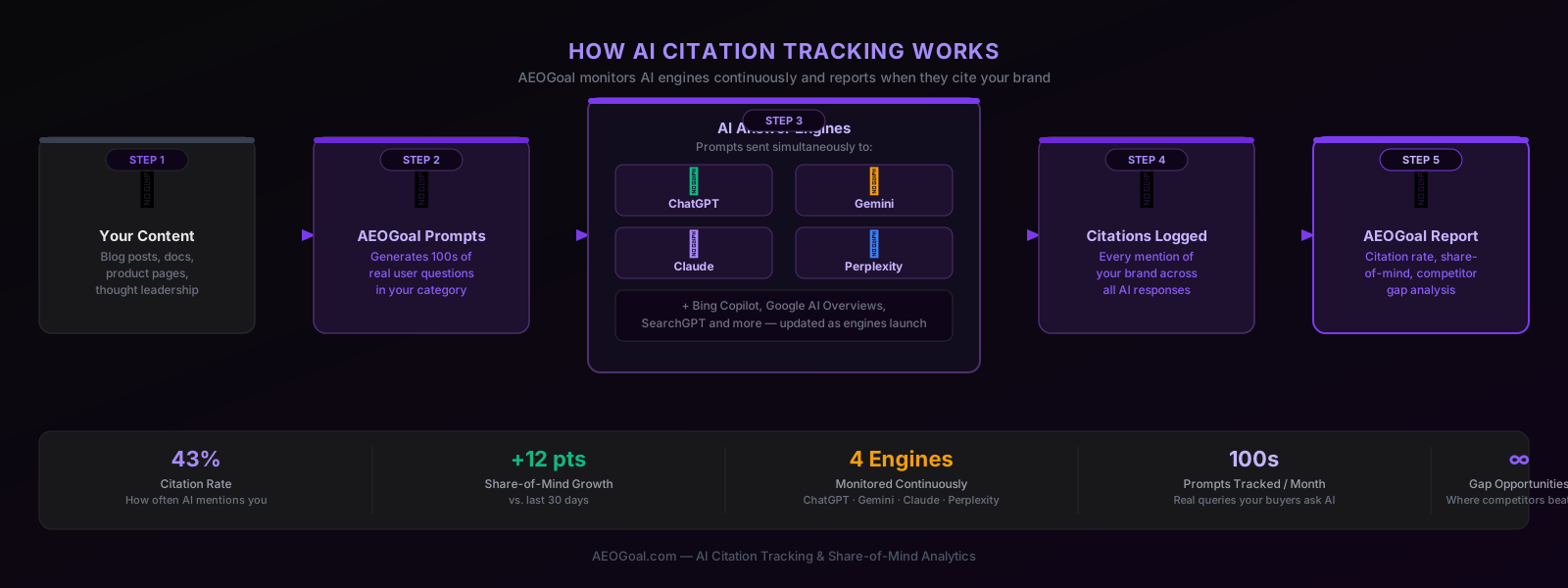
Citation tracking vs visibility tracking
These two are complementary, and reading only one gives a misleading picture. AI visibility tracking asks whether you were mentioned - it measures mentions, share of answer, and sentiment across prompts. Citation tracking goes one level deeper, to the source URL the engine actually drew from.
The gap between them is where the insight lives: a brand can have high visibility but low citation share if engines mention it from third-party sources rather than its own pages. That tells you something specific and actionable - people are talking about you, but your pages are not the ones being trusted as evidence, so the fix is content and authority, not awareness. AEO Goal reports both side by side so you never mistake being talked about for being the source.
From citation gap to published fix - the agent layer
Measurement is only useful if it changes what you publish next. This is where AEO Goal separates from tracking-only software: every citation gap is wired to a concrete fix that a writer, an SEO, or an engineer can execute without translating a chart into a task.
For example: suppose ChatGPT and Perplexity both cite a competitor’s page for “how to evaluate [category] tools” and never draw from you, even though you have a relevant page. AEO Goal surfaces the competitor URL the engines cited, diagnoses why yours was passed over - say, the answer is buried, the key claim has no supporting proof, and the page lacks the schema that reinforces the facts - then generates an answer-first brief to close the specific gap. After you publish, it re-runs the prompt set and confirms whether your updated page earned the citation. Findings become work, and work becomes measurable movement.
Citation tracking is one loop inside AI SEO
Citations do not live in isolation. A page rebuilt to be cited in an AI answer is usually the same page that earns rankings and backlinks, so AEO Goal treats citation tracking as one loop inside the broader AI SEO program - alongside AI visibility tracking, competitor AI visibility, keyword research, rank tracking, and backlink analysis in one workspace. You work a single prioritized backlog and one report, instead of stitching a citation tracker to an SEO suite.
That single-backlog view is more important than it sounds. When a citation gap sits next to the keyword, ranking, and backlink context for the same page, you can tell whether you are being skipped because the content is weak, because the domain lacks the authority engines trust, or because an AI crawler simply cannot reach the page - three very different problems with three very different fixes that a citation-only tool would leave you guessing between. To compare tooling approaches, see our overview of the best AI SEO tools.
An implementation workflow
AEO Goal runs citation tracking as a repeatable loop, not a one-off check:
- Define the market, brand, competitors, and priority prompts.
- Baseline cited URLs, uncited mentions, competitor citations, and source freshness across each engine.
- Diagnose each missing or weak citation to a root cause - content, structured data, entity proof, or crawlability.
- Fix with an answer-first brief that closes the exact citation gap.
- Re-run and prove whether citation coverage improved.
The engines covered, prompt cadence, and matching rules are documented in our AI citation tracking methodology.
How teams increase AI citations
Citation growth starts with pages that answer the query directly and provide evidence AI systems can retrieve and trust. In practice that means concise answers near the top, clear headings, schema that matches the visible content, fresh source pages, and internal links from supporting pages to your strongest answers. It also means making sure AI crawlers can actually reach those pages - a page an engine cannot fetch is a page it cannot cite. AEO Goal is honest here: do not add review schema, ratings, or claims unless they are real and approved, because fabricated proof is both a trust risk and a fragile foundation for a citation.
Who AI citation tracking is for
Citation tracking earns its place for any team that needs to know not just whether they are visible in AI answers, but whether their own content is the reason.
- SEO and content teams get a page-level map of which assets are cited and which should be, so they know exactly what to strengthen.
- Marketing leaders get an evidence-based view of whether the brand’s own content is trusted by AI engines, not just mentioned.
- Competitive teams get an early read on which competitor pages are winning the evidence placements that shape your category.
- Agencies get a per-client program that proves content work with citations earned, not pages shipped.
If your brand gets mentioned in AI answers but you are not sure your pages are doing the work, citation tracking is how you find out - and how you fix it.
An honest boundary
No tool can force an engine to cite a brand - ChatGPT, Perplexity, and Google AI Overviews own their answers and revise them constantly. What citation tracking controls is the quality of your evidence: whether your pages answer the question directly, prove their claims, carry accurate structured data, and can be reached by AI crawlers. AEO Goal is built to measure the current state reliably, tie every citation gap to a concrete fix, and prove whether the work moved your answer-engine presence.
New to the category? Start with what is AEO. Ready to see your own citations? Run a free AI visibility scan to find which of your pages get cited, which get skipped, and what to fix first.