What Is Generative Engine Optimization?
Generative engine optimization (GEO) is the practice of structuring content so generative AI systems can retrieve, synthesize, and attribute it when generating answers. The term describes optimization specifically for large language model-based products - ChatGPT, Perplexity, Google AI Overviews, Claude, Bing Copilot - that produce original synthesized responses rather than ranked lists of links.
GEO is closely related to Answer Engine Optimization (AEO). Many practitioners use the terms interchangeably, and the technical requirements are nearly identical. Where a distinction exists, GEO typically refers specifically to LLM-powered generative systems, while AEO covers the broader category of answer engines including voice search and featured snippets.
GEO vs SEO vs AEO
| Dimension | Traditional SEO | Answer Engine Optimization (AEO) | Generative Engine Optimization (GEO) |
|---|---|---|---|
| Primary surface | Search result pages | AI answers, voice search, featured snippets | LLM-generated answers (ChatGPT, Perplexity, etc.) |
| Goal | Earn ranked positions and clicks | Appear in direct-answer surfaces | Be retrieved and cited in generated responses |
| Key measurement | Rankings, impressions, click-through rate | Answer appearances, citation count | Citation rate, share of model, source URL attribution |
| Technical requirements | Crawlability, indexability, page speed | Crawlability + entity clarity + answer structure | All AEO requirements + LLM crawler allowance |
| Schema focus | Sitelinks, breadcrumbs, article metadata | FAQPage, HowTo, DefinedTerm | FAQPage, Organization, SoftwareApplication, Article |
GEO and AEO share fundamentals. If you do AEO well, you are also doing GEO well. The difference is primarily one of framing and measurement surface. For a side-by-side of AEO vs GEO vs SEO - including how they differ from traditional search optimization and how to run them together - see our comparison.
Why GEO Is Important
Generative AI systems are changing how people find information and make decisions:
- Buyers ask ChatGPT or Perplexity for vendor shortlists before visiting a website
- Google AI Overviews appear above organic results for many informational queries
- Answers synthesized by LLMs cite specific sources - and omit others
- Brands not appearing in AI answers lose consideration even when they are the right answer
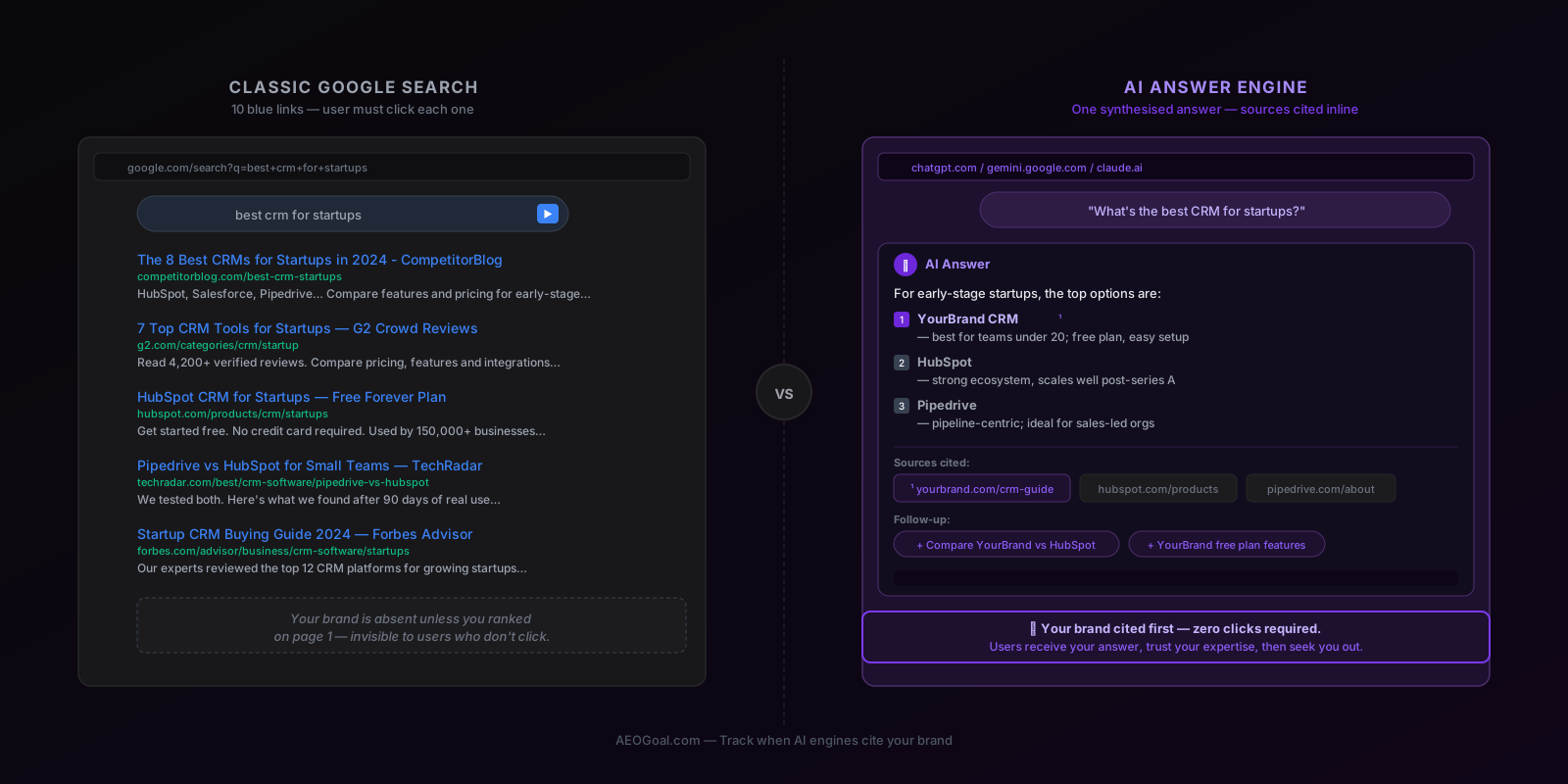
GEO is about ensuring that when a generative system constructs an answer in your category, your brand is included, accurately described, and cited from your canonical pages rather than third-party summaries.
Core GEO Technical Requirements
1. LLM Crawler Access
Allow the crawlers that power generative AI products. Each major LLM-powered search product has its own crawler:
| System | Crawler name |
|---|---|
| ChatGPT | GPTBot, OAI-SearchBot, ChatGPT-User |
| Claude / Anthropic | ClaudeBot, Claude-Web, Claude-User |
| Perplexity | PerplexityBot |
| Google (Gemini/AI Overviews) | Google-Extended, Googlebot |
| Bing Copilot | Bingbot |
Your robots.txt must allow these crawlers. Blocking them prevents the associated AI product from citing your live content.
2. Entity Clarity and Consistency
Generative AI systems reason over entities - brands, products, people, concepts. For a brand to be retrieved consistently, the content across your site must answer: what the entity is, what category it belongs to, who it serves, and what makes it distinct.
Use Organization JSON-LD schema with a name, URL, logo, description, and sameAs social links. Use SoftwareApplication schema if the product is software. Be consistent in how you describe the brand across the homepage, about page, product pages, and comparison pages.
3. Answer-First Page Structure
LLMs extract answers from pages at retrieval time. A page that states the answer in the first 60 words is easier to cite than one that builds context for multiple paragraphs before reaching the point.
Structure content as:
- H1: The primary question or topic
- First paragraph or answer box: Direct answer in 40-80 words
- H2s: Specific, descriptive section headings (phrased as questions where useful)
- Short paragraphs: One idea per paragraph, under 100 words each
- FAQ section: Discrete Q&A pairs that map to related prompts
4. Accurate Structured Data
JSON-LD schema signals to generative AI systems what type of information a page contains and what claims it supports. Relevant types include:
FAQPage- for question/answer sectionsArticle- for guides, withdatePublishedanddateModifiedOrganization- with logo, contact, and sameAsSoftwareApplicationorProduct- for product pagesDefinedTerm- for glossary entriesBreadcrumbList- for page hierarchy
Schema only helps when it matches visible content. Fake reviews, invented ratings, or schema fields that have no corresponding content on the page should not be added.
5. Source Freshness
LLM systems weight freshness. Keep lastmod dates in your sitemap accurate. Update content when claims, features, or pricing change. Stale pages with outdated claims are deprioritized in retrieval and may be cited less accurately.
6. Internal Linking with Descriptive Anchor Text
Link between related pages using anchor text that names the target topic. Internal links reinforce entity relationships across your site and increase the likelihood that the canonical page for each topic is retrieved for the relevant prompt.
Avoid anchor text like “click here,” “read more,” or “learn more” - these provide no entity signal. Use anchor text like “AI citation tracking” or “answer engine optimization.”
GEO Content Strategy
Prompt Research vs Keyword Research
Traditional SEO starts with keyword research - finding search terms by volume and difficulty. GEO starts with prompt research - identifying the questions buyers are asking AI systems at each stage of their research.
Instead of optimizing for “best AI SEO tools” as a keyword, GEO prompt research identifies questions like:
- “What tools track AI citations?”
- “How do I know if my brand appears in ChatGPT answers?”
- “What is the best platform for AEO monitoring?”
- “Which AI SEO platforms track Perplexity citations?”
Each question maps to a canonical answer page. If no page exists for a prompt that counts, you create one. If a page exists but is not being cited, you audit the entity clarity, answer structure, schema, and crawler access.
Citation-Worthy Page Types
Some page types earn citations more often than others:
- Definition/glossary pages: Answering “what is X” clearly and concisely
- Comparison pages: Factual, structured comparisons with clear criteria
- Methodology pages: Explaining how you measure or build something
- Use case pages: Specific workflows for specific audiences
- FAQ pages: Direct Q&A format that maps to real prompts
For each important topic in your category, you want a canonical page of one of these types that is well-structured, crawlable, and linked from related pages.
Measuring GEO Success
GEO performance is not measured with traditional rank tracking. You need to track:
- Citation rate: How often your brand appears in AI answers for target prompts
- Cited URLs: Which of your pages are referenced as sources
- Competitor citations: Which competitors appear in answers you should be in
- Share of Model: Your brand mention percentage across all answers in your category
- Citation gaps: Prompts where the category is answered but your brand is absent
AI visibility tracking and AI citation tracking software automates this measurement across ChatGPT, Perplexity, Claude, and Google. Manual testing is possible but does not scale to dozens of prompts and multiple engines.
Measurement is also only half the job. AEO Goal treats each citation gap as a work item rather than a data point: it identifies the prompt where a competitor is cited and your brand is not, diagnoses the likely cause - a blocked LLM crawler, weak entity signals, a missing canonical page, or an answer buried too deep on an existing page - and hands you the specific fix, then re-runs the same prompt set after you ship it to verify the citation appeared. The checks behind those diagnoses are documented in the AI citation tracking methodology.
Next Steps
If you are starting GEO work, a reasonable sequence is:
- Audit crawler access - Verify robots.txt, sitemap, and llms.txt
- Run a baseline citation check - Identify where your brand appears and where competitors appear instead
- Fix entity signals - Review Organization and SoftwareApplication schema, consistent brand description, logo
- Rewrite top-priority pages - Add direct answers near the top, restructure headings, add FAQ sections
- Build citation-worthy assets - Glossary entries, comparison pages, methodology pages
- Track and iterate - Re-run the same prompt set after each change and measure whether citations improve
See What Is Answer Engine Optimization for the foundational checklist, or compare AI SEO tools to find platforms that support GEO measurement.