Competitor AI visibility that shows you how to win the answer
Competitor AI visibility tracking shows which competitors AI answer engines mention, cite, compare, and recommend for the prompts that matter to your market. In answer engine optimization terms, this is competitive share of model: not just whether you appear, but how much of the answer goes to each brand - and why.
Most tools stop at the leaderboard - here is who shows up, here is your rank. AEO Goal is built as an AEO agent, not a scoreboard. It shows which competitors win each answer, surfaces the exact pages the engines cite for them, diagnoses why yours were passed over, and ships the specific fix to close the gap - then re-checks whether the answer changed. That is the difference between watching competitors win and taking the answer from them.
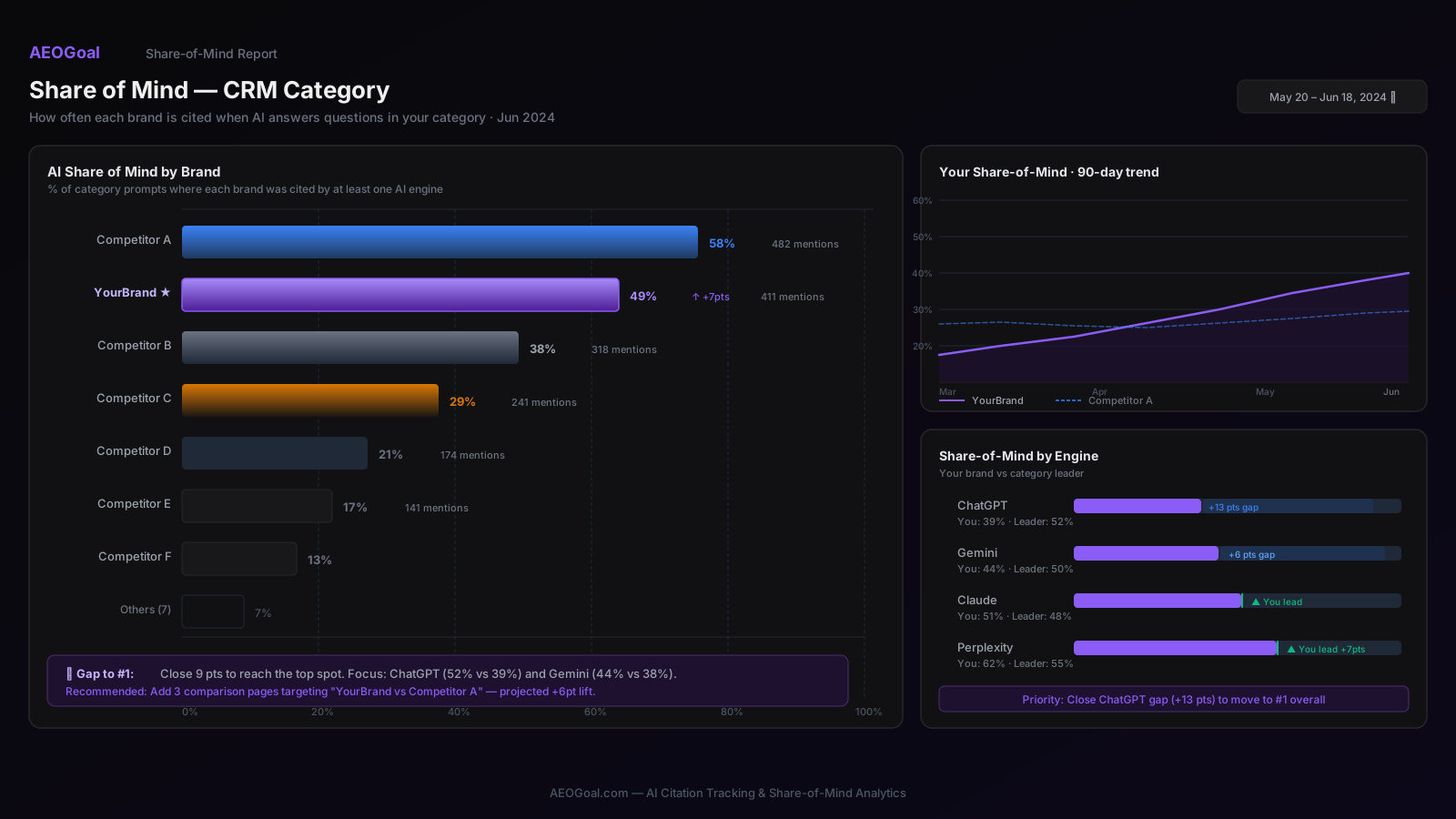
It is not whether you appear - it is who owns the answer
The mistake most competitive tracking makes is treating presence as binary: you were mentioned or you were not. AI answers do not work that way. A single generated answer might name three competitors, recommend one, cite a fourth as its source, and never mention you at all. What counts is share of answer - how much of the response each brand owns, and which brand the engine actually recommends.
That reframes the goal. You are not trying to “be present” in the answer; you are trying to be the brand the answer is built around and the source it trusts. Competitor AI visibility measures that distribution prompt by prompt, so you can see not only that a competitor is winning, but exactly how much of the answer they own and where the opening is.
What AEO Goal tracks about your competitors
AEO Goal runs your priority prompts against the major answer engines on a schedule and quantifies share, not just presence - the signals that explain why a competitor wins a prompt:
- Competitor mention rate. Which competitors show up most often, per engine, over time.
- Share of answer. How much of each generated answer focuses on each brand - the real competitive metric.
- Cited competitor URLs. Which competitor or third-party pages the engines use as evidence, so you know exactly what to beat.
- Missing-owned-page gaps. The prompts where your site lacks a strong answer target and a competitor fills the vacuum.
- Sentiment and framing. Whether answers describe competitors more clearly or favorably than they describe you.
Because every data point is captured per prompt and per engine, you can see where a competitor dominates one engine but not another, or wins one buyer question while you own the next.
This distribution view is what turns competitive data into a plan. A single number - “you are third in share of model” - tells you almost nothing about what to do next. But seeing that one competitor owns most of the answer on your three highest-intent prompts, from a single comparison page cited across two engines, tells you exactly where to focus and precisely what to beat. AEO Goal is built to surface that specific, actionable picture rather than a rank you cannot act on, because a competitive metric that does not point at a fix is just a scoreboard.
What to compare, prompt by prompt
The comparison that changes decisions is not a single score - it is prompt-by-prompt. For each priority prompt, AEO Goal shows which competitors appear, the source URLs an answer engine cites for them, whether your brand is omitted, and which content gap explains the difference. The prompts worth comparing span the whole buyer journey, because each surfaces a different reason a competitor wins:
- Category questions - who the engines treat as a default answer.
- Alternatives and “best” prompts - who makes the recommended shortlist.
- Implementation and how-to prompts - who owns the practical, high-intent answers.
- Pricing research - who the engines cite on cost and value.
- Vendor comparison prompts - how you are framed head-to-head.
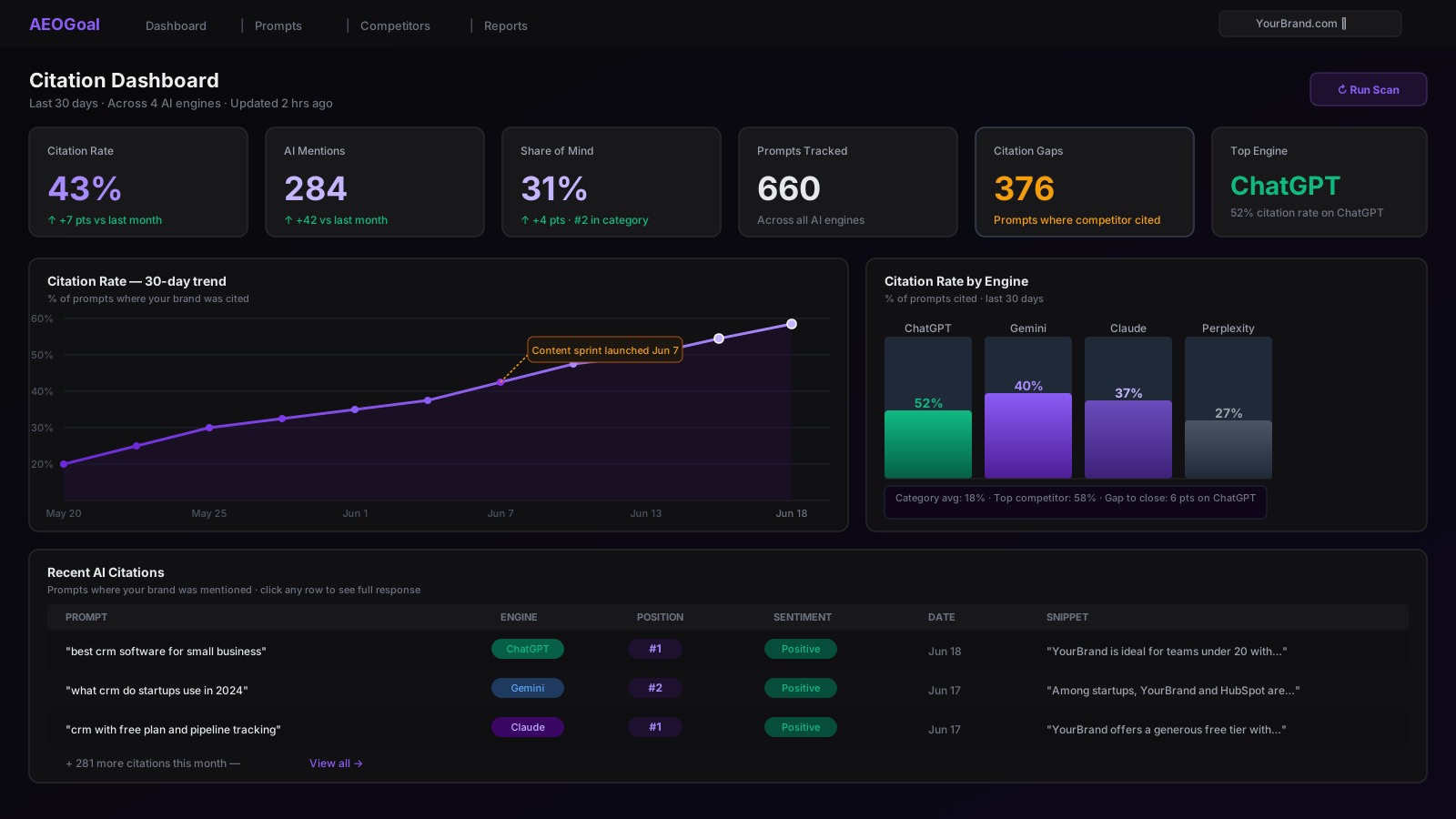
From competitor win to your fix - the agent layer
Knowing a competitor wins a prompt is only useful if you can do something about it. This is where AEO Goal separates from tracking-only software: it closes the gap by fixing the specific reason a competitor wins, not by telling you to “publish more.”
For example: suppose Perplexity and ChatGPT both recommend a competitor for “best [category] for growing teams” and cite their comparison page, while you are absent. AEO Goal starts with that cited competitor URL and diagnoses why it wins - a clearer direct answer, stronger entity proof, better crawl access, or more page depth. Then it builds the owned answer designed to beat it: AEO content generation turns the finding into an answer-first brief, and AI citation tracking confirms whether your new page earns the citation after you publish. You attack the exact weakness, then prove the answer moved.
The advantage of going straight at the cited page is that you are not guessing at how the engine decides. It has already told you what it trusts for that prompt - a specific competitor URL - so your job narrows to publishing something demonstrably better on the same question: a clearer direct answer, stronger and better-sourced proof, and a structure that is easier to extract and cite. That converts a vague “improve our content” into a concrete, testable bet against a known page, and the next scan tells you whether the bet paid off. Over time, that is how a challenger systematically takes answers from an incumbent - one high-intent prompt at a time, each with evidence that the switch happened.
Competitor AI visibility beside traditional SEO competitive analysis
Competitor AI visibility should sit beside classic SEO competitive analysis, not replace it. SEO teams still need keyword and competitor research, backlink context, ranking movement, and content-gap reviews to understand why a competitor is winning - authority, technical access, page depth, or clearer entity proof. AEO Goal keeps both evidence sets in one workspace, so you can tell whether a competitor’s AI-answer dominance traces back to a backlink advantage, a crawlability edge, or simply a better-structured page. The AEO versus traditional SEO comparison explains how the two views complement each other, and the best AI SEO tools overview compares tooling approaches.
An implementation workflow
AEO Goal runs competitor AI visibility as a repeatable loop, not a one-off audit:
- Define the market, brand, competitors, and priority prompts.
- Baseline competitor mentions, share of answer, cited URLs, sentiment, and overlap across each engine.
- Diagnose each competitor win to the specific reason - answer clarity, entity proof, crawl access, or page depth.
- Fix with an answer-first brief that beats the cited competitor page.
- Re-run and prove whether your share of answer improved.
Who competitor AI visibility is for
Competitor AI visibility earns its place for any team that competes in a category where buyers now ask AI assistants who to choose.
- Marketing and competitive teams get an early-warning system when a competitor starts winning the answers that shape your category - before it shows up in your pipeline.
- SEO and content teams get a prioritized target list: the exact prompts and competitor pages to beat, with the reason attached.
- Product marketing gets a clear read on how engines frame you head-to-head, so you can correct a misleading comparison.
- Agencies get a per-client competitive program they can baseline, act on, and report on a schedule.
If a competitor is quietly becoming the default AI answer in your category, this is how you see it early and take the answer back.
An honest boundary
No tool can force an engine to recommend or cite your brand over a competitor - ChatGPT, Perplexity, and the rest own their answers and revise them constantly. What competitor AI visibility controls is your understanding of the current answer landscape and the quality of the inputs you can change: clearer answers, stronger proof, better structure, and crawlable pages. AEO Goal is built to measure that landscape reliably, tie every competitor gap to a specific fix, and prove whether the work moved your share of the answer.
New to the category? Start with what is AEO. Ready to see where competitors are beating you? Run a free AI visibility scan to find the prompts you are losing and what to fix first.