What an SEO firm does now
An SEO firm helps client businesses get found by the people searching for what they sell. The classic scope - technical fixes, content, and links - still holds, but the reporting question has widened. Clients now notice when a competitor is named inside an AI answer and they are not, and they expect their firm to have an opinion about why. A firm that can only report Google rankings is answering half the question.
The opportunity is that the underlying work overlaps. The same crawlable, well-structured, credibly-linked pages that rank also tend to be cited inside AI answers. A firm that measures both surfaces can package a broader, more defensible service without reinventing its delivery. AEO Goal is built to be that operational layer - and because it is an AEO agent, not just a tracker, every gap it surfaces for a client comes with a specific fix and a re-check, which is exactly what turns a finding into billable, defensible work.
The economics matter for a firm specifically. A finding that arrives with its own diagnosis and fix is one an account manager can scope, price, and schedule the same day - no back-and-forth with a specialist to translate a chart into a task. That compresses the distance between spotting an opportunity in a client’s data and booking the work to address it, which is the difference between a tool that merely informs the firm and one that actually grows it.
Why AI answers are a firm’s best expansion opportunity
For most firms, the hardest part of growth is selling more into existing accounts without adding proportional headcount. AI-answer visibility is close to an ideal expansion line: it is a question clients are already asking, it draws on the same crawl, content, and entity work the firm already does, and almost no client has visibility into it today. That combination - high demand, low incremental delivery cost, and a genuine gap in the client’s knowledge - is what makes it a natural addition to an existing retainer rather than a separate product to build from scratch.
The catch is that you cannot sell what you cannot measure. A firm that pitches “AI visibility” without a way to baseline it, show competitor gaps, and prove movement is selling a promise. AEO Goal supplies the evidence, so the firm can open the conversation with a client’s actual numbers - which prompts name them, which name a competitor - and turn that into a scoped, reportable engagement.
It also reframes the sales conversation. Instead of pitching a vague “we should look at AI,” the firm walks in with the client’s own data: here are the six prompts where your top competitor is named and you are not, here is why, and here is what it costs to contest them. Prospects and existing clients alike respond to specifics about their own brand far more than to a generic capabilities deck, and that specificity shortens the path from proposal to signed scope.
Running both surfaces from one platform
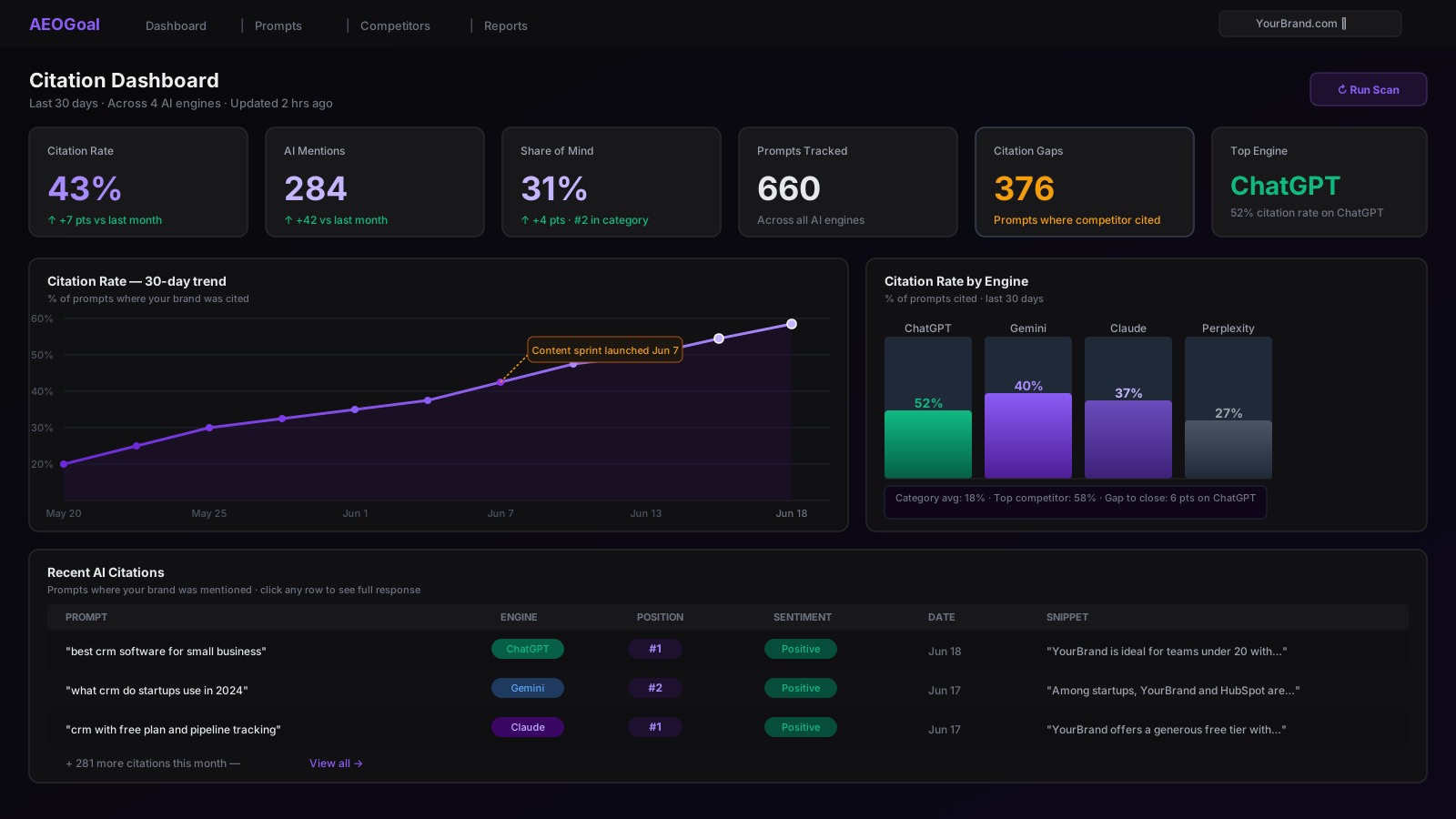
AEO Goal gives a firm the operational layer for that combined service. Per client, it tracks keyword rankings and referring domains, audits technical and content gaps, and measures AI visibility: which prompts name the client, which sources models cite, and which competitors win the answers the client wants. That competitor view is available directly through competitor AI visibility.
Crucially, the two surfaces are not separate workstreams with separate tooling. Because rankings, backlinks, technical health, and AI-answer presence live in one place, a firm can see the connections a siloed stack would hide - the client page that ranks but is never cited, or the technical fix that lifted both at once. That single view is what lets a small delivery team credibly cover more ground per account without adding tools or hours to every engagement.
A typical client engagement runs as a loop:
- Baseline rankings, backlinks, technical health, and current AI mentions.
- Diagnose each gap to a root cause: crawlability, thin content, weak entity proof, or missing structured data.
- Prioritize fixes by leverage and effort.
- Report movement in rankings, citations, and share of voice on a cadence the client can follow.
Our AI visibility reporting layer is built for this cadence, so account managers spend less time assembling slides and more time on strategy.
Standardizing that loop across every account is what protects margin as the firm grows. When each client runs the same baseline-diagnose-fix-report cycle, a new hire inherits a proven process rather than improvising, and quality does not swing with whoever happens to own the account. The reporting comes out in a consistent format the whole book of business recognizes, so the firm scales coverage without scaling chaos - the single hardest problem in running a services business profitably.
A worked example
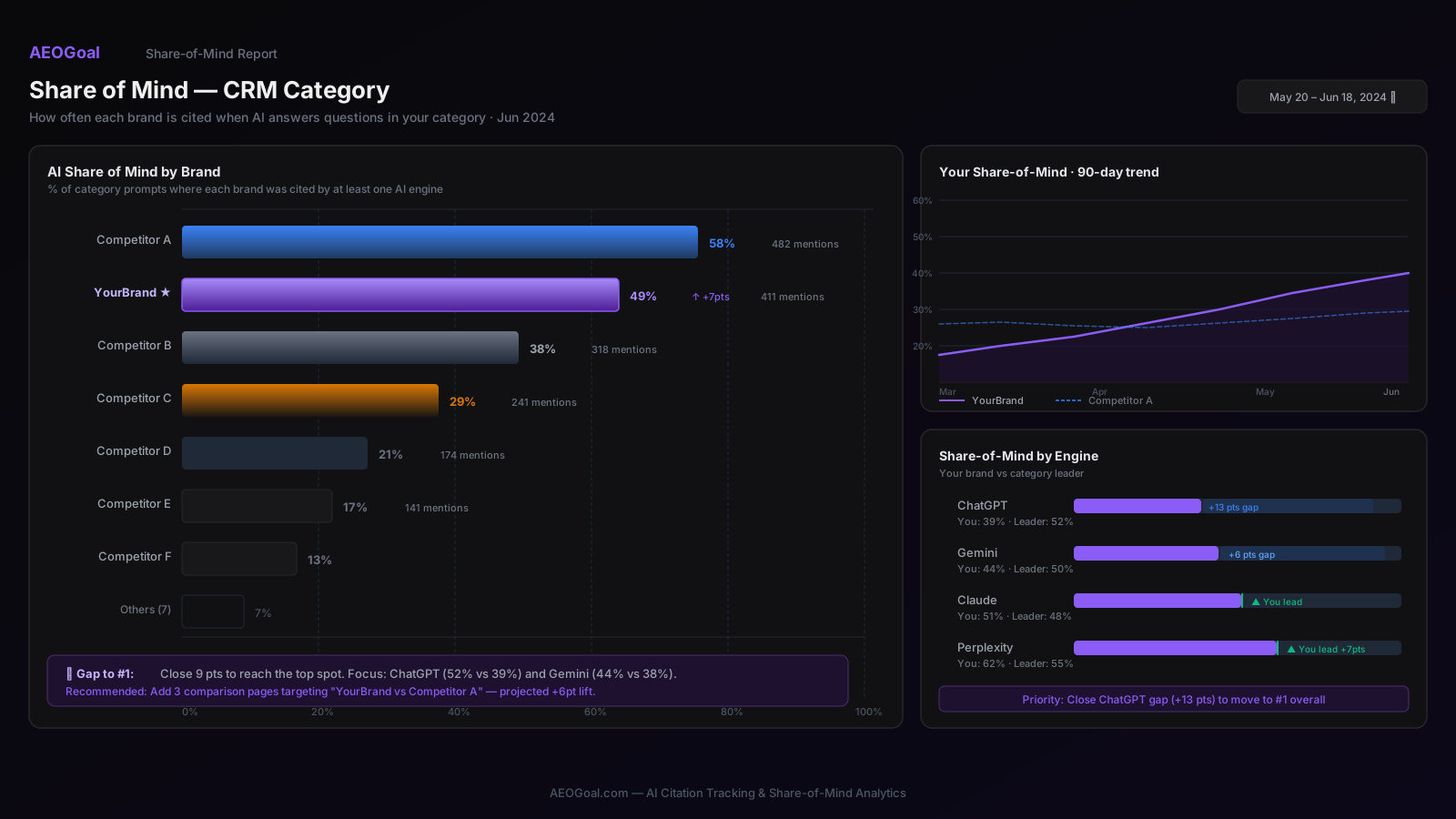
Suppose a client in a competitive services niche is happy with their rankings but frustrated that a rival keeps getting named in ChatGPT and Perplexity answers for the category. The firm uses AEO Goal to show the exact prompts where the rival is cited, traces it to the rival’s stronger comparison page and clearer entity signals, and scopes a project: rebuild two pages, tighten the client’s entity markup, and re-measure. The next report shows whether the client entered those answers - a concrete, billable outcome the account manager can point to, rather than another rankings screenshot the client has seen a hundred times.
The contrast with a rankings-only report is the whole point. Clients have grown numb to position charts that tick up and down with little apparent connection to their pipeline. A report that says “you now appear in the AI answer for your three highest-intent buyer questions, where you were absent last quarter” lands differently, because it maps to something the client’s own buyers actually see when they research. That is the kind of result that renews retainers and justifies expanding them.
What you can finally answer for clients
For every account, the platform turns fuzzy client questions into concrete, evidence-backed ones the firm can actually answer:
- Why is a competitor named in AI answers when our client is not?
- Which specific fixes will contest the answers this client cares about?
- Across our whole book, which accounts are gaining or losing AI-answer presence?
- Did the work we billed for last month actually move rankings, citations, or share of voice?
Who it is for
- Full-service SEO firms adding an AI-answer offering to an existing retainer without rebuilding delivery.
- White-label and reseller firms that need per-client measurement and reporting they can brand.
- Account managers who want a defensible before-and-after trend for every client conversation.
The common thread is leverage: a firm that can measure and report both surfaces from one platform sells a broader service, defends it with evidence, and delivers it without a proportional increase in hours. In a market where clients increasingly expect an answer about their AI visibility, that is less a nice-to-have than the price of staying competitive.
Where to go next
A firm keeps trust by pairing broad coverage with honest expectations, and AEO Goal is built to support both. If your firm serves a specific segment, see SaaS SEO agency and B2B SEO services. For the agency workflow in depth, read for SEO agencies, and compare tooling options in the best AI SEO tools. To see a client’s starting picture, run a free AI visibility scan on their domain.