AEO content generation that starts from a measured gap
AEO content generation turns AI visibility gaps into answer-first briefs and page updates. Instead of producing generic AI copy, the workflow starts from evidence - real buyer prompts, missing citations, competitor answer patterns, and technical findings - then creates content built to be retrieved, summarized, and cited by AI answer engines.
This is the production side of answer engine optimization: measurement tells you which answers are missing, and AEO content generation turns those gaps into pages that AI systems can quote. AEO Goal is built as an agent, not a copy machine - it does not spray out articles for every keyword. It supplies the evidence that tells your team exactly which question to answer, which page should own it, and, after you publish, whether the page actually earned the citation it targeted.
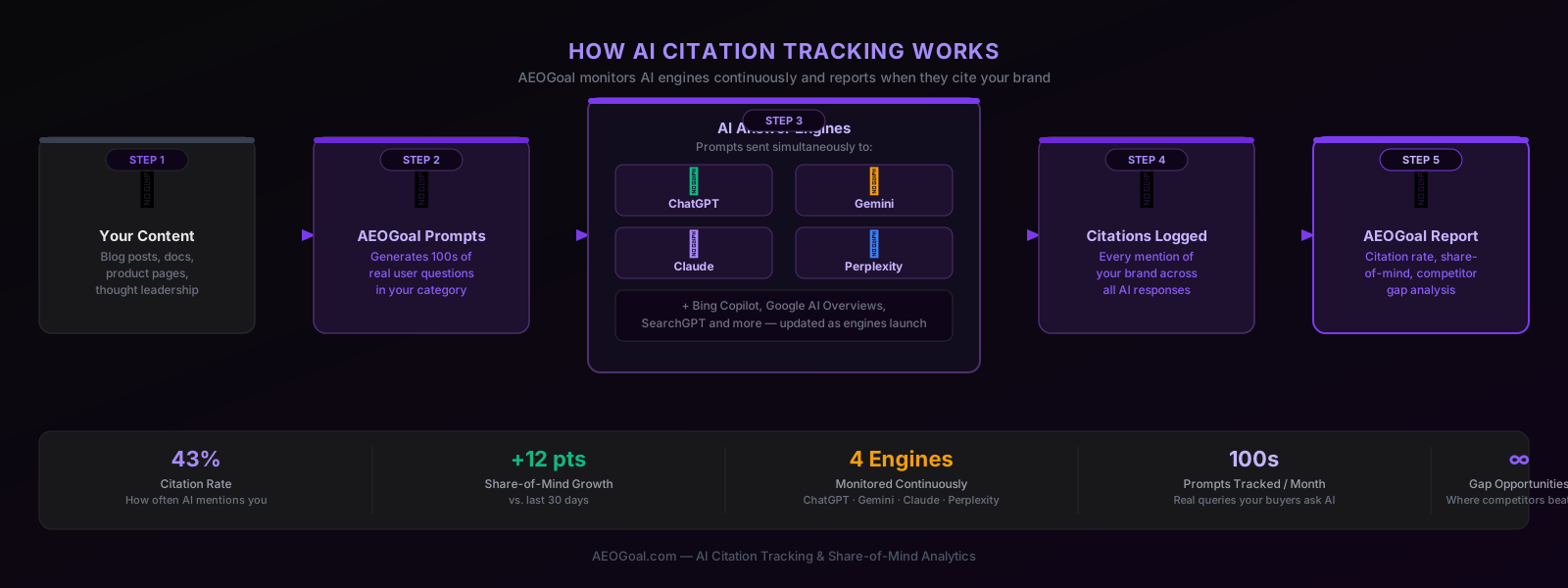
Most AI writing tools start from a keyword. AEO Goal starts from a citation gap.
Here is the gap in the market. A generic AI writing tool starts from a keyword and a blank page: it drafts something plausible, optimized for a reading score, and hopes it ranks. That produces a lot of copy that repeats what already ranks - which is exactly the content an answer engine has no reason to cite, because a better-supported page already exists.
AEO content generation inverts the order. It starts from a measured answer gap: a prompt buyers ask where you have no owned answer, a topic where a competitor is cited and you are not, or a page whose evidence has gone stale. Because the brief begins with the specific reason an engine is skipping you, the resulting page is aimed at a real citation opportunity, not a keyword guess. The output is worth publishing because it closes a gap you can see, not because it is merely fluent.
What makes content AEO-ready
Content is AEO-ready when an answer engine can lift a correct, attributable answer straight from the page. In practice that means:
- The answer comes first. The target question is answered directly in the opening, not buried under a long introduction.
- Entities are clear. Your brand, product, and key concepts are named and disambiguated so a model can connect them confidently.
- Claims carry proof. Specifics, numbers, and sources make your page the safer citation than a thinner competitor page.
- Structure matches schema. Visible headings, lists, and sections mirror accurate structured data, so the facts are easy to extract.
- It links to canonical pages. Internal links from supporting pages point to the definitive answer, reinforcing which page owns the intent.
The goal is never to publish more pages for every keyword. It is to fill real answer gaps with stronger source material that earns an AI citation.
What goes into an answer-first brief
Strong briefs are built from evidence, not guesses. Each one draws on real prompt clusters, citation gaps, competitor source patterns, and your existing pages, so the writer knows exactly which question to answer and which page should own it:
| Input | Why it is important |
|---|---|
| Prompt cluster | Keeps the page focused on real AI and search questions buyers actually ask. |
| Citation gaps | Shows which answers lack owned source material today. |
| Competitor citations | Reveals what competing pages already prove, so the brief can beat them. |
| Existing owned pages | Prevents duplication and cannibalization by assigning intent to one page. |
| Schema opportunities | Helps the page expose definitions, FAQs, products, and breadcrumbs accurately. |
The brief is the deliverable. It gives a writer or editor a specific target - the question, the proof to include, the entities to clarify, and the page that should own it - instead of a vague instruction to “write something about the topic.”
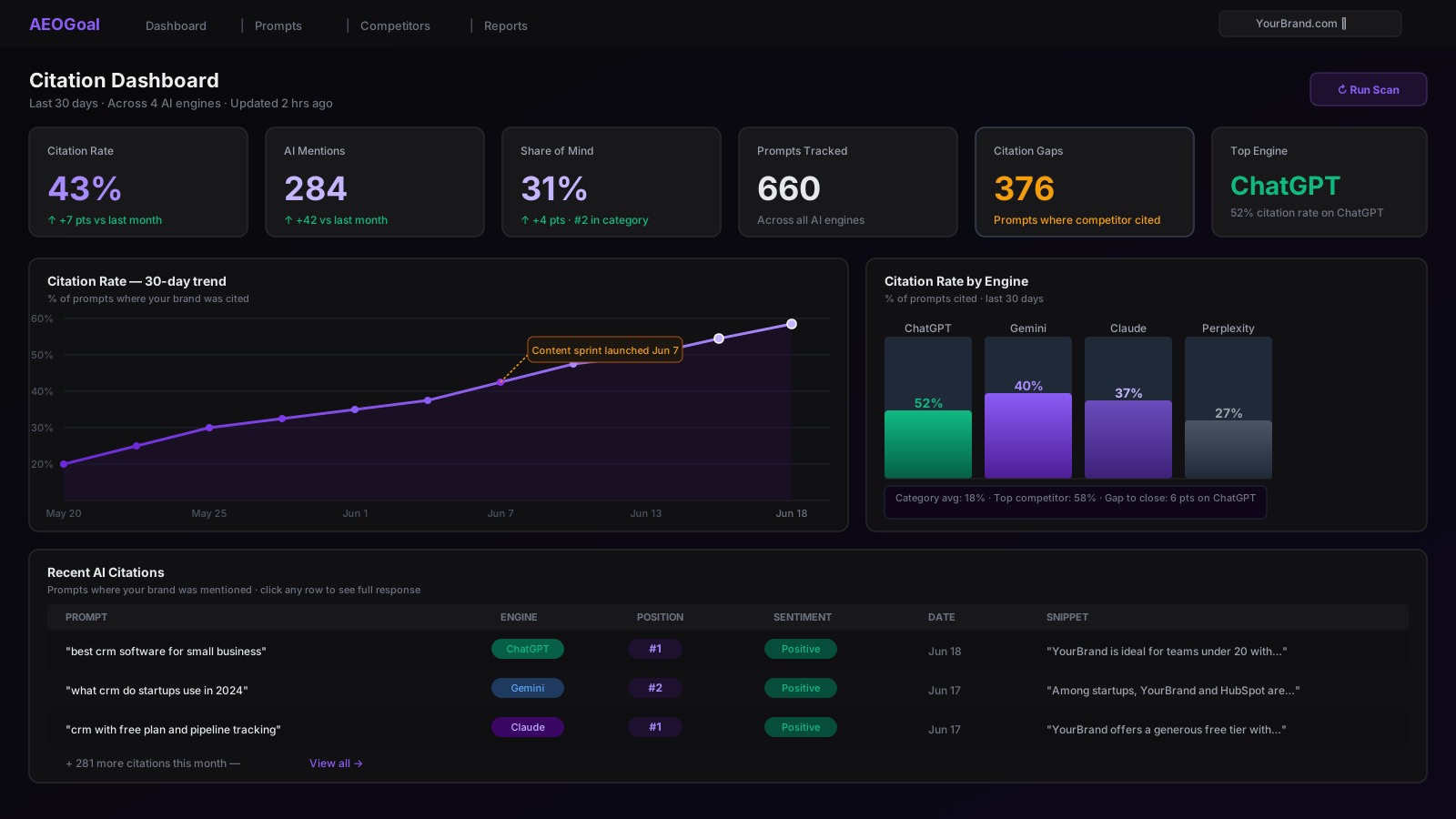
From gap to published, verified page - the agent layer
This is where AEO Goal separates from a writing assistant: it closes the loop from measured gap to verified result. It sits upstream of writing, supplying the evidence that tells content teams what to write, and downstream of publishing, confirming whether it worked.
For example: suppose AI visibility tracking shows a competitor is cited across ChatGPT and Perplexity for “how to migrate to [category] tool” while you have no page on it. AEO Goal builds the brief - the exact question, the competitor page to beat, the proof and entities to include, and the internal links to add - your team writes and an editor verifies it, and after you publish, AI citation tracking re-runs the prompt set to confirm whether your new page earns the citation. The gap is measured, the brief is grounded, the page is verified, and the result is proven - not assumed.
Generation and optimization, one loop
AEO content generation and AI content optimization are two halves of the same loop. Generation creates a page where none exists; optimization strengthens a live page that already ranks but is not cited. AEO Goal runs both from the same evidence, so you generate new pages only where a real gap exists and optimize existing assets everywhere else - avoiding the trap of publishing duplicate pages that compete with your own. Both feed one prioritized backlog inside the broader AI SEO program.
Running them together also protects your content budget. Without a measured gap to point to, teams default to producing more - more posts, more keywords, more drafts - most of which an engine has no reason to cite because a stronger page already exists. Starting from evidence flips that: you write only where a citation is genuinely winnable, and refresh where you already have equity, so every hour of content work is aimed at a specific answer you can later confirm you won. That is the difference between a content program that compounds and one that just adds pages.
An implementation workflow
AEO Goal runs content generation as a measured, verifiable loop rather than an unsupervised content firehose:
- Define the market, brand, competitors, and priority prompts.
- Baseline AI mentions, citations, source URLs, sentiment, and competitor overlap.
- Map missing answers to owned pages, structured data, entity proof, and crawlability issues.
- Brief an answer-first page that addresses the exact informational gap, for an editor to verify.
- Publish and re-run the prompt set to confirm whether citations, mentions, and share of model improved.
How AEO content differs from generative AI copy
The difference is provenance and intent: AEO content starts from a measured answer gap and is verified by an editor, while undirected generative copy starts from a prompt and a keyword. Generic AI copy tends to repeat what already ranks, which rarely earns a new citation. AEO content is built to close a specific gap that measurement surfaced - a question with no owned answer, a competitor-cited topic, or a page whose evidence has gone stale. This grounding in generative engine optimization practice is what makes the output worth publishing rather than just plausible. Teams comparing a content optimization tool, an AI-powered content generator, or a generic writing assistant should separate drafting help from visibility measurement: writing tools help produce text, while AEO Goal supplies the evidence that decides what the content should answer and how the update is checked after publishing. For a deeper view, see how AEO compares with traditional SEO.
Who should use AEO content generation
This workflow fits any team that owns the answer surface for a market.
- SaaS companies use it to win category and alternatives prompts before a competitor becomes the default answer.
- Content teams use it to prioritize which pages to write or refresh, with a specific citation target for each.
- SEO agencies use it to show clients which gaps were closed and what actually moved.
In each case the brief is the deliverable, and the published page is checked against the same prompt set that revealed the gap.
An honest boundary
No tool can force an engine to cite a page - AI answer platforms control their own answers and revise them constantly. What AEO content generation controls is whether your content targets a real gap, states the answer clearly, proves its claims, and is structured to be extracted and cited. AEO Goal is built to ground every brief in measured evidence, keep an editor in the loop, and prove whether the published page earned the citation it targeted.
New to the category? Start with what is AEO. Ready to see which answers you are missing? Run a free AI visibility scan to find the gaps worth turning into content first.