Law firm SEO for search and AI answers
Law firm SEO is the practice of helping a legal practice get found by the people searching for the help it offers. Most of that demand is local and high-intent: someone looking for a family lawyer, an injury attorney, or an estate planner usually wants a nearby, credible option quickly. Increasingly, that search does not start in a results page. Prospects ask an assistant a direct question, and the answer they receive already includes a shortlist of firms and sources. Winning both surfaces is now the job.
Legal content also sits in a higher-scrutiny category. Search and AI systems weigh credibility heavily for topics that affect someone’s rights or finances, so accurate information, clear firm and author identity, and genuine reviews are more important than in a low-stakes niche. AEO Goal is built to measure both surfaces and act on the gaps - and because it is an AEO agent, not just a tracker, it ties each finding to a specific, recommendable fix rather than a vague suggestion, which is exactly what a busy firm needs.
The stakes are concrete for a firm. Legal matters are often urgent and high-value: a person searching for an injury attorney or a criminal defense lawyer usually needs help now and is choosing from a shortlist they assemble in minutes. If an assistant hands them three firm names and yours is not one of them, you are not competing for that client - you were never in the room. For a practice where a single retained matter can be worth far more than a month of ad spend, being absent from that shortlist is an expensive, and usually invisible, loss.
Why credibility signals matter more for legal
Search engines describe topics that affect health, finances, or legal rights as high-stakes, and both Google and AI systems apply extra scrutiny to who they trust for those answers. For a law firm, that raises the bar on a specific set of signals: clear attorney identity and credentials, substantive practice-area content that demonstrates real expertise, genuine client reviews, and consistent, accurate firm information. A model deciding whether to name a firm in an answer is, in effect, asking whether this is a real, credible practice - and thin or ambiguous content is a fast way to be passed over in favor of a competitor that made its expertise obvious.
This is why generic, high-volume content strategies tend to backfire for legal. An assistant will not cite a shallow page on a consequential legal topic; it wants a page that clearly answers the question, shows who stands behind it, and can be trusted. That favors firms willing to invest in genuine practice-area depth over those chasing keyword volume - and it is measurable, which is where AEO Goal comes in.
This aligns neatly with what good legal marketing should look like anyway. The same substantive, accurate, clearly-authored content that earns an AI citation is the content that actually helps a prospective client understand their situation and trust the firm. There is no tension between writing for the assistant and writing for the human here: both reward genuine expertise, plainly stated, from a clearly identified attorney. A firm that leans into that produces marketing it can stand behind, which is more important in law than in almost any other field.
What a modern law firm audit covers
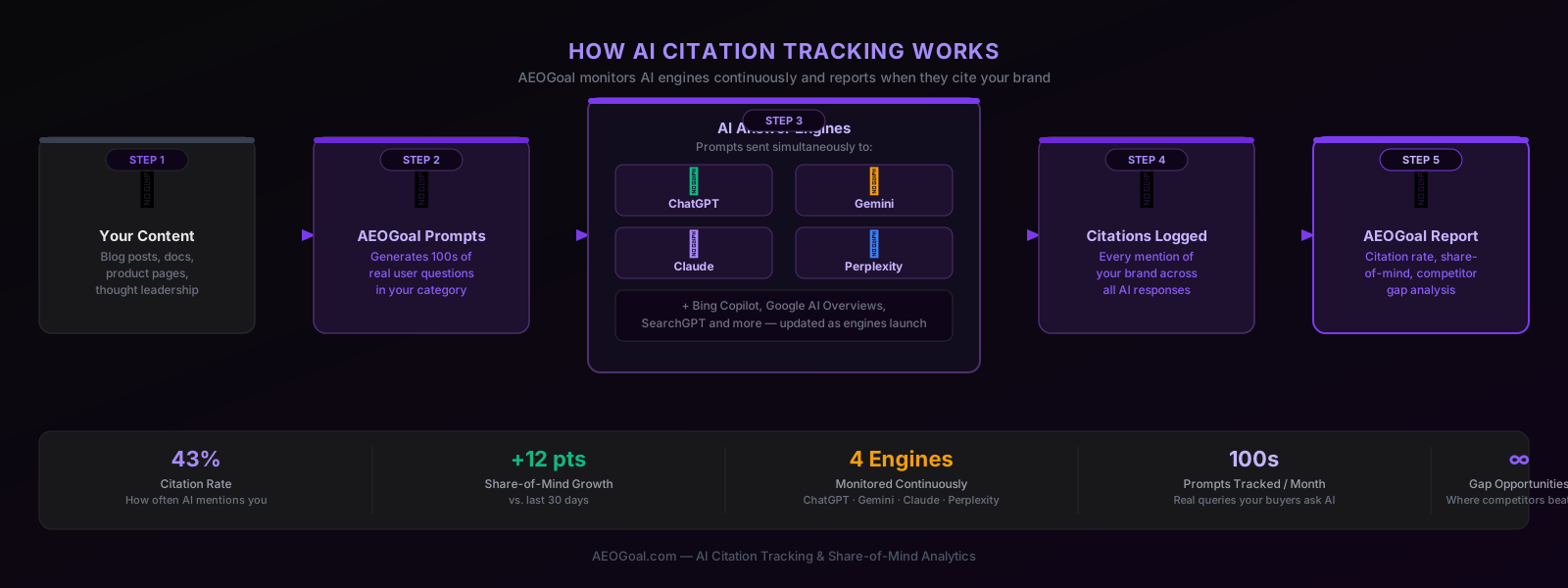
A useful audit for a firm looks at four layers: local presence, practice-area content depth, technical health, and credibility signals. AEO Goal supports this with rank tracking, technical audits, backlink analysis, and, on the AI side, a measurement of whether the firm is named and cited when prospects ask legal questions.
Concretely, the questions worth answering are:
- Local: Does the firm appear for its city and practice area in maps, organic results, and AI recommendations? Local SEO is usually the fastest lever here.
- Practice-area depth: Does each service have a substantive page that a model could cite, or is it a thin stub?
- Credibility: Are attorney identity, credentials, and real reviews clear enough for a system to trust the firm?
- AI presence: For the legal questions prospects actually ask, does an assistant name the firm, a competitor, or a directory?
That last question often surfaces an uncomfortable truth: for many legal queries, assistants default to directories and aggregators rather than individual firms. That is both a threat and an opening. It is a threat because a directory listing puts you in a lineup rather than presenting you as the answer; it is an opening because a firm that publishes genuinely authoritative, well-structured content on a practice-area question can sometimes earn the citation directly, over the aggregator. Knowing which of your questions are owned by directories tells you exactly where that opportunity is.
How AEO Goal helps
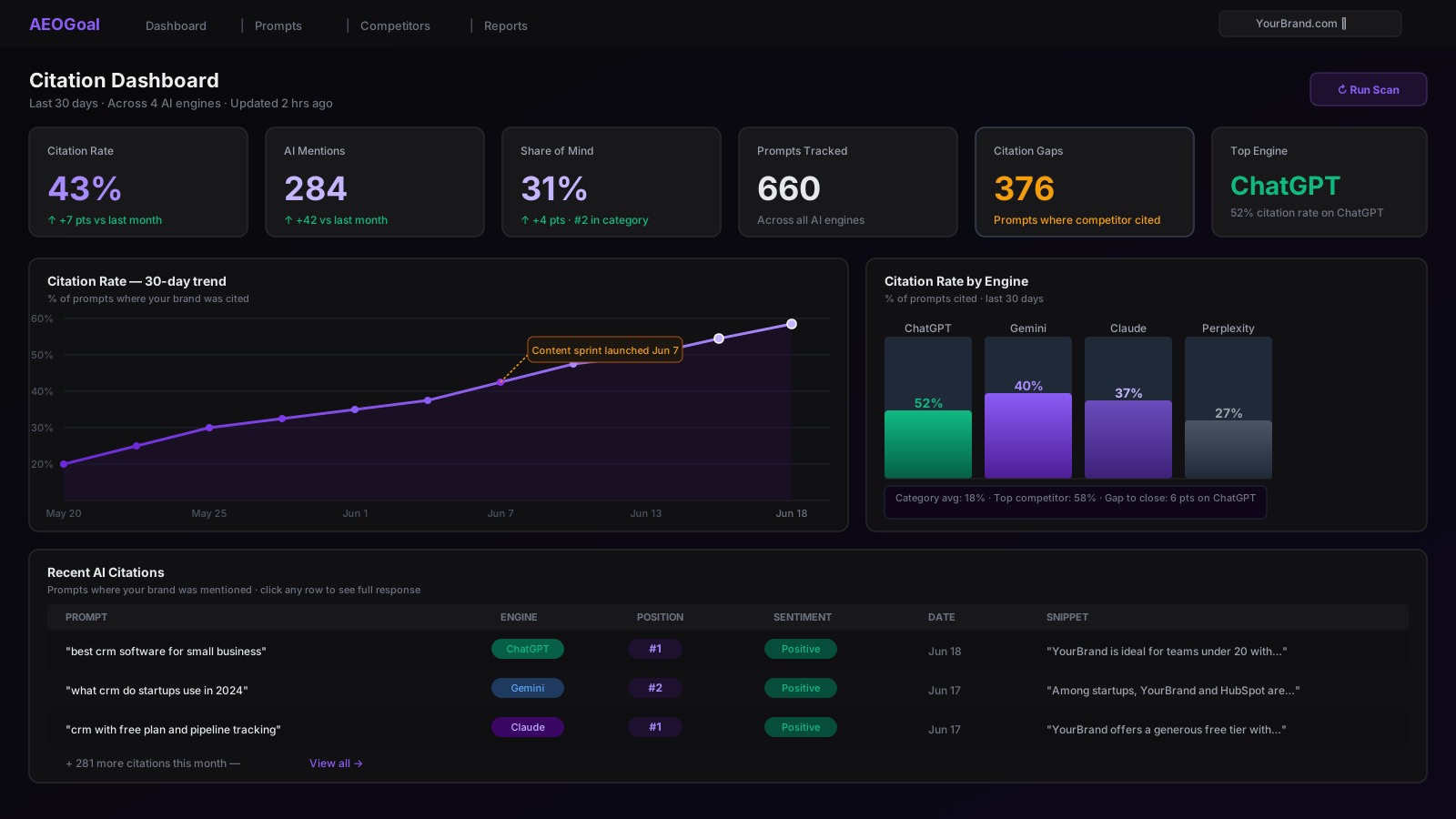
AEO Goal gives a firm one place to measure both surfaces and act on the gaps. It tracks keyword rankings and referring domains, audits the technical and content issues on practice-area pages, and measures whether AI engines like ChatGPT and Google AI Overviews mention the firm, which sources they cite, and which competitors appear instead. Each gap ties to a specific, recommendable fix rather than a vague suggestion.
For a firm without a dedicated marketing team, that prioritization is the real value. Attorneys are not short on things to do, and legal marketing advice tends to arrive as an overwhelming list. Reducing it to “these two practice-area pages are too thin to be cited, and this is the local question a competitor owns” turns an intimidating discipline into a manageable, sequenced project - one a firm can hand to a marketing coordinator or an outside consultant with clear direction rather than vague ambition.
A worked example
Suppose a personal-injury firm ranks respectably in its city but is never named when someone asks an assistant “what should I do after a car accident in [city].” AEO Goal surfaces the gap, inspects why - the firm has a thin services page and no substantive, genuinely helpful content answering that exact question, while a competitor does - and briefs a credible, well-structured page that answers it, with clear attorney authorship. On the next run, it shows whether the assistant began citing the firm. The work targets the specific high-intent question a prospective client actually asks, not a vanity keyword.
That specificity is what makes the difference for a firm with limited marketing time. Rather than a broad mandate to “do more content,” the firm gets a ranked, finite list: this practice-area page needs depth, this local question is owned by a competitor, this credibility signal is missing. Each item is scoped tightly enough to hand to a marketing coordinator or an outside consultant and actually check off, and each is re-measured afterward, so the firm can see which items moved visibility and which did not - and spend its next round of effort accordingly.
What you can finally answer
For a firm, the measurement is only worth anything if it answers the questions that decide where scarce marketing effort should go:
- Do prospects find us in maps, organic results, and AI answers for our practice areas?
- Which practice-area pages are too thin for a model to trust and cite?
- Which competitor or directory is winning the legal questions we want to own, and why?
- Did our content and credibility work actually improve visibility over time?
Who it is for
- Solo and small firms competing locally for high-intent legal searches.
- Multi-practice firms that need per-practice-area visibility across both surfaces.
- Legal marketers who want an evidence-backed, prioritized plan rather than a volume content push.
Start with local SEO for the fastest local wins, review AI visibility tracking to see how AI recommendations are measured, and use AEO versus traditional SEO to explain the two surfaces to partners - or run a free AI visibility scan to see whether assistants recommend your firm today.