An enterprise SEO platform built for AI answers
An enterprise SEO platform built for AI answers is software that lets a large organization monitor, manage, and report on visibility across both classic search and AI assistants - at the scale of many brands, markets, and stakeholders. The defining word is scale. A small team can check a handful of prompts by hand; an enterprise has dozens of product lines, several regions, multiple languages, and a chain of approvers who all need different views of the same data. A platform earns the “enterprise” label when it handles that breadth without breaking and without becoming a spreadsheet exercise.
The newer requirement layered on top is answer engine optimization: tracking whether the brand is named and cited inside up to nine AI answer engines - ChatGPT, Claude, Gemini, Perplexity, Google AI Overviews, Microsoft Copilot, Grok, Meta AI, and DeepSeek - not just where it ranks. For an enterprise, an AI citation in a high-intent answer can influence buyers long before they reach a results page, so it belongs in the same system as everything else. AEO Goal is built to be that system - and, because it is an AEO agent rather than a dashboard, it does not just report portfolio-wide visibility, it turns every gap into an assignable fix and re-checks whether it moved.
What an enterprise needs beyond a basic tracker
Three capability areas separate an enterprise platform from a point tool.
- Multi-brand and multi-market structure. The ability to scope data per brand, region, and team so one organization’s portfolio stays organized and isolated, and each stakeholder sees their slice without wading through everyone else’s.
- Governance and access. Role-based access control, single sign-on, and audit trails so the right people see the right data and changes are accountable. These are available on the Enterprise plan - contact sales for current availability - and are exactly the items a procurement review should verify in a trial.
- Reporting that survives an executive review. Trends over time, share-of-voice against competitors, and exportable summaries a VP can read in two minutes, alongside the prompt-level detail a practitioner needs.
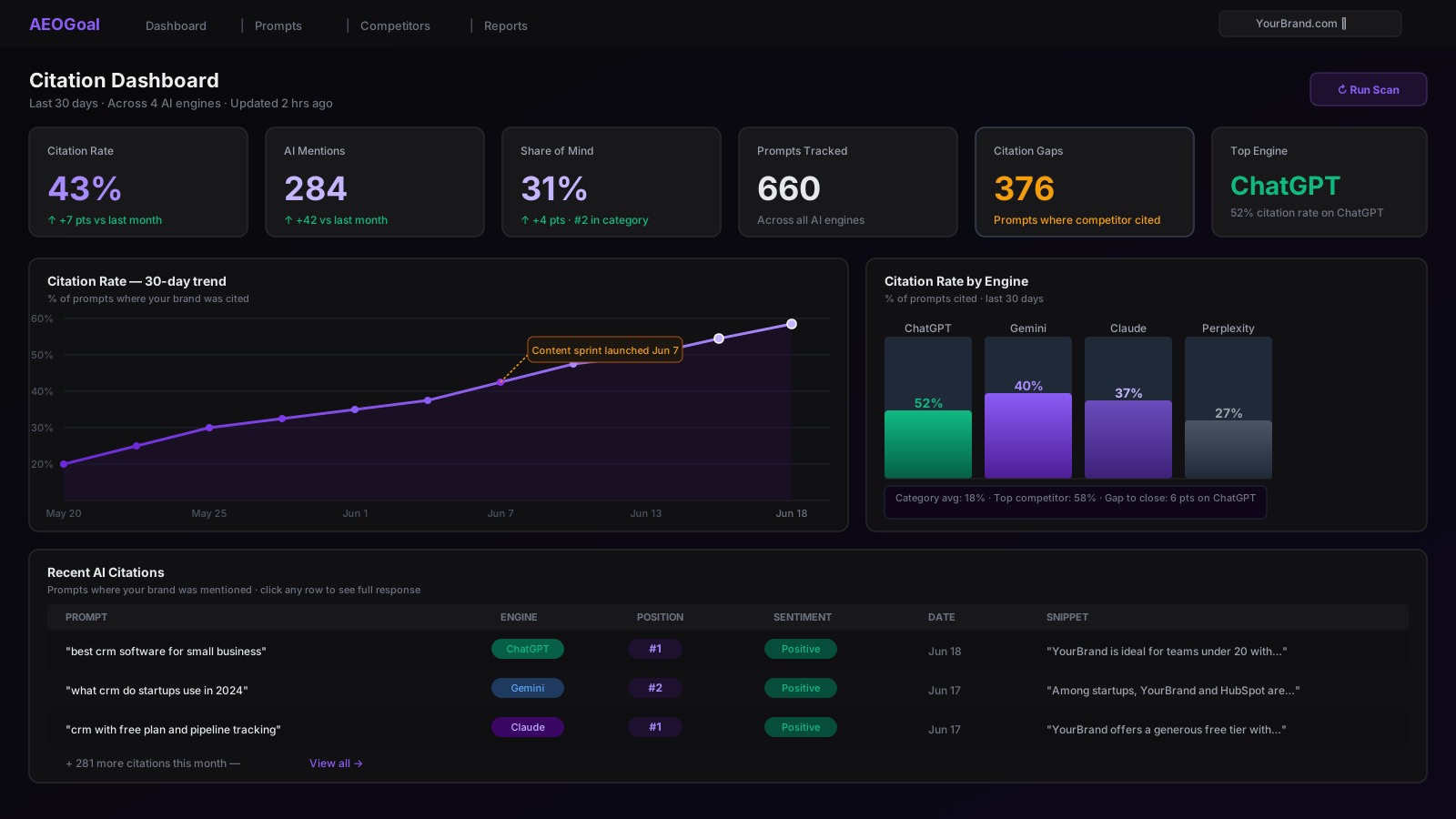
Underneath those, the core measurement still counts - which prompts trigger a brand mention, whose URLs assistants cite, and how share of model shifts against competitors. AEO Goal’s AI visibility tracking runs prompt sets across assistants on a recurring schedule, AI citation tracking records the exact source URLs, and competitor AI visibility analysis frames it against the field - so the platform produces an action list, not just charts.
That per-brand isolation is not just tidiness; at enterprise scale it is a requirement. A regional team should not have to scroll past forty other brands to find its own numbers, and one product line’s competitive data should not bleed into a sibling’s report. Scoping data cleanly per brand, market, and team is what keeps a portfolio-wide program legible - each stakeholder gets a focused view of exactly the surface they own, while leadership keeps the roll-up across everything. Without that structure, an enterprise rollout collapses into one unreadable spreadsheet within a quarter, and the program quietly dies of its own complexity.
Why “the platform reports, the agent acts” is important at scale
The failure mode of enterprise tooling is the beautiful dashboard nobody acts on. At scale, a visibility problem is only useful if it lands as a specific task on a specific team’s board, with the reason attached. A platform that stops at a portfolio-wide score forces a central team to manually translate charts into work - which does not survive contact with fifty product lines.
AEO Goal is designed so each finding carries its own fix and owner. A missing citation on a regional product line becomes a content brief routed to that line’s team; a crawlability regression becomes a technical ticket with the evidence attached. The central function shifts from assembling spreadsheets to governing a program - setting priorities, watching the trend, and reporting up - while the fixes happen where the content actually lives. That division of labor is what lets AI visibility scale across a large org instead of bottlenecking on one team.
It also changes the economics of the program. When fixes are briefed and routed automatically, adding another brand or market costs a fraction of what it would if a central team had to hand-translate every chart into work. The marginal cost of coverage drops, which is precisely what lets an enterprise extend answer-engine measurement across its whole portfolio rather than rationing it to the flagship brand and hoping the rest sort themselves out. Coverage that is expensive to add is coverage that never gets added - so the automation is not a convenience, it is what makes portfolio-wide AEO viable at all.
How enterprise teams roll out AI visibility at scale
Rollout works best as a phased program rather than a big-bang launch:
- Model the portfolio. Define brands, markets, competitors, and the priority prompts for each, and map them to the teams that own them.
- Baseline broadly, then focus. Capture mentions, citations, sentiment, and competitor overlap across the portfolio, then concentrate effort on the highest-value gaps.
- Assign ownership. Route each gap to the team that owns the relevant content, so fixes have an accountable owner instead of sitting in a backlog.
- Standardize reporting. Give executives trend and share-of-voice views, and give practitioners the prompt-level detail.
- Operate the loop continuously. Re-measure on schedule and report movement, because AI answers change frequently.
A worked example
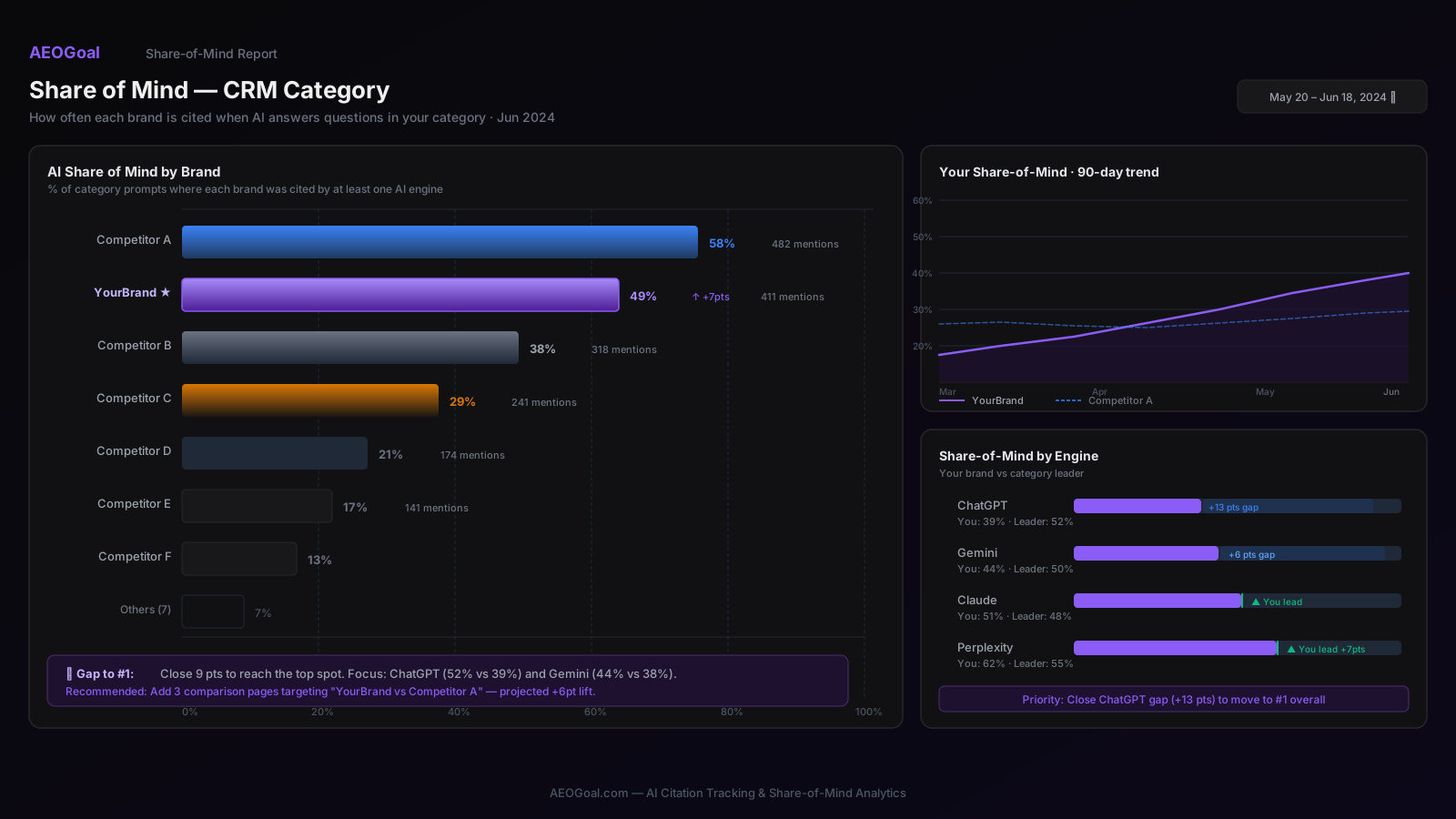
Suppose a multi-brand software company finds that its flagship product is well cited in AI answers, but two acquired product lines are absent from every “best tool for X” answer in their categories. A portfolio-wide score would average that into a comfortable-looking number and hide the problem. AEO Goal surfaces it per brand, traces each line’s absence to a missing comparison page and inconsistent entity naming after the acquisition, and routes a content brief to each line’s team. The central marketing function watches the two lines’ share of model on the next cycle - accountability at the edge, oversight at the center.
Repeat that across a portfolio and a pattern emerges: the platform is not just measuring visibility, it is coordinating a distributed program. Each brand runs its own loop, the center sees the aggregate trend and the outliers, and the reporting rolls up cleanly enough to put in front of a CMO. That is the real deliverable of an enterprise SEO platform in the AI era - not a prettier chart, but a way to run answer-engine visibility as an accountable, portfolio-wide operation that survives audits, reorganizations, and executive scrutiny.
How an AI-era platform differs from legacy enterprise SEO suites
Legacy enterprise SEO suites were built around rankings, crawl audits, and backlink databases for large sites. An AI-era platform keeps that foundation but adds answer-engine measurement as a first-class layer, because a brand can rank well and still be absent from the AI summary sitting above the results. The governance, multi-brand, and reporting needs are similar; the new measurement surface is what is different. Teams evaluating where AI tracking fits relative to traditional tooling will find the AEO versus traditional SEO comparison and the survey of AI SEO tools useful for scoping a buying decision.
What you can finally answer
- Across every brand, market, and product line, where are we present in AI answers and where are we absent?
- Which gaps belong to which team, and are they being closed?
- How does our share of model trend against competitors, per engine, over time?
- Which portfolio-wide investments actually moved visibility last quarter?
Who it is for
- Enterprise SEO and digital leaders managing many brands, markets, and stakeholders who need one system of record for search and AI-answer visibility.
- Central marketing functions that must govern a program and report to executives without doing every fix themselves.
- Procurement and security reviewers evaluating governance, access, and reporting against enterprise requirements.