What is AI SEO?
AI SEO is the practice of using AI to improve how both search engines and AI answer engines find, understand, and cite your brand. It has two sides that now move together: using AI to do the SEO work itself - research, content structuring, and measurement - and optimizing so AI answer engines like ChatGPT, Claude, Gemini, Perplexity, Google AI Overviews, Microsoft Copilot, Grok, Meta AI, and DeepSeek actually name and cite you in the answers they generate.
For most of search history, the goal was a ranked link. Today, a growing share of buyer research ends in a synthesized answer that names a few brands and cites a few sources - often before anyone clicks anything. AI SEO is how you make sure your brand is one of the named, cited few, while still competing for the traditional rankings that continue to drive traffic.
Why AI SEO is important now
Buyers increasingly ask AI systems for shortlists, comparisons, and recommendations. If an answer engine cannot retrieve, understand, or trust your content, it will confidently recommend someone else - even when you are the better answer. That has three consequences worth taking seriously:
- Discovery moved upstream. The first impression is now the AI answer, not the search result page.
- Ranking no longer guarantees inclusion. You can rank first on Google and still be absent from the AI summary sitting above the results.
- Measurement changed. Traditional rank tracking cannot see citations, mentions, sentiment, or share of model inside generated answers.
AI SEO exists to close that gap: to measure the new surface, improve the inputs you control, and keep the traditional-search fundamentals working at the same time.
The stakes are compounding, not one-time. Answer engines increasingly learn from what they have already generated and from the sources they already trust, so an early lead in citations tends to reinforce itself while a late start gets harder to reverse. The brands that establish clear entity signals, citable pages, and consistent presence now are teaching the engines who the category’s trusted answers come from - and that is expensive for a competitor to unwind later.
AI SEO vs traditional SEO
AI SEO does not replace SEO - it extends it. The technical foundation is shared: crawlable pages, clean structure, clear entities, and trustworthy sources help both a search index and a language model. What changes is the objective. Traditional SEO optimizes to rank; AI SEO also optimizes to be retrieved, summarized, and cited.
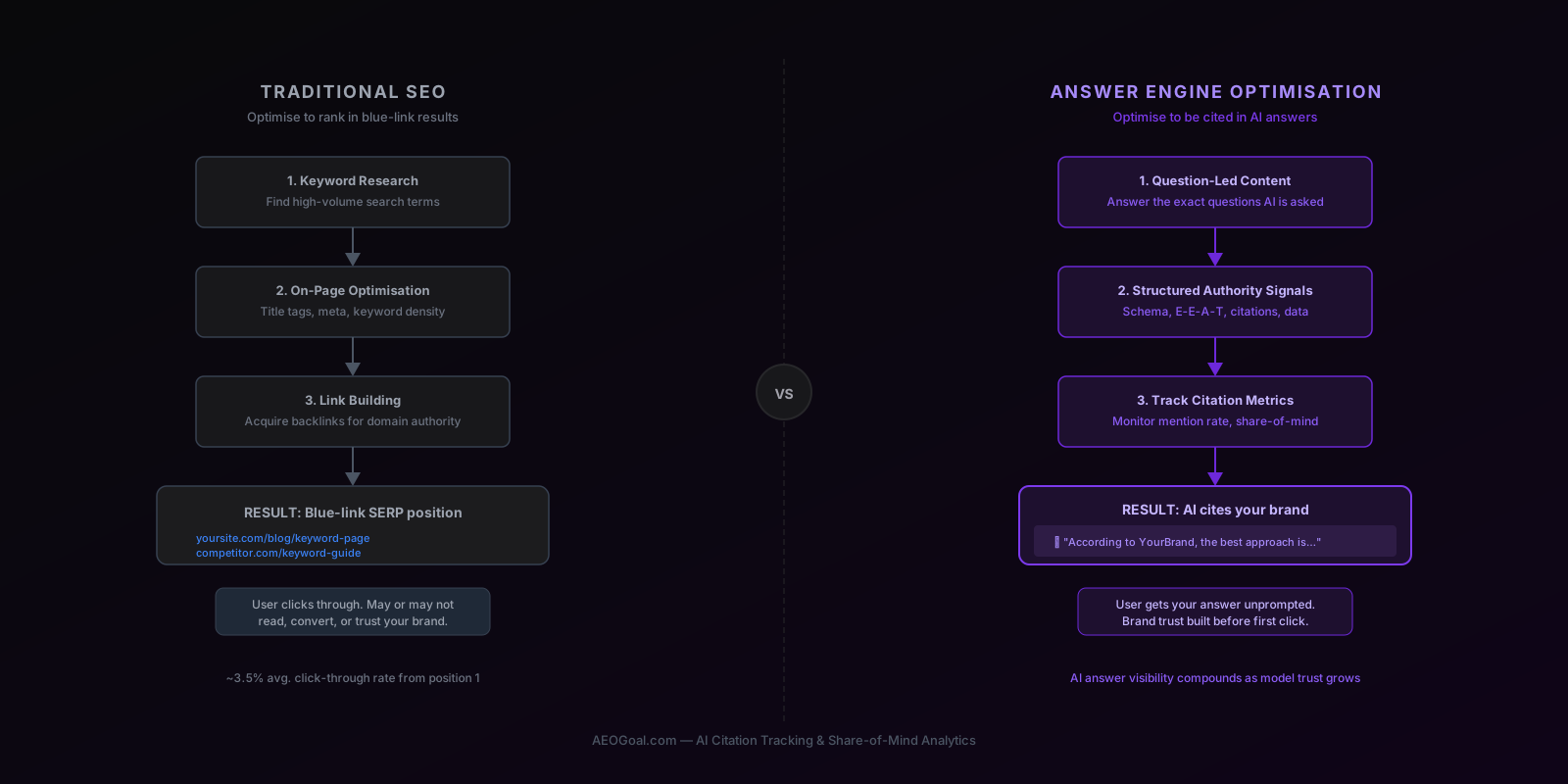
Most teams run both, because the two surfaces feed each other: pages engineered to be citable tend to be well-structured and authoritative, which also helps them rank. The reverse is true as well - the crawlability, internal linking, and topical depth that earn rankings are exactly the signals that make a page easy for a language model to retrieve and trust. Treating AEO and SEO as one program, rather than two competing budgets, is what lets a single content investment pay off on both surfaces at once. For a deeper breakdown, see AEO vs traditional SEO, and for the category definition, what is AEO.
What AI SEO software does
AI SEO software is the tooling layer that makes this practical instead of manual. Checking AI answers by hand does not scale - engines change, prompts vary, and a single observation is only a snapshot. Capable AI SEO software runs the loop for you:
- Measures AI visibility - which engines mention or cite you, for which prompts, and how you compare to competitors.
- Runs technical readiness checks - AI-crawler access, structured data, metadata, and how extractable your answers are.
- Turns gaps into content - answer-first briefs and pages designed for retrieval and citation.
- Keeps the classic SEO stack - keyword research, rank tracking, and backlinks, so AI SEO and traditional SEO live in one place.
The important distinction is between software that only reports and software that acts. A tracker tells you your citation rate; an AI SEO platform worth paying for tells you what to change and whether it worked.
AI SEO covers two surfaces, not one
The mistake teams make is treating “AI search” and “Google” as separate projects with separate tools. Buyers do not - a single research session moves between an AI assistant and a classic search page without thinking about it. Effective AI SEO covers both:
- AI answers: citations, mentions, share of model, competitor overlap, and sentiment across engines.
- Traditional search: keyword opportunities, scheduled rankings, backlinks and authority, and technical health.
Run on one platform, these stop competing for attention and start reinforcing each other on a single prioritized backlog.
How AEO Goal approaches AI SEO
AEO Goal is AI SEO software built as an AEO agent, not a dashboard. Most tools in this category stop at tracking - they show a citation-rate chart and hand the hard part back to you. AEO Goal closes the loop:
- It runs your priority prompts through up to nine AI answer engines: ChatGPT, Claude, Gemini, Perplexity, Google AI Overviews, Microsoft Copilot, Grok, Meta AI, and DeepSeek, logging every brand mention and cited source URL, with position and sentiment per engine.
- It scores share of model against your named competitors and surfaces the exact prompts where they win and you are absent.
- It runs a free technical scan - AI-crawler access, llms.txt, sitemap, structured data, and entity salience - and scores AEO readiness.
- And then it does the part trackers skip: every gap ships with a concrete fix - a content brief, a schema change, a crawler-access fix, or a page to publish - and the next scan shows whether it worked.
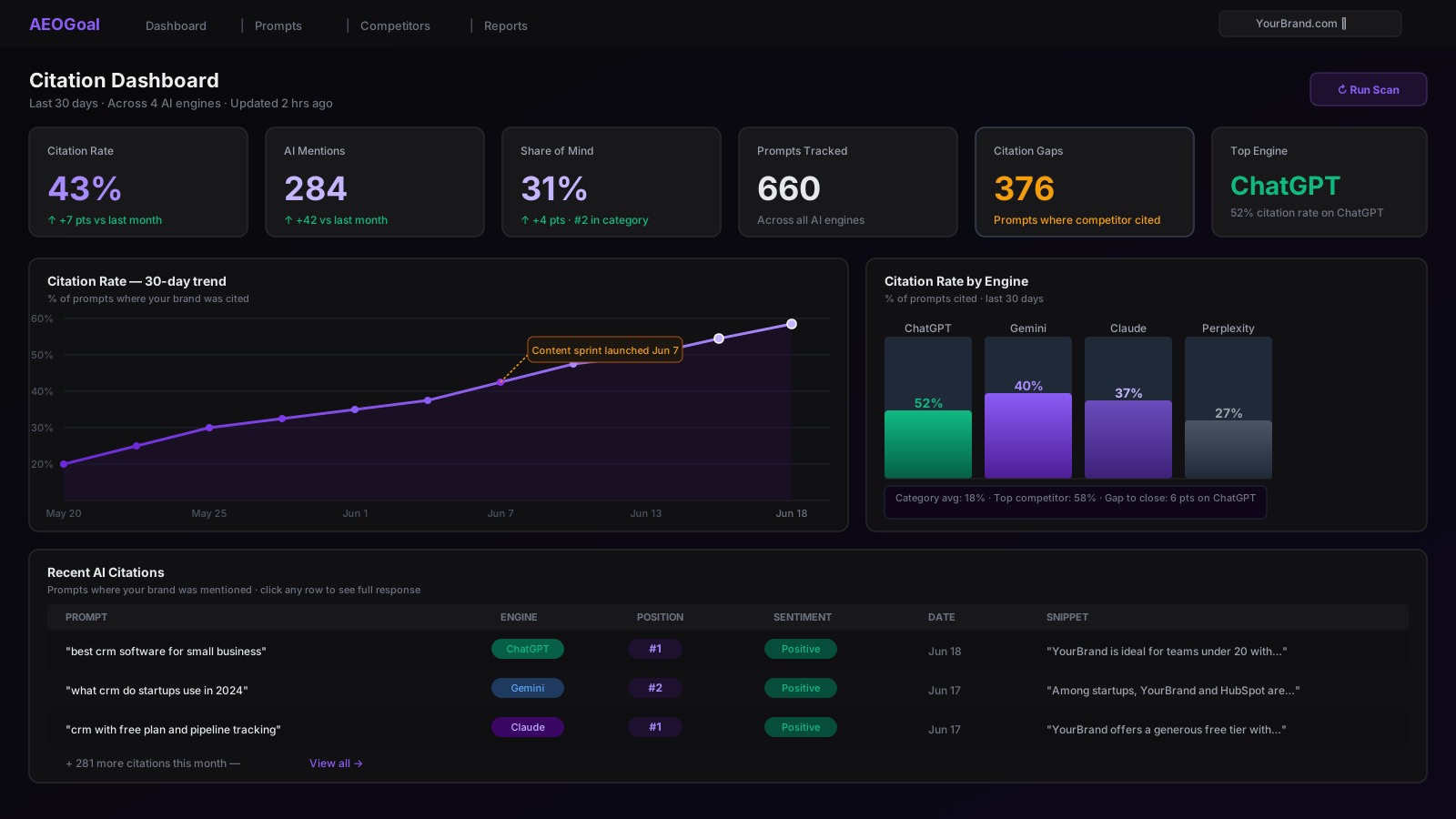
For example, if Perplexity and ChatGPT both cite a competitor for “best [category] for enterprise” while never naming you, AEO Goal does not just flag the gap. It shows the exact prompt, the competitor pages the engines cited, and the likely cause - often no page that answers the enterprise version of the question with clear proof - then generates an answer-first brief to close it and watches whether your page starts appearing on the next run. Findings become work, and work becomes measurable movement.
It also carries the full traditional-SEO stack - keyword research, scheduled rank tracking, and backlink analysis with a DR-weighted Domain Score and our AI-citation AEO Rank - so findings on both AEO and SEO land in one backlog and one report. Explore the platform on the AI SEO software page, or the measurement layer on AI visibility tracking.
An AI SEO optimization workflow
AEO Goal runs AI SEO optimization as a repeatable loop rather than a one-off audit:
- Scan your domain for crawler access, structured data, metadata, and entity salience, and baseline citations, mentions, and rankings.
- Map the prompts, competitors, and content gaps that shape your category’s AI answers.
- Fix the highest-impact gaps - each finding ships with a concrete next action across content, technical, and entity work.
- Monitor citations, share of model, competitor overlap, and rankings, and prove what actually moved.
Run once and you get an audit. Run it on a cadence and you get a compounding program, because each cycle turns last month’s fixes into this month’s proof.
Who AI SEO is for
AI SEO counts most for brands whose buyers research before they buy - B2B and SaaS companies, agencies managing client visibility, and any team in a considered-purchase category where an AI assistant now shapes the shortlist. If your prospects ask ChatGPT or Perplexity “what are the best options for X,” AI SEO decides whether your brand is in that answer at all.
- SEO and content teams get a new, measurable surface to own, with the same fundamentals they already know applied to AI answers.
- Marketing leaders get a share-of-mind metric that maps to pipeline and category position, not just rankings.
- Agencies get a repeatable, reportable program - baseline, fix, re-measure - they can run across every client and show in a single dashboard.
The common thread is that AI SEO is not a separate discipline bolted onto SEO; it is where SEO is heading. Teams that treat AI answers as a first-class surface now compound an advantage while competitors are still screenshotting citation charts.