ChatGPT SEO: get named in the answer, not lost in the links
ChatGPT SEO is the practice of optimizing your brand, content, and entity footprint so that ChatGPT mentions, recommends, or cites you when users ask questions in your category. ChatGPT is OpenAI’s conversational large language model; its answers are assembled from model training data and, in ChatGPT Search mode, from live web results retrieved at query time. Unlike classic search, there is rarely a ranked list of ten blue links to climb. Instead there is a single synthesized answer, and the only positions that matter are: are you named, are you cited, and how are you described.
That difference is why ChatGPT SEO is a subdiscipline of answer engine optimization rather than a tweak to traditional SEO. The goal is not a keyword ranking; it is an AI citation - a moment where the model surfaces your brand or links your URL inside its reply. AEO Goal is built to make that measurable and improvable: it is an AEO agent, so it does not just tell you whether ChatGPT names you, it explains why, ships the fix, and re-checks whether the answer changed.
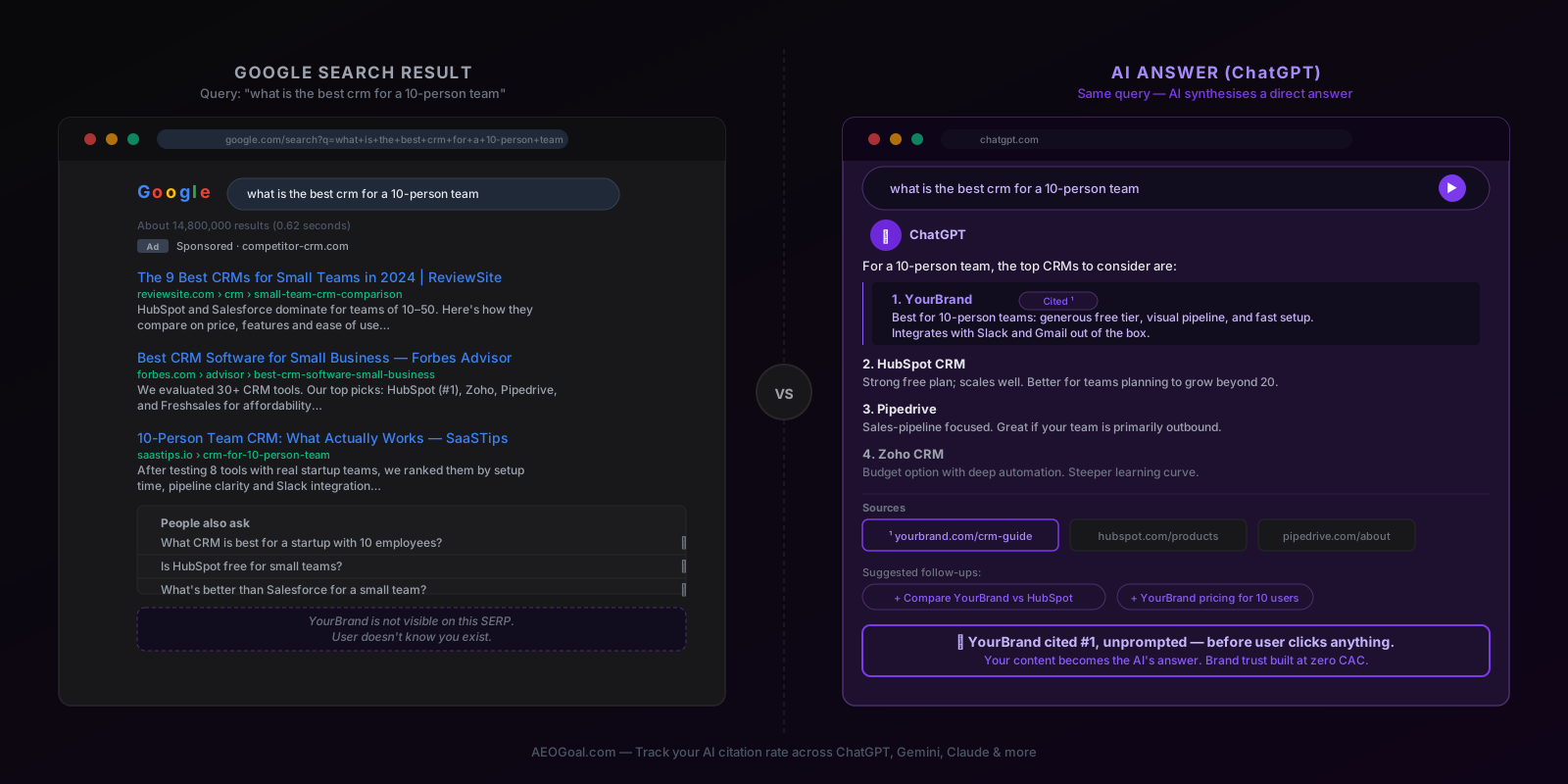
How ChatGPT decides which sources to mention
ChatGPT draws on two distinct mechanisms, and optimizing for each is different. First, the base model has parametric knowledge baked in during training, so brands that are widely and consistently described across the open web tend to surface even without a live retrieval step. Second, ChatGPT Search and browsing modes run retrieval against live web results - historically powered by Bing’s index - then ground the answer in the pages it pulls. The result is that two factors dominate: how clearly your brand is established as an entity across the web, and whether your pages are crawlable, answer-first, and structured enough to be retrieved and quoted in the moment.
This is why content that reads well to humans but buries the answer often loses. Models reward a clear, early, self-contained answer that can be lifted into a response. If you want a fuller primer on how this category works, our explainer on what answer engine optimization is covers the fundamentals, and the difference between AEO and traditional SEO explains why the old ranking playbook only partly transfers.
The practical implication is that ChatGPT SEO is won on two timescales at once. The training-data channel is slow and cumulative: it rewards a brand described consistently and credibly across the whole web - your own site, third-party mentions, reviews, and reference pages - so the model effectively “knows” who you are before any retrieval happens. The retrieval channel is fast and page-level: it rewards a specific page that is crawlable, answer-first, and cleanly structured at the moment of the query. A serious program works both - building durable entity presence while shipping the pages that win live retrieval - and AEO Goal measures whether either channel is letting you down, so you know whether to invest in authority, in content, or in technical fixes.
Most SEO tools cannot see inside ChatGPT. AEO Goal can.
Here is the problem with running ChatGPT SEO on a traditional stack: your rank tracker has no idea what ChatGPT actually said. It cannot tell you whether ChatGPT recommended a competitor for your highest-intent question, whether it cited your page or someone else’s, or whether it described you accurately or with a stale caveat. You are optimizing blind for the surface that increasingly shapes your buyers’ shortlist.
AEO Goal is built to see inside the answer. It runs your priority prompts through ChatGPT (and the other major assistants), records whether you are named, whether a URL is cited and whose, how you are framed, and which competitors share the answer - then ties every gap to a concrete fix. That is the difference between hoping ChatGPT mentions you and systematically earning it.
What to track for ChatGPT visibility
Track the prompts a real buyer would type, not vanity keywords. The useful signal set is:
- Mention. Which category, comparison, alternative, and implementation questions trigger a mention of your brand.
- Citation. Whether ChatGPT cites a URL, and whose URL it is - yours or a competitor’s.
- Framing. How your brand is characterized: favorably, neutrally, or with a caveat.
- Competitor overlap. Which competitors share the answer space, and which crowd you out entirely.
A single visibility score is not enough on its own. What moves work forward is a gap list - the specific prompts where a competitor is named and you are not, paired with the owned page that should have supported the answer. AEO Goal’s AI visibility tracking monitors those prompts across assistants over time, and AI citation tracking records which exact source URLs the model pulled, so a missing citation becomes an assignable content task instead of a guess.
How AEO Goal improves ChatGPT SEO - the loop
Improvement is an operational loop, not a one-time fix:
- Baseline the answer landscape. Run your priority prompt set through ChatGPT and record mentions, citations, source URLs, sentiment, and competitor overlap.
- Find the gaps. Isolate the prompts where the model answers confidently but omits you, and identify the page that should have been retrieved.
- Fix entity clarity and crawlability. Make sure your brand is described consistently across your site and the wider web, that key pages are crawlable, and that structured data and clear naming reinforce who you are and what you do.
- Publish answer-first content. Lead each target page with a direct, self-contained answer the model can lift, then add the supporting depth.
- Re-measure. Re-run the prompt set and report whether mentions, citations, and share of model moved.
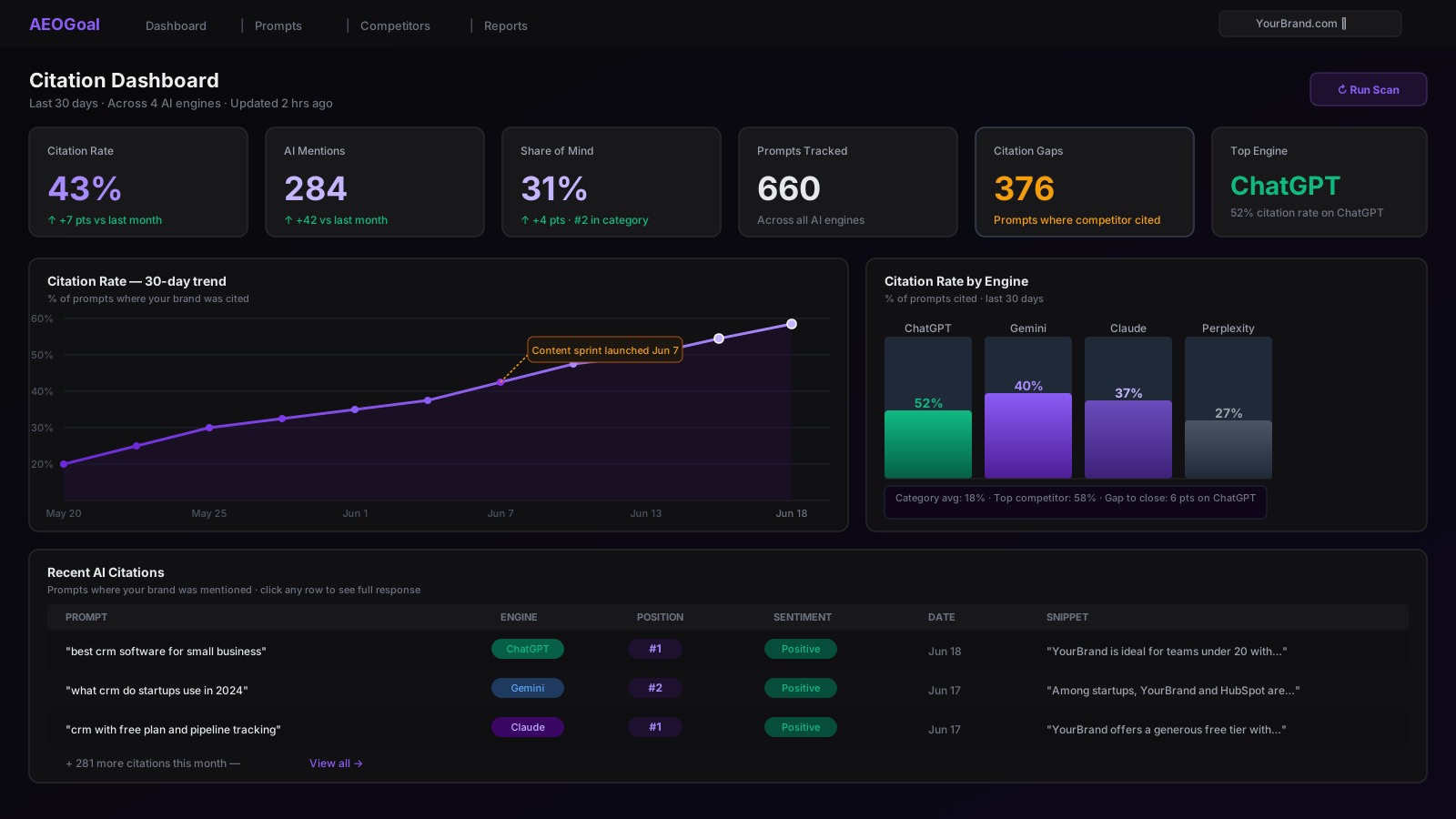
A worked example
Suppose you ask ChatGPT “what are the best tools for [category]” and it names three competitors, cites one of their comparison pages, and never mentions you - even though you rank well on Google for the same query. A rank tracker shows green and flags nothing. AEO Goal surfaces the miss, shows the competitor URL ChatGPT leaned on, and diagnoses the likely cause: your entity is described inconsistently across the web and your comparison page buries its answer below a long intro. The fix is specific - tighten the entity signals, lead the page with a direct answer, add the schema - and the next run shows whether ChatGPT started including you. You are working the exact reason for the omission, not guessing.
How ChatGPT SEO differs from optimizing for other assistants
ChatGPT is one answer engine among several, and each weights sources differently. Perplexity leans heavily on live retrieval and shows citations prominently; Google AI Overviews blend the model with Google’s index; Claude and Gemini have their own retrieval and training profiles. Tactics that earn a ChatGPT mention often help elsewhere - clear entities, answer-first pages, crawlable structure - but the prompt set and citation behavior differ per platform, so treating ChatGPT as a proxy for “all of AI” understates the work. Tracking each assistant separately is what keeps the picture honest, and comparing approaches across the category is easier with a survey of the available AI SEO tools.
There is also a strategic reason not to over-index on ChatGPT alone. Its share of the assistant market is large but not total, and your buyers may lean on Perplexity for research or hit Google AI Overviews without ever opening a chat app. Optimizing only for ChatGPT can leave you blind to a competitor quietly winning the answer on the engine your specific market prefers. AEO Goal tracks each engine as its own surface, so you can invest where your buyers actually are rather than where the loudest headlines point - and see when a tactic that won a ChatGPT mention failed to transfer elsewhere.
What you can finally answer
- Does ChatGPT name us, a competitor, or no one for our highest-intent questions?
- When it cites a source, is it our page or someone else’s?
- Is ChatGPT describing us accurately, or repeating a stale or wrong characterization?
- Which specific fix would make a given ChatGPT answer include us - and did it work?
Who it is for
- Marketing and SEO leaders who need to know whether the most-used AI assistant recommends the brand.
- Content teams who want a ChatGPT-specific gap list, not a generic keyword report.
- Founders and product marketers in categories where buyers now open ChatGPT before Google.