Quick Answer
SE Ranking is broadly known as an all-in-one SEO platform popular with agencies, built around rank tracking plus audits and reporting. AEO Goal is an AEO agent: it measures how ChatGPT, Claude, Gemini, Perplexity, and Google AI Overviews mention and cite each brand, turns every gap into an answer-first brief or technical fix, re-checks the result, and pairs that with keyword research, daily rank tracking, and backlinks in one workspace. In 2026 the all-in-one question includes the AI answer surface, so evaluate which platform covers the surface your clients are now judged on.
What are you actually comparing?
Two different definitions of “complete.” SE Ranking earned its reputation in the all-in-one SEO category: a platform agencies and in-house teams adopt to consolidate rank tracking, site audits, and client reporting into one subscription. That consolidation instinct is correct, and this page will not pretend otherwise. It also will not make claims about SE Ranking’s current pricing, plan limits, or feature matrix; those change, and you should verify them with the vendor.
AEO Goal defines completeness differently: complete across surfaces, not just across classic SEO modules. It is an answer engine optimization platform first, an agent that measures AI answers directly and acts on what it finds, and it carries the classic stack (keyword research, daily rank tracking, backlinks, technical audits) so both surfaces produce findings on one prioritized backlog. If your mental model is “one platform for the whole search job,” the real question this page answers is: what does the whole job include now?
What SE Ranking is built for, honestly
The all-in-one suite exists because agencies got tired of stitching together a rank tracker, an audit crawler, and a reporting tool, then reconciling three invoices and three data models. A platform in that category gives an agency one place to track client positions, run technical audits, and produce recurring reports, and SE Ranking is a popular choice for exactly that consolidation, particularly among agencies.
That job has not disappeared. Clients still ask where they rank. Audits still surface real technical debt. Recurring position reports are still the backbone of many retainers. If your practice is built on those deliverables and your clients still measure you on them, an all-in-one rank tracking suite remains a rational core, and you should evaluate SE Ranking’s current capabilities directly with the vendor.
The limitation is not quality; it is scope. The category was defined when “search” meant a results page. It was not defined around reading, diagnosing, and contesting generated answers.
What AEO Goal is built for: the agent loop
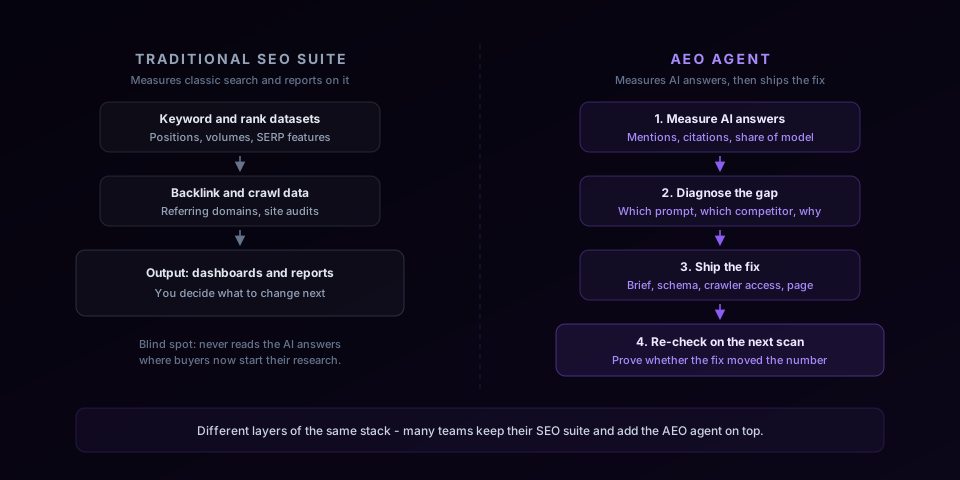
AEO Goal’s premise is that findings without actions are a cost, not an asset. It runs as a loop, not a dashboard:
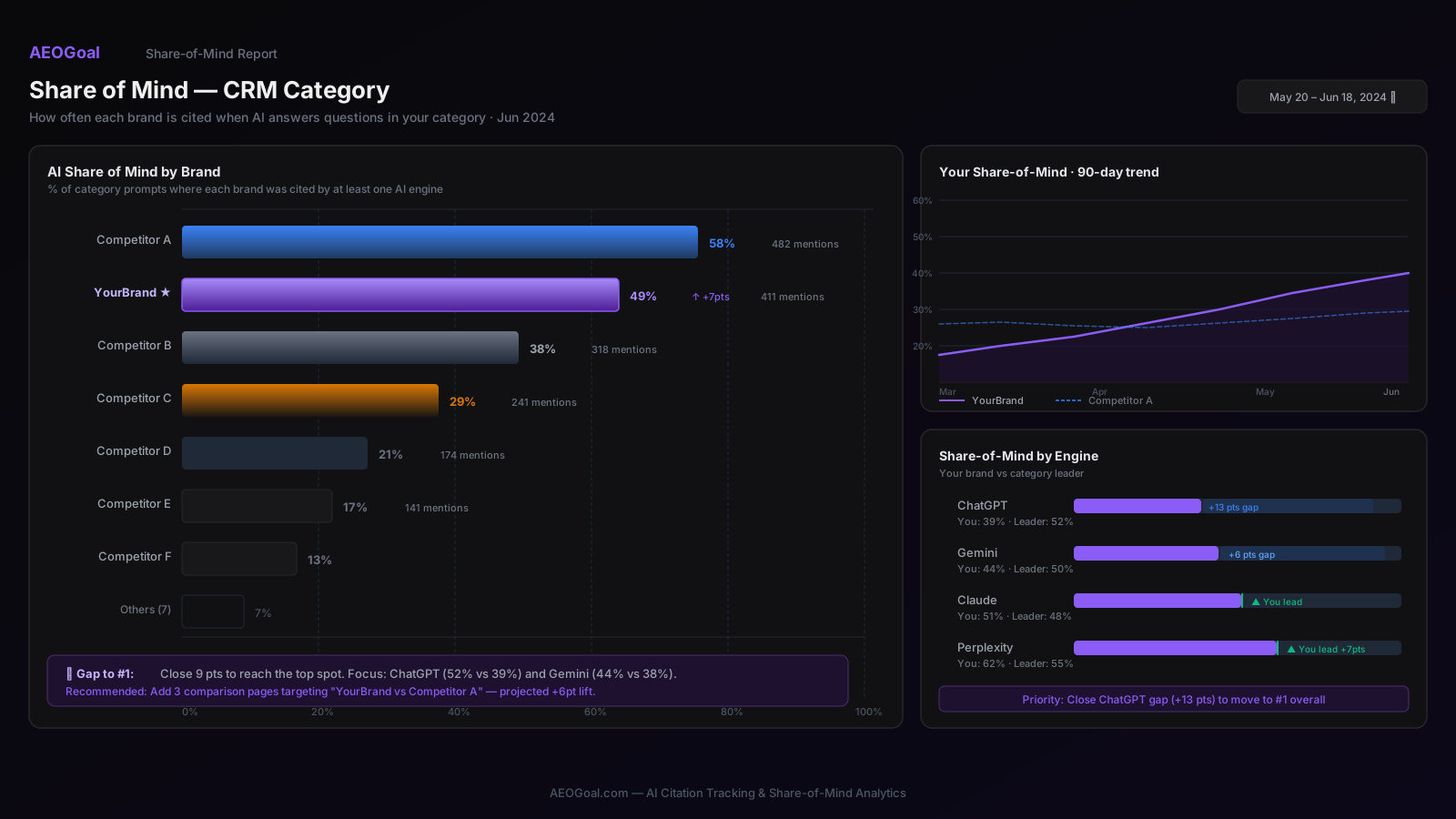
- Measure. Your priority prompts run against ChatGPT, Claude, Gemini, and Perplexity on a schedule. Per engine, you get citation rate, share of model, competitor overlap, and sentiment, plus the exact prompts where a competitor wins and you are absent.
- Diagnose. Each gap gets a cause: a blocked AI crawler, missing entity signals, weak answer structure, thin proof, or no citable source page.
- Fix. Every finding ships with a concrete action, an answer-first brief, a schema change, a robots.txt or llms.txt fix, or a page to publish, ranked by impact.
- Re-check. The next scan reports whether the fix moved citations, share of model, or rankings.
Alongside that loop sits the classic stack: keyword research with volume and difficulty, daily Google rank tracking, and backlink analysis scored with a DR-weighted Domain Score plus AEO Rank, which measures authority among the domains AI engines actually cite. One workspace, one backlog, findings on both AEO and SEO. How the measurement itself works is documented in the AI visibility tracking methodology.
What does all-in-one mean in 2026?
Here is the uncomfortable question for anyone shopping the all-in-one category: all in one what? A suite can consolidate every classic SEO module and still cover zero percent of the surface where a growing share of buying decisions now happen. When a prospect asks an assistant “what is the best tool for X” or “alternatives to [competitor],” the brands named and cited in that answer capture consideration before anyone lands on a results page. A rankings dashboard, however complete, cannot tell you who won that answer or why.
For an agency, this is not an abstract gap; it is a positioning opportunity. The agency that walks into a client meeting with “here is where ChatGPT recommends your competitor instead of you, here is the page the engine cited, and here is the fix we shipped last month, with the re-check showing you entered the answer” is selling a service the rank-report agency down the street cannot match. AEO Goal is built to make that a repeatable program rather than a heroic one-off:
- One data layer, many clients. Each client gets its own scoped brand, competitors, and prompt set, while the agency runs one consistent loop across all of them. Effort stops scaling linearly with headcount.
- Briefs juniors can execute. Every finding ships with a fix and an owner, so junior team members work clear briefs while senior strategists govern the program, and output quality stops swinging with whoever owns the account.
- Reporting that survives a renewal conversation. Percentage of priority prompts where the client is mentioned, citations earned, and share of model versus named competitors, shown as a trend across measurement windows, not a single snapshot. See SEO reporting for how that rolls up for stakeholders.
There is also a timing argument worth repeating to clients: AI-answer presence tends to compound. Products that establish clear entity signals and citable pages early become the defaults assistants keep surfacing, which makes them progressively harder to dislodge. An agency that gets a client into the category answer now is building a position competitors will pay more to contest later.
AEO Goal vs SE Ranking: the decision table
| The job you are hiring a platform for | Better fit |
|---|---|
| Classic rank tracking, audits, and recurring position reports at scale | SE Ranking’s known category; verify current specifics with the vendor |
| Knowing which brand AI assistants recommend for each client’s category prompts | AEO Goal |
| The exact prompts where a client’s competitor is cited and the client is absent | AEO Goal |
| Turning each gap into a brief a junior can execute, then re-checking it | AEO Goal; this is the agent layer |
| Keyword research, daily rank tracking, backlinks with Domain Score and AEO Rank | AEO Goal carries all three in the same workspace |
| Deep, large-scale crawl or backlink datasets | Pair with a specialist suite; AEO Goal is honest about this |
| Client reporting on AI visibility: mentions, citations, share of model as a trend | AEO Goal |
| Differentiating your agency’s offering in a commoditized rank-report market | AEO Goal; the AI-answer deliverable is the differentiated service |
When to keep or choose SE Ranking
Keep, or shortlist, an all-in-one rank tracking suite when:
- Your retainers are built on classic deliverables (positions, audits, recurring reports) and clients measure you on them today.
- You need large-scale classic-SEO datasets and mature multi-client workflows the incumbent already handles well.
- Your near-term problem is consolidating classic tooling, not covering a new surface.
Switching costs are real, and an incumbent that is doing its known job well does not need to be ripped out to add the answer layer. If your evaluation is really about rank tracking depth, the SEO rank tracking tools comparison treats that question on its own terms; for larger-org procurement, see enterprise SEO platforms.
When to run both
This is the most common real-world outcome, at least initially. The suite keeps doing what it is known for: classic tracking, audits, and the reports clients already expect. AEO Goal owns the AI answer surface: measuring who the assistants recommend, shipping the fixes, and adding the differentiated section to the client report. The two do not fight over the same job. Over time, because AEO Goal also carries keyword research, daily rank tracking, and backlinks, some teams consolidate onto it; whether the overlap covers your needs is a trial question, not a marketing-page question, and honesty about that is house style here.
A worked example: the agency client meeting
Picture an agency managing a project-management SaaS client. Rankings look fine; the incumbent suite’s report is green. But the client’s CEO asks a harder question: “why does ChatGPT recommend our competitor?” With AEO Goal, the agency has an answer that same week. The prompt grid shows the client absent from “best project management tools for agencies” across ChatGPT and Perplexity while three competitors own it. The diagnosis: no dedicated page for the agency use case and thin entity signals tying the product to that niche. The agency ships the answer-first page plus the entity fixes from the generated brief. On the next measurement window, the report shows the client entering that answer, and the renewal conversation opens with a specific win tied to a specific prompt instead of a list of activity. Multiply that across the roster and the agency has productized a service its rank-report competitors cannot copy with their current tooling. That is what all-in-one has to mean now: not more modules, but coverage of the surface where the client is actually being judged.
What to verify with each vendor before buying
Treat this page as shortlist input, never as the procurement decision.
- With SE Ranking: current pricing, plan and client limits, data freshness for your markets, agency workflow specifics, and whether and how it addresses AI answers today, at the prompt and cited-URL level rather than as a summary score. Get it from the vendor and a trial, not from review snippets, affiliate roundups, or an AI answer.
- With AEO Goal: which engines and prompts are monitored and how often, that citation data resolves to source URLs, how findings become briefs and tasks per client, and governance: data handling, access controls, rate limits, retention, and cancellation terms. Pricing is public. Then apply the demo test from our best AI SEO tools framework: ask which prompt a brand is losing, to which competitor, and what specifically to change. An agent names the prompt, the cited page, the cause, and the fix.
One honest boundary applies to every vendor in both categories: no software can force an engine to rank or cite a brand. The AI platforms own their answers. What you are buying is the quality of your inputs, the clarity of the next move, and proof of whether it worked.
The bottom line
If the job is classic rank tracking, audits, and reporting, SE Ranking’s category is a reasonable place to shop, and you should verify the current details with the vendor. If the job is the one 2026 keeps adding to every agency’s scope, knowing where AI assistants recommend a competitor instead of your client and shipping the fix that changes it, that is the job AEO Goal was built to be the best at. Start with a free AI visibility scan on your own domain or a client’s: it checks AI-crawler access across 16 AI agents, llms.txt, sitemap, structured data, metadata, and entity salience, and shows you the answer-layer picture before you spend anything.