AI search visibility: are you in the answer, or invisible?
AI search visibility is how present and prominent a brand is across AI-powered search experiences - Google AI Overviews, Bing Copilot, Perplexity, and assistants like ChatGPT and Gemini - when people search the way they actually do now: by asking a question and reading a single composed answer. It is the AI-era successor to “search visibility,” which historically meant where a site appeared across ranked results pages.
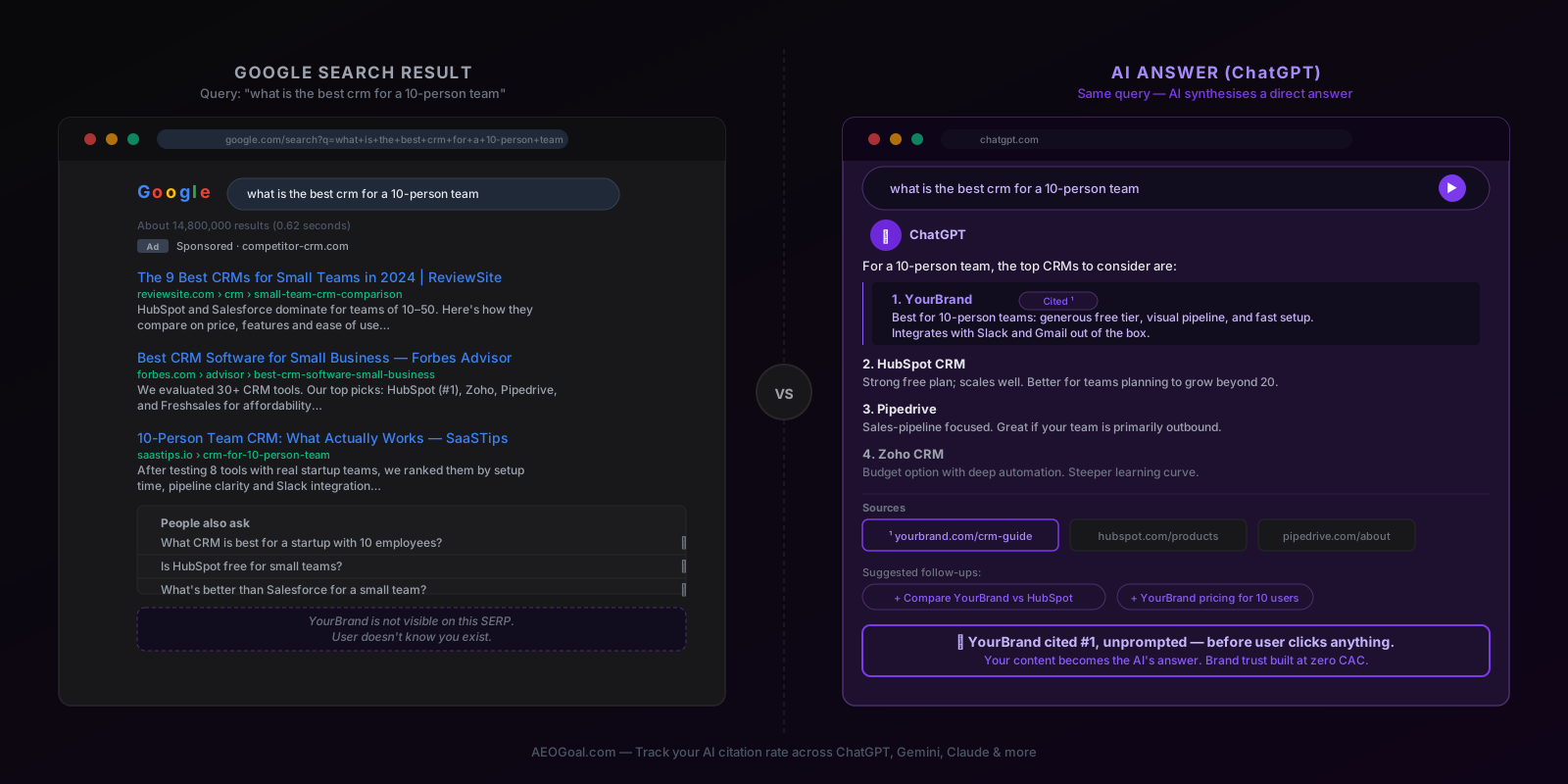
The surface changed, so the metric has to change with it. In an AI search result, the answer sits above or in place of the traditional link list, and many searches now end without a click - the pattern often called zero-click search. Visibility is no longer just “do we rank”; it is “are we present in the answer the user reads, and how are we represented when we are.” AEO Goal is built for exactly that question - and, because it is an AEO agent rather than a dashboard, it does not stop at telling you whether you are present; it tells you why, ships the fix, and re-checks whether presence improved.
Why AI search visibility is important now
A growing share of research and buying questions are answered inside an AI summary before a user ever reaches a website. When that summary names and trusts certain brands, those brands shape the buyer’s shortlist directly; brands that are absent never enter the consideration set. The competition has moved up the page, into the answer itself.
This does not make classic rankings worthless - they still drive clicks and often feed the AI’s source selection - but it does mean tracking only ranked positions now misses a large part of the picture. A brand can rank on page one and still be completely absent from the AI Overview sitting above those results, which is the worst of both worlds: you did the SEO work and still lost the impression.
Timing is important because these positions harden. Once a competitor becomes the default AI answer for your category, each engine keeps leaning on the sources and entities it already surfaced, so the same brand gets named again on the next run and the one after that. That is not a lead you close in a quarter; it is a pattern you have to interrupt with sustained, measured work. Baselining your AI search visibility now, while the answer is still contested, is how you keep the category open instead of conceding it by default. For a structured comparison of optimizing for ranked results versus AI answers, see AEO versus traditional SEO. Teams new to the discipline can start with the introduction to answer engine optimization.
Most tools track rankings. AEO Goal tracks the answer.
Here is the gap most SEO stacks have. They tell you where you rank, and they are blind to what the AI actually said. They cannot tell you whether ChatGPT recommended a competitor for your highest-intent query, whether Perplexity cited your page or someone else’s, or whether the AI Overview framed you accurately or with a stale description.
AEO Goal is built to see inside the answer. It monitors a defined prompt set across each AI surface and records the signals that decide whether a buyer meets your brand - and then it acts. Every gap it surfaces is tied to a likely cause and a concrete fix, so you are not left staring at a visibility score with no idea what to do. That is the difference between measuring AI search visibility and improving it.
What to measure - presence, prominence, and framing, per surface
Measure across a defined set of real search prompts and across each AI surface that is important to your buyers. For each prompt, four things count:
- Presence. Is the brand mentioned in the answer at all?
- Citation. Is one of your pages cited as a source, or is the mention drawn from someone else?
- Prominence. Where does the brand sit relative to competitors - recommended first, listed among many, or an afterthought?
- Framing. Is the description accurate and favorable, or outdated and misleading?
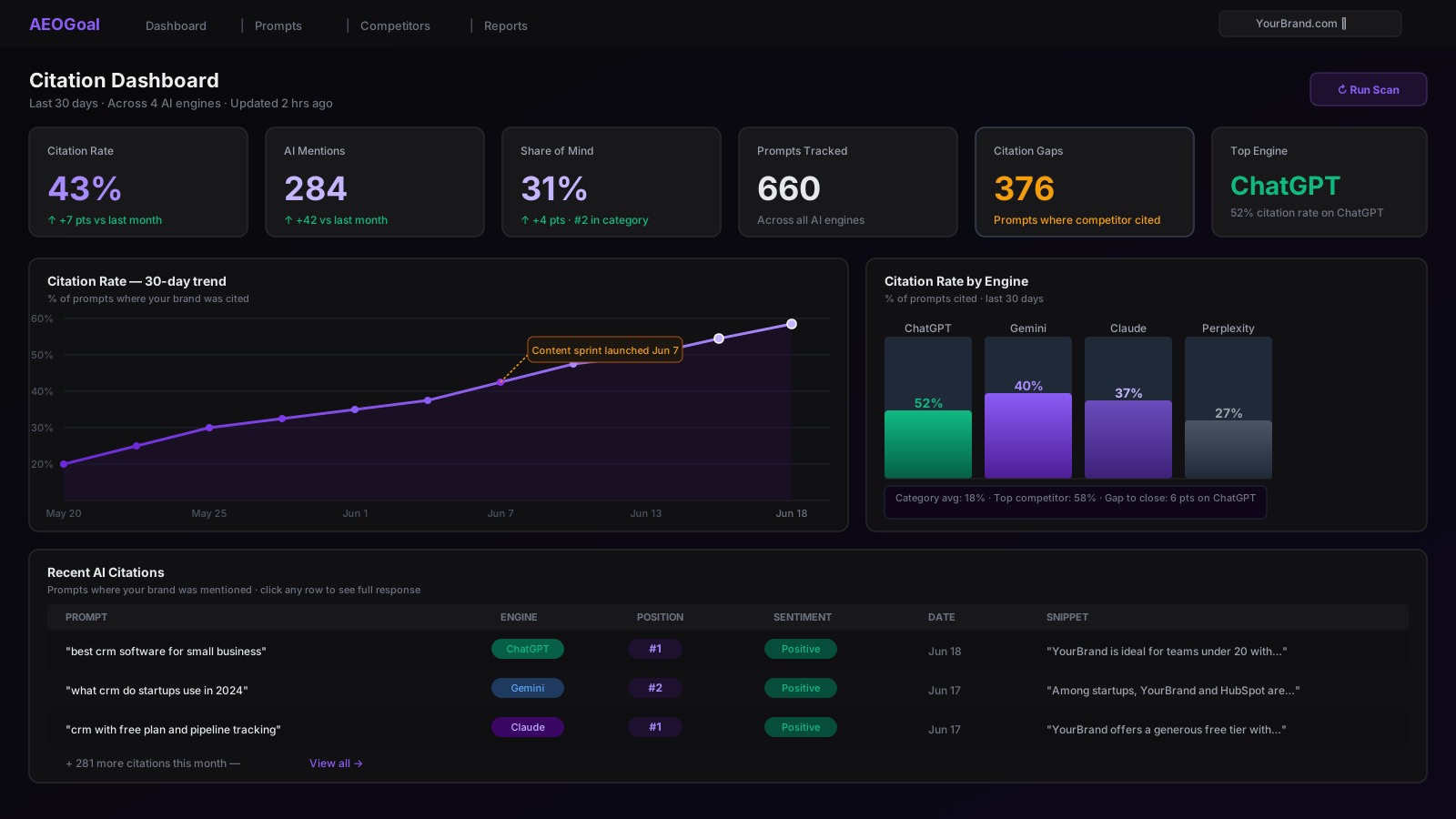
Because different surfaces - Google AI Overviews versus Perplexity versus an assistant - can answer the same question differently, visibility is genuinely multi-platform and worth tracking per system. A single composite number is fine for a headline but weak for action; the useful artifact is a per-prompt, per-platform view that shows exactly where the brand is missing and which competitors are filling the gap. That maps cleanly onto share of model across AI answers, which expresses how much of the answer surface a brand owns relative to its market.
How AEO Goal measures AI search visibility
AEO Goal monitors your prompt set across multiple AI search surfaces and records whether the brand is mentioned, cited, and how it is framed, along with which competitors appear. It then connects those findings to competitor visibility and content briefs so each gap leads to a concrete fix rather than a number. The citation signal in detail lives in AI citation tracking, and the day-to-day monitoring view lives in AI visibility tracking.
The important design choice is that AEO Goal keeps the data per prompt and per surface rather than collapsing everything into one figure. That granularity is what makes it usable. You can hand an executive a single share-of-mind headline for the board deck, hand a content lead the exact list of prompts and engines where the brand is missing, and hand an engineer the subset of those gaps that trace to a technical blocker - three views of the same underlying data, each pitched at the person who has to act on it. A number nobody can act on is a report; a per-prompt, per-surface gap list is a plan. It is the difference between knowing you have a visibility problem and knowing precisely where to spend the next sprint, on which engine, for which buyer question.
A worked example
Suppose a team discovers they appear in a Perplexity answer for a category question but are entirely absent from the corresponding Google AI Overview. A rank tracker would show both engines’ underlying pages ranking fine and flag nothing. AEO Goal surfaces the per-surface gap, inspects why the Overview omits the brand - often a structured-data or answer-clarity difference the Overview weighs more heavily - and prioritizes the specific fixes most relevant to that surface. After the change, it re-checks that exact prompt on that exact engine to see whether the brand appeared. Whether the surface responds is the platform’s decision, but now the work is aimed at the real gap rather than guessed at.
A workflow for improving AI search visibility
- Define the market, competitors, and the prompts that mirror real searches.
- Baseline visibility across each AI surface: presence, citations, competitor overlap, and framing.
- Diagnose each gap - crawlability first, then entity clarity, then answer-first content that resolves the searched question.
- Fix in priority order, with each finding carrying a specific action.
- Re-run and report per surface on a cadence, since a change that helps one engine may not transfer to another.
What you can finally answer
- Are we present in the AI answers our buyers read, on the surfaces they actually use?
- Where do we appear on one engine but vanish on another, and why?
- Which competitors are being recommended when we are absent?
- Are we framed accurately, or is an AI repeating a stale description of us?
- Did last month’s fixes actually increase our presence, per surface?
Who it is for
- Marketing and SEO leaders who need to know whether the brand is winning the AI answers that now precede the click.
- Demand and content teams who want a per-prompt target list instead of a rankings report that no longer tells the whole story.
- Competitive and product-marketing teams who need early warning when a competitor starts owning the AI answer in the category.