AI answer optimization: making the answer itself winnable
AI answer optimization is the work of shaping content so that an answer engine - a system like ChatGPT, Google AI Overviews, Perplexity, or Gemini that returns a single composed response rather than a list of links - is more likely to include, quote, and correctly represent a brand. An answer engine reads across many sources, decides which to trust, and synthesizes a reply. AI answer optimization targets that synthesis step directly.
The core unit of work is the answer itself, not the keyword. For any given question, you are asking three things: is there a page that answers this directly, is that page structured so a model can extract a clean answer from it, and is the brand established clearly enough that the model treats it as a credible authority. Get those right and the page becomes a far better candidate for inclusion. AEO Goal is built as an agent around exactly this loop: it does not just report whether you were included, it identifies which answers are winnable, briefs the content to win them, and re-checks whether the engine adopted it.
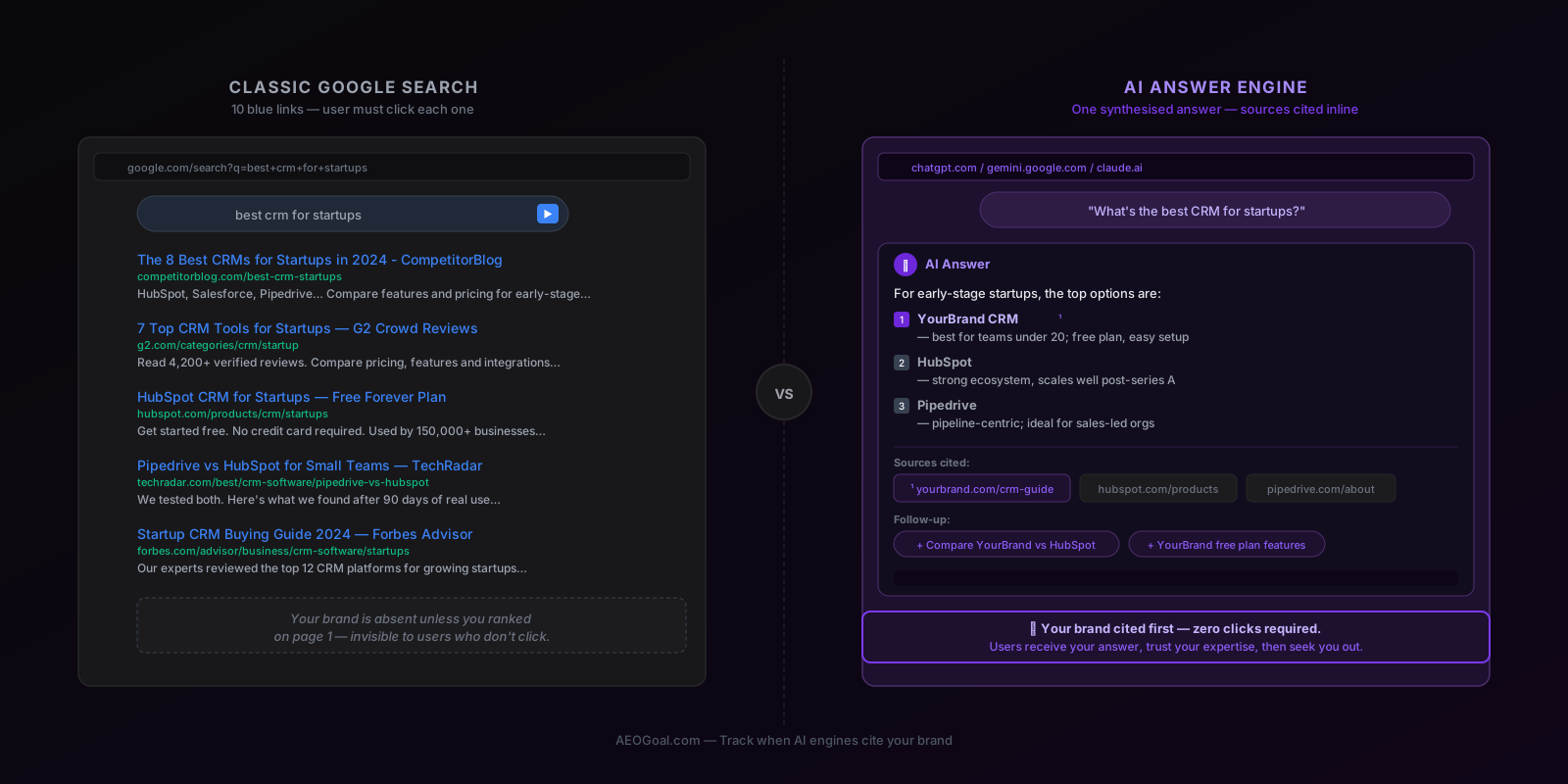
Most tools optimize for keywords. AEO Goal optimizes the answer.
Keyword tools tell you what to target and readability tools tell you how a human scores your prose. Neither tells you whether an answer engine can lift a clean, attributable answer from your page - which is the only thing that decides inclusion now. A page can be keyword-perfect and readable and still be passed over because the answer is buried, incomplete, or ambiguous about which brand it describes.
AEO Goal optimizes for the thing that actually wins the answer: extractability and authority on a specific question. It measures how each engine currently answers your priority prompts, diagnoses why your page is or is not used, and ships the rewrite that makes the answer cleaner to lift. That is the difference between producing more content and producing content an engine will actually quote.
How AI answer optimization relates to AEO and GEO
They are closely overlapping disciplines with different emphases. Answer Engine Optimization (AEO) is the broad practice of being surfaced in AI and answer-style results. Generative Engine Optimization (GEO) emphasizes the generative-model side specifically - how large language models retrieve and assemble sources. AI answer optimization sits squarely inside both: it is the hands-on content and structuring work that makes a specific answer winnable.
If your team is mapping the terminology, our explainer on what generative engine optimization means clarifies where GEO and AEO overlap and diverge. The practical takeaway is that the optimization techniques are largely shared - clarity, structure, and authority - even when the framing differs.
What makes content answer-ready for AI
Answer-ready content leads with a direct, self-contained answer in the first sentence or two, then supports it with detail. This “answer-first” structure mirrors how featured snippets work and how retrieval-augmented generation systems extract passages: they reward a clean, quotable statement that resolves the question without requiring the reader to assemble it from scattered paragraphs.
Three properties matter most:
- Directness. The answer appears immediately, not buried under preamble - a model can quote it verbatim.
- Completeness. The page also addresses the obvious follow-up questions, so the model can draw a fuller answer from one trusted source instead of stitching several together.
- Machine-readability. Clear headings, structured data, and unambiguous entity references help the model parse what the page is about and attribute it correctly.
Vague, padded, or burial-of-the-lede content is hard for an answer engine to lift cleanly, so it defaults to a competitor that made extraction easy.
There is a useful mental model here: write for the passage, not the page. An answer engine rarely quotes a whole article; it lifts the one passage that best resolves the question. So the goal of AI answer optimization is to make sure that, somewhere near the top of the relevant section, there is a clean, self-contained passage the model can take verbatim and attribute to you. Everything else on the page supports that passage - it earns the model’s trust and supplies the follow-ups - but the passage itself is what wins the citation.
How AEO Goal supports AI answer optimization
AEO Goal treats AI answer optimization as a measure-fix-remeasure loop. It monitors a defined prompt set across AI systems, records whether the brand is mentioned and cited, captures which competitors appear, and turns those gaps into answer-first content briefs. Each brief is built around the exact question a prompt represents, so the resulting content is designed to be extractable rather than merely keyword-rich, and AEO content generation helps scale that output while an editor keeps claims accurate.
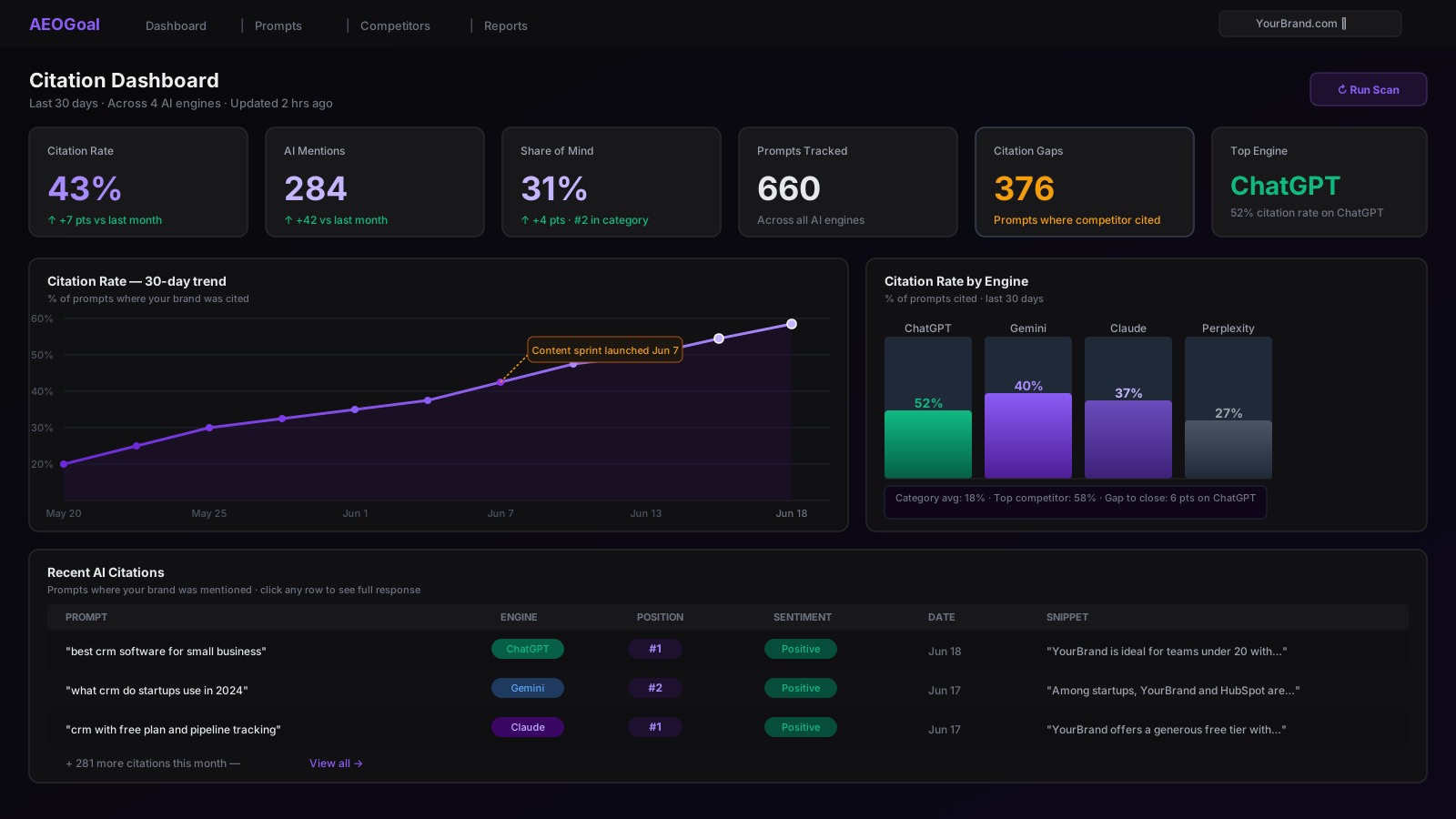
To know whether the work landed, you need to see the answers themselves over time, which is where AI visibility tracking comes in. AEO Goal does not promise that any model will cite a brand - answer engines control their own output - but it offers honest measurement of the current answer landscape and a structured way to verify movement.
What makes the loop trustworthy is that the same prompt set runs before and after the rewrite. It is easy to publish an “improved” page and assume it helped; it is another thing to watch the exact question on the exact engine and see your passage start appearing where a competitor’s used to be. Because AEO Goal re-checks against the original baseline, every rewrite is either confirmed by real movement or flagged as not-yet-working, so writers and editors get direct feedback on whether their answer craft actually changed the machine’s output - not just whether the draft read well to a human. Over several cycles that feedback compounds into a house style tuned to what your engines actually reward, which is far more valuable than any one-off optimization.
A worked example
Suppose an answer engine summarizes a competitor’s definition of your category but never mentions your brand. AEO Goal surfaces the prompt, shows the competitor passage the model leaned on, and diagnoses the cause - your page circles the topic but never states a crisp, quotable definition, and lacks the schema that ties it to the entity. The brief is specific: open with a one-sentence definition, add the follow-up questions the model tends to pull, and mark up the entity. After you publish, the next run shows whether the model started drawing from your page. Whether it adopts the passage is the model’s decision, but you have given it a cleaner one to choose.
A workflow for optimizing AI answers
- Define the questions that matter: real buyer prompts, comparison queries, and implementation questions.
- Baseline how AI systems currently answer them - who is mentioned, who is cited, and how the brand is framed.
- Diagnose each gap: missing answer, weak extraction, or weak authority.
- Fix accordingly - write an answer-first page, restructure and add structured data, or strengthen entity proof.
- Re-run and report on a cadence whether inclusion and framing improved.
What you can finally answer
- For our priority questions, does the AI include us, a competitor, or no one?
- When we are omitted, is it a missing page, weak extraction, or weak authority?
- Which exact rewrite would make a given answer winnable?
- Did the page we just shipped change how the engine answers?
Who benefits from AI answer optimization
Content and SEO teams at B2B and SaaS companies benefit most, because their buyers increasingly research through AI assistants before ever visiting a site. The skill set is adjacent to existing content work - it asks writers to be more direct and editors to think in terms of extractable answers. Teams weighing tooling can compare options across the AI SEO tool landscape to find a measurement layer that fits their workflow. The teams that adopt it earliest tend to be the ones whose category is already being reshaped by AI answers, where a missing citation on a high-intent question is effectively a missing deal.