Definition
An answer engine is an AI system that responds to a question with a synthesized answer composed by a language model from retrieved sources, rather than a ranked list of links. ChatGPT, Perplexity, Claude, Gemini, Google AI Overviews, and Microsoft Copilot all operate as answer engines: the user asks in natural language, the system returns prose, and it may cite the specific pages it drew from.
How An Answer Engine Works
Under the hood, most answer engines run a retrieve-then-generate pipeline. First, the system interprets the prompt and, when it decides fresh information is needed, issues search queries against a web index or its own retrieval layer. Second, it selects candidate passages from the returned pages and evaluates them for relevance and reliability. Third, a large language model synthesizes those passages, plus what it already encodes from training data, into a single answer. Finally, many engines attach source references to specific claims, which is what makes the output auditable and makes AI citations a measurable signal.
Two consequences follow from that pipeline. A brand can appear in an answer through two separate doors: the model’s training data (what it already believes about the world) and live retrieval (which pages it can fetch and parse right now). And because the model compresses several sources into a few sentences, only a handful of brands and URLs survive into the final answer. Presence is scarce in a way ten blue links never were.
Answer Engine vs Search Engine
A search engine’s job ends at ranking: it orders documents by estimated relevance and hands the evaluation work to the user. An answer engine does the evaluation itself and hands back a conclusion. That changes the unit of competition. In classic search you compete for a position on a results page; in an answer engine you compete to be one of the few entities named or one of the few sources cited inside the generated text. A page can rank fourth on Google and still be the answer’s only citation, or rank first and be absent from the answer entirely.
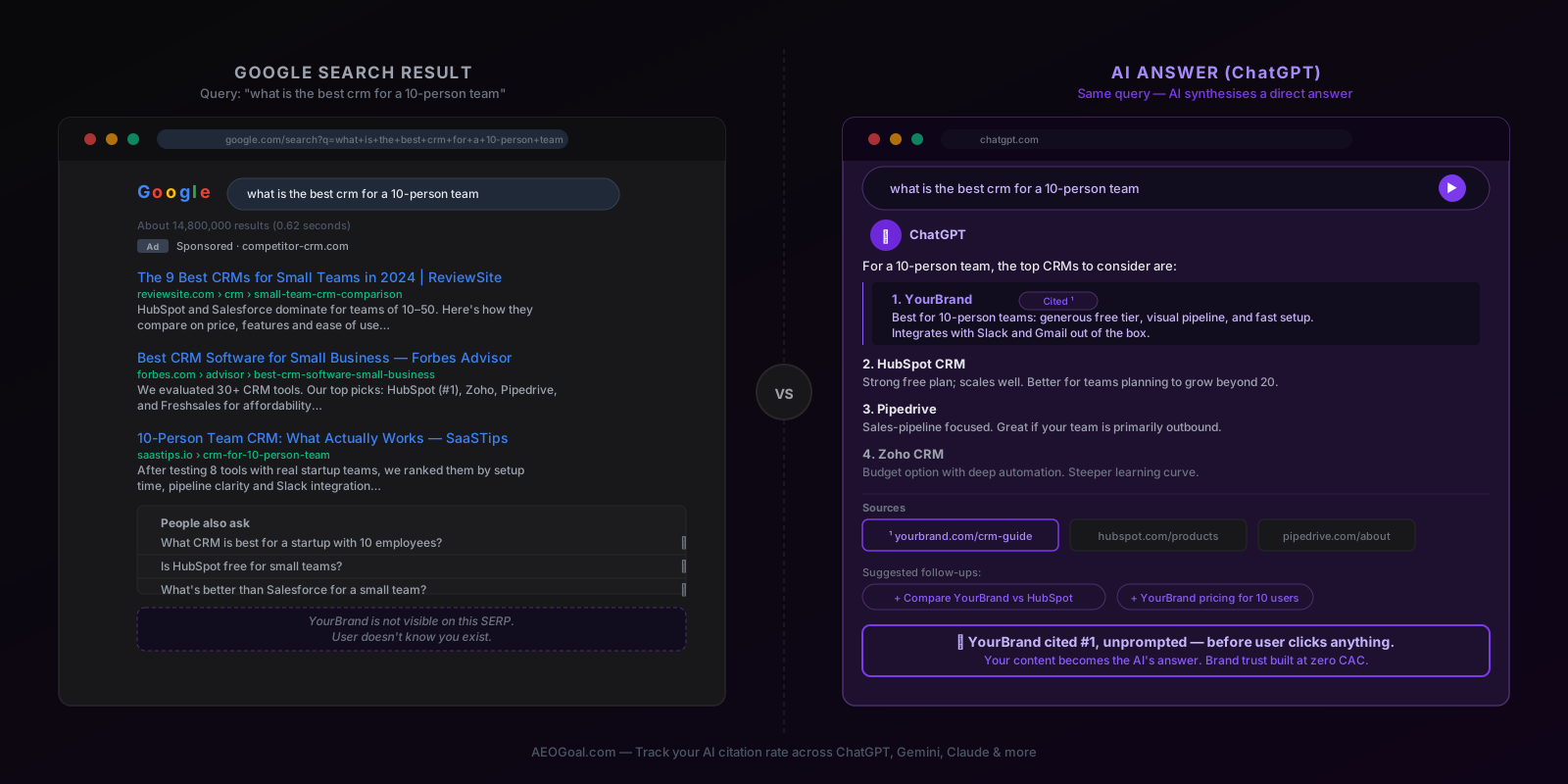
A Worked Example
Suppose a buyer asks “what is the best CRM for a 10-person team.” A search engine returns ads, review roundups, and vendor pages, and the buyer clicks and compares. An answer engine instead replies with something like “For a team of ten, consider X, Y, or Z,” a two-sentence rationale for each, and two or three cited sources, often review sites rather than the vendors themselves. The vendors named in that reply were shortlisted before a single click happened. A vendor absent from it never entered the buyer’s consideration, no matter where it ranks.
What This Changes For Measurement
Rankings and clicks do not describe the answer-engine surface, so teams track different signals: whether the brand is named in generated answers (an AI mention), whether owned pages are attached as sources (an AI citation), how the brand is framed, and how its presence compares with competitors across a prompt set, which rolls up into Share of Model. Because outputs vary run to run, these are measured as rates over a stable prompt set rather than read off a single response, and they are segmented per engine, since each system retrieves and cites differently for the same question. That per-prompt, per-engine measurement is what AI visibility tracking automates in AEO Goal, with each detected gap paired to a concrete fix the next scan re-checks.
Where It Fits In An AEO Program
The answer engine is the surface every AEO program optimizes for. The practice of earning presence on that surface is answer engine optimization: making pages retrievable by AI crawlers, structured so a model can extract a direct answer, and evidence-rich enough to be worth citing. The strategic contrast with rank-focused work is covered in AEO versus traditional SEO, and the discipline as a whole in what AEO is.
Related Terms
Related terms include answer engine optimization, AI citation, AI mention, AI visibility, and structured data.