AEO optimization: the full loop, not a one-time project
AEO optimization is the practice of improving whether and how a brand is surfaced inside AI-generated answers from systems like ChatGPT, Perplexity, Google AI Overviews, and Gemini. Answer Engine Optimization (AEO) targets the synthesized answer an AI returns rather than a ranked list of ten blue links. Where classic SEO competes for position on a results page, AEO competes for inclusion, citation, and favorable framing inside a single composed response.
In practice, optimization happens across three layers: the content layer (does a page answer the question directly and completely), the entity layer (does the AI understand what the brand is, what category it belongs to, and how it relates to competitors), and the technical layer (can the source be crawled, parsed, and trusted). AEO optimization is the coordinated work of improving all three. AEO Goal is built to run that work as a loop rather than a checklist - it is an AEO agent, so it measures the answer landscape, ships the fix for each gap across all three layers, and re-checks whether the needle moved.
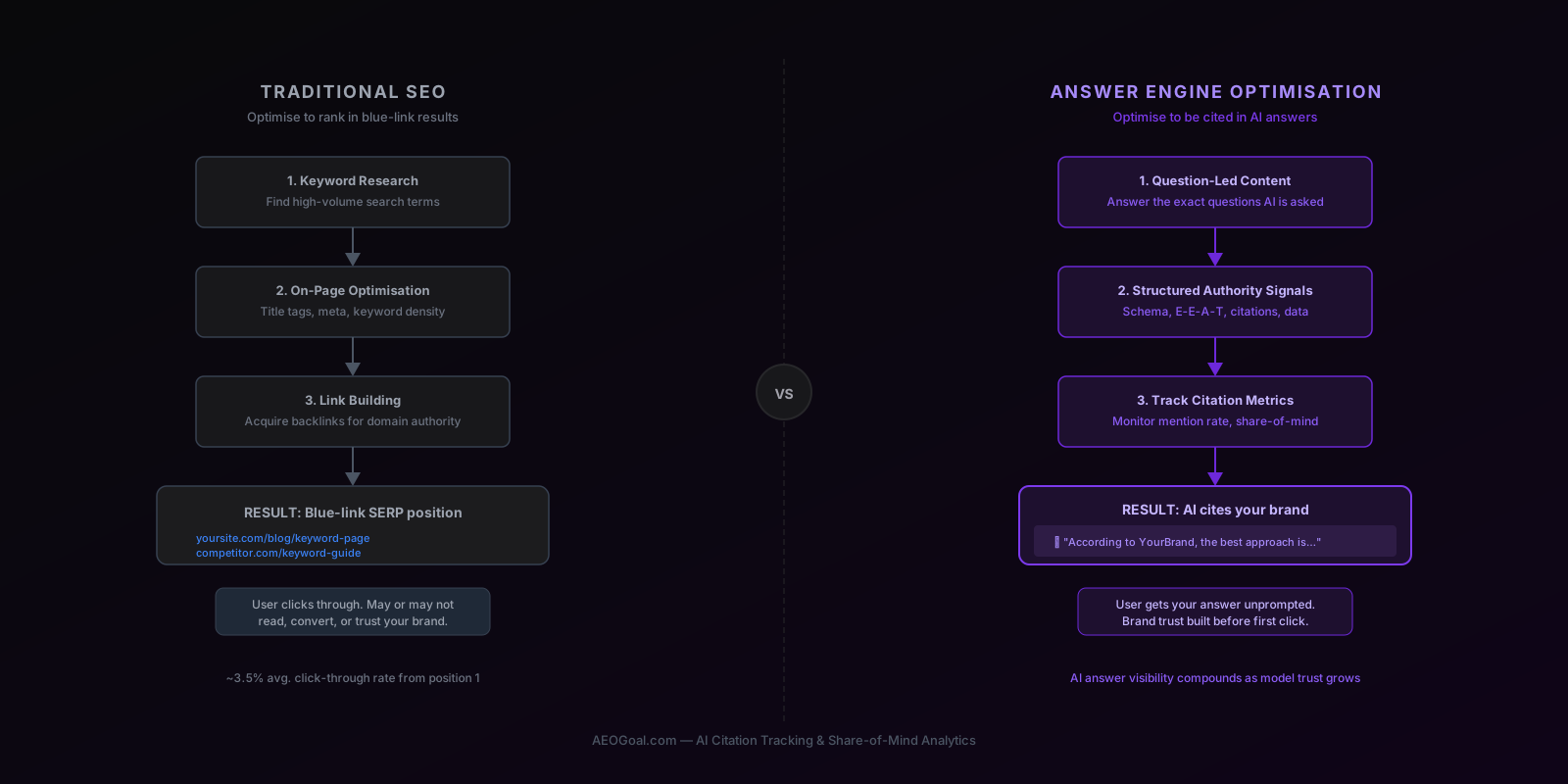
How AEO is different from traditional SEO
The short version: traditional SEO optimizes for a ranked page of links, while AEO optimizes for being chosen as a source inside one synthesized answer. Both still matter, but the success metric changes. In a ten-link results page, position two or three still earns clicks. In an AI answer, the system typically composes a response from a small handful of sources and may cite only a few of them - so the difference between being included and being omitted is far more binary.
That changes the playbook. Keyword density and link volume are less decisive than answer clarity, entity authority, and structured data that makes a page machine-readable. For a fuller side-by-side, see our breakdown of how AEO compares to traditional SEO. If the concept itself is new to your team, the introduction to answer engine optimization is a good starting point.
Most tools stop at a score. AEO Goal runs the program.
Plenty of tools will now hand you an “AI visibility score.” Almost none will tell you which of the three layers is holding you back, or what to do about it. A score that goes down does not tell you whether the cause is a blocked crawler, an ambiguous entity, or a page that never answers the question - and those are three completely different fixes.
AEO Goal is built to run the actual program. It baselines the answer landscape, attributes each gap to a content, entity, or technical cause, and ships the specific fix, then re-measures. The output is not a vanity number; it is a prioritized backlog where every item names the problem, the fix, and the surface it affects. That is what turns AEO from a dashboard you check into an operation you run.
What an AEO optimization program should track
At minimum, track the prompts that mirror real buyer research - category questions, “best tool for X” queries, alternative and comparison searches, and implementation questions - and measure four things per prompt: whether the brand is mentioned, whether it is cited with a source URL, which competitors appear alongside it, and how the answer frames the brand. A single composite “visibility score” is convenient for a dashboard but rarely tells you what to fix.
The actionable output is a gap list. For each prompt where the brand is absent or weakly represented, you want to know the reason: there is no owned page that answers the question, an existing page is not crawlable or lacks structured data, or a competitor simply has a stronger, clearer entity presence. Mapping the answer landscape this way turns AEO from a vanity exercise into a prioritized backlog you can actually work.
It also helps to track the gap by layer, not just by prompt. If most of your misses trace back to crawlability, the fix is an engineering sprint; if they trace to entity ambiguity, it is a structured-data and messaging project; if they trace to missing pages, it is a content plan. Grouping the gap list by root cause tells you which team to mobilize and in what order, so the program moves as coordinated work rather than a scattered pile of one-off tickets nobody owns.
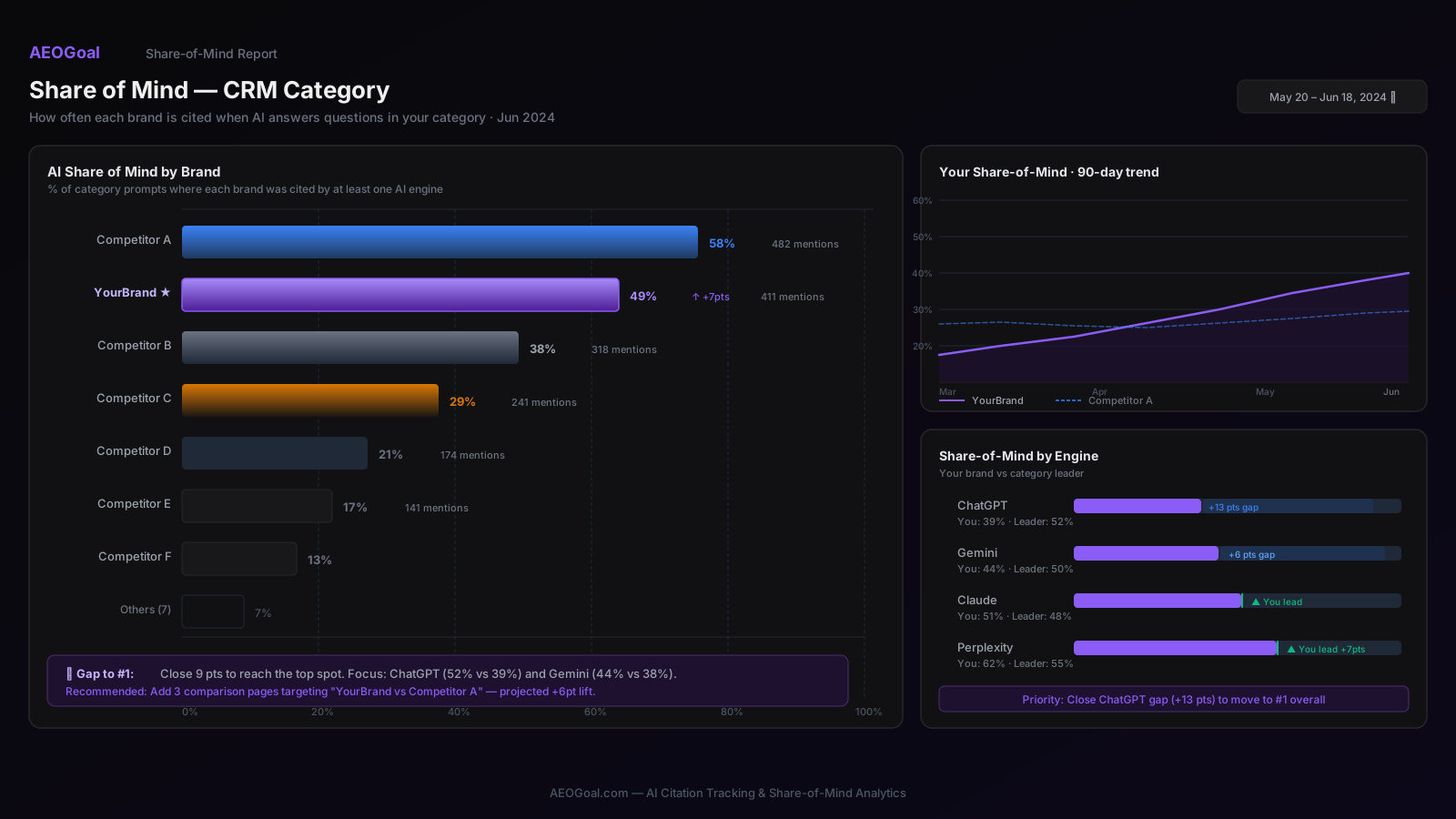
How AEO Goal supports the optimization loop
AEO Goal treats AEO optimization as a measurable, repeatable loop rather than a one-time project. The platform connects prompt monitoring, AI citation tracking, competitor visibility, and answer-first content briefs so that each finding leads to a specific next action. You see which AI systems mention the brand, which sources they cite, and where competitors are winning the answer.
AEO Goal does not guarantee that any AI system will cite a brand. The platforms control their own answers, and that control sits entirely outside any vendor’s reach. What the tool can honestly do is measure the current state, surface the most likely reasons for omission, and let you verify whether changes moved the needle over time. The methodology behind those measurements is documented in our AI citation tracking methodology.
The reason to run this as a loop rather than a project is that AI answers move. Models update, retrieval indexes refresh, and competitors publish, so a page that wins an answer today can quietly lose it next quarter without anything on your side changing. A one-time AEO audit captures a snapshot that is stale almost immediately; a monitored loop catches the drift, re-opens the gap, and points you at the specific fix before the lost ground compounds. That is why AEO Goal is built around a cadence and alerts rather than a single report - the work of staying in the answer is ongoing, and the tooling should match the reality rather than pretend optimization is ever finished.
A worked example
Suppose a high-intent “best tools for X” prompt cites three competitors across ChatGPT and Perplexity but never the brand. AEO Goal traces the omission to a missing comparison page (a content-layer gap), publishes an answer-first page built to be extracted, and reinforces the entity signals that tie it to the category. On the next monitoring run, the brand begins to appear for that prompt. That sequence - baseline, attribute, fix, re-measure - is the shape of the loop, not a promised result, because the engine ultimately decides what to include.
A practical AEO optimization workflow
- Define the market, the brand, the real competitors, and a prompt set that reflects how buyers research the category.
- Baseline the answer landscape: which systems mention the brand, which cite it, what URLs they pull, and which competitors recur.
- Diagnose and prioritize. Crawlability and indexability first, then entity clarity (closely tied to share of model across AI answers), then answer-first content.
- Fix each gap with the specific action its cause calls for.
- Re-run and report on a schedule whether mentions, citations, and competitive share improved.
What you can finally answer
- Across the three layers, which one is actually costing us AI-answer presence?
- Which prompts do competitors own, and what specifically are they doing that we are not?
- What is the highest-impact fix this cycle - technical, entity, or content?
- Are mentions, citations, and share of model trending up after our work?
Who runs AEO optimization, and what does it require?
Most often it is owned by SEO leads, content strategists, or growth marketers at SaaS and B2B companies, working alongside whoever controls the site’s technical SEO. AEO optimization does not require a separate team; it requires connecting work that is usually already happening - content, technical SEO, and competitive research - to a measurement loop focused on AI answers rather than rankings alone. Teams comparing tooling options can review the landscape of AI SEO platforms before committing.