Quick Answer
SpyFu and AEO Goal answer different competitive questions. SpyFu is best known as a competitor keyword research tool for SEO and PPC competitive intelligence: seeing what rivals rank and bid on in classic search. AEO Goal is an AEO agent for the answer layer: it measures which brands ChatGPT, Claude, Gemini, Perplexity, and Google AI Overviews mention and cite, surfaces the exact prompts where a competitor wins and you are absent, ships the answer-first brief to contest that answer, and re-checks the result. Teams serious about competitor intelligence increasingly watch both layers.
Are AEO Goal and SpyFu even in the same category?
No, and that is the most useful thing this page can tell you. You are not choosing between two versions of the same product; you are deciding which competitive surface you need eyes on.
SpyFu built its reputation in a specific, valuable category: competitor keyword research. Its broadly known job is espionage on the classic search battlefield, showing you what your competitors rank for organically and what they bid on in paid search. That intelligence answers questions like “which keywords fund their pipeline” and “where is their SEO strategy concentrated.” We will not characterize its current pricing, database, or feature set here, because those change and you should get them from the vendor directly.
AEO Goal operates one layer up, where a growing share of buying decisions now start: the generated answer. When a prospect asks an AI assistant “what is the best tool for X” or “alternatives to [competitor],” the assistant names two or three brands and effectively hands over the shortlist. AEO Goal measures who wins those answers, diagnoses why, and then acts, which is what makes it an agent rather than another dashboard. The full discipline is covered in answer engine optimization, and the strategic split between the two surfaces in AEO vs traditional SEO.
What SpyFu is built for, honestly
If your competitive program runs on questions like “what keywords did this rival just start bidding on” or “which organic terms drive their traffic,” a competitor keyword research tool is the right instrument, and SpyFu has spent years in exactly that category. SERP-and-ads espionage is a real job. It informs paid budgets, exposes a competitor’s content strategy through their ranking footprint, and gives you historical context on how a rivalry has evolved in classic search.
Nothing on this page argues that job stopped mattering. Google still drives enormous volumes of traffic, competitors still bid against your brand terms, and a paid team flying blind on rival ad activity is at a genuine disadvantage. If those are your active questions, verify SpyFu’s current capabilities with the vendor and evaluate it on that job.
What that category of tool was never designed to see is the layer this page is really about.
What AEO Goal is built for: acting at the answer layer
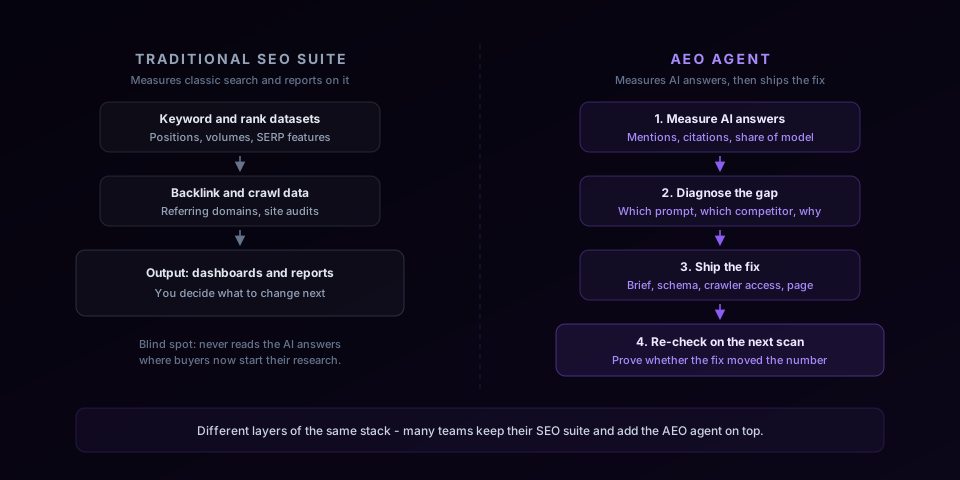
AEO Goal is an AEO agent with findings on both AEO and SEO. The distinction from tracking tools is important: most products in the AI-visibility category report a citation rate and stop. AEO Goal closes the loop.
- It finds the gap. It runs your priority prompts against ChatGPT, Claude, Gemini, and Perplexity on a schedule and reports citation rate, share of model, competitor overlap, and sentiment per engine. Crucially for a competitive buyer, it isolates the exact prompts where a rival is cited and you are absent.
- It explains the cause. Missing entity signals, weak answer structure, a blocked AI crawler, thin proof, or no citable source page.
- It hands you the fix. An answer-first brief, a schema recommendation, a robots.txt or llms.txt fix, or a page to publish, prioritized by impact on one backlog.
- It re-checks. The next scan shows whether the fix moved citations, share of model, or rankings.
It also carries the classic stack so the two surfaces live in one workspace: keyword research, daily rank tracking, and backlink analysis with a DR-weighted Domain Score plus AEO Rank, which measures authority among the domains AI engines actually cite. One prioritized backlog, both surfaces. That combined footprint is laid out on the AI SEO software page.
Competitor intelligence moved into the answer
Here is the shift a SpyFu shopper should sit with. Classic competitive intelligence tells you what a rival ranks and bids on. But when the buyer’s first research step is a question to an assistant, the competitive event is no longer a results page where being fourth still earns clicks. A synthesized answer names two or three brands, and everyone else is invisible. The field is winner-skewed, which means moving from absent to named on a high-intent comparison prompt is not an incremental gain: it is the difference between being in the consideration set and being excluded from it.
That changes what “competitor intelligence” has to mean. Four signals now carry the weight, and none of them exist at the SERP level:
- Mention rate. Across your priority prompts, how often each competitor is named at all.
- Citation source. When the assistant links a URL, whose domain it is: a competitor’s owned page, a third-party review, or a directory. See the AI citation glossary entry for why cited beats merely mentioned.
- Framing. Whether a brand is described as the leader, the budget option, or with a caveat.
- Co-occurrence. Which brands the model groups together, revealing the peer set the AI believes you belong to. If assistants group you with budget tools while you sell an enterprise product, you have a positioning problem no ranking report will ever surface.
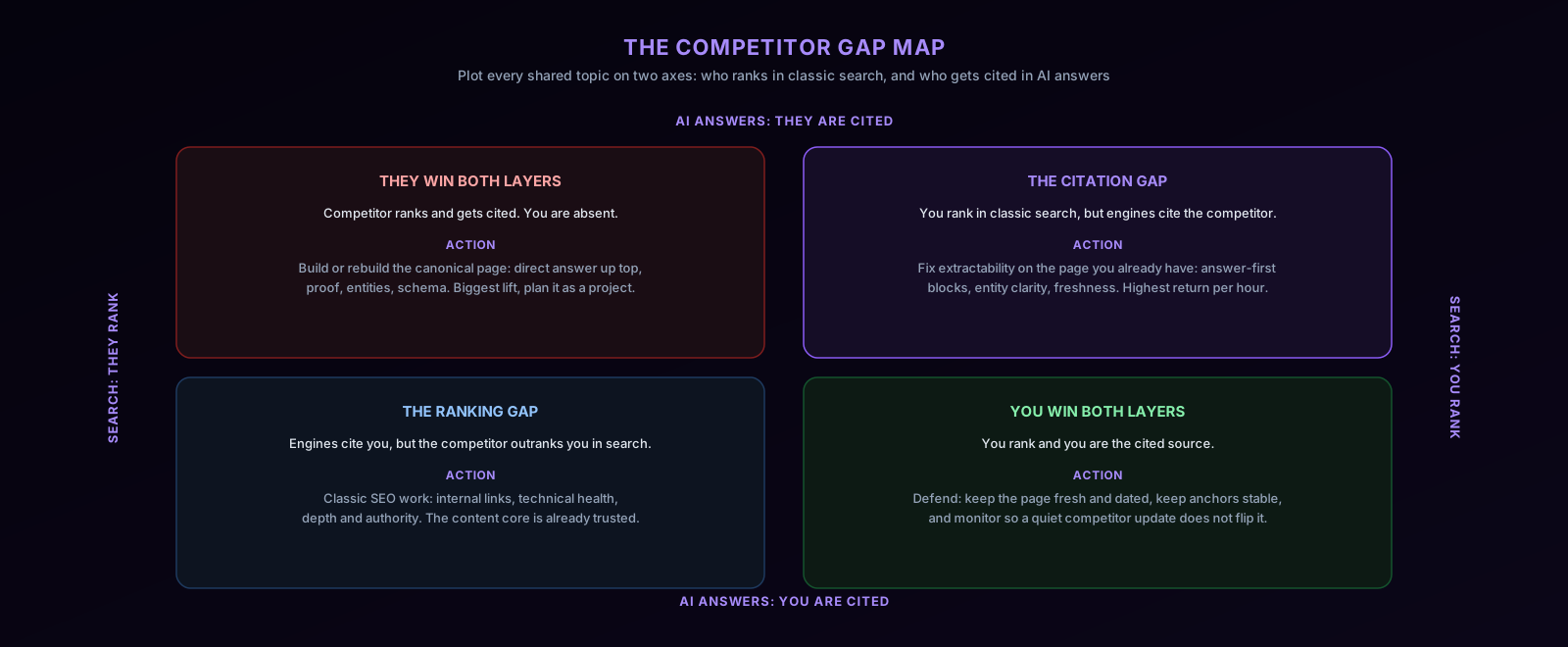
AEO Goal captures all four per prompt and per engine, then does what a briefing cannot: it turns each gap into an assignable task. The competitive picture stops being a report you read and becomes a backlog you work. The product view of this capability lives at competitor AI visibility.
AEO Goal vs SpyFu: the decision table
| Your competitive question | Better fit |
|---|---|
| What keywords do rivals rank for and bid on in classic search? | SpyFu’s known category; verify current specifics with the vendor |
| Which brand does the AI answer actually recommend for our category prompts? | AEO Goal |
| Which exact prompts does a competitor win while we are absent? | AEO Goal |
| Which competitor page did the engine cite, and why did it win? | AEO Goal |
| How is our brand framed in answers: leader, budget option, or caveat? | AEO Goal |
| PPC and ad-copy intelligence | A paid-search specialist; not AEO Goal’s job |
| Keyword research, daily rank tracking, backlinks with Domain Score | AEO Goal carries these; deep-dataset specialists exist for scale |
| Turning a competitive gap into a shipped fix and a re-check | AEO Goal; this is the agent layer trackers and SERP tools do not have |
When SpyFu is the right choice
Choose a competitor keyword research tool, and evaluate SpyFu on its known category strengths, when:
- Your competitive program is primarily about paid search: rival bidding behavior, ad history, and PPC strategy.
- Your buyers still overwhelmingly discover and decide through ranked results, and SERP-level rivalry data drives your roadmap.
- You need long-horizon historical context on a rivalry in classic search.
AEO Goal does not do ads intelligence, and pretending otherwise would violate the house rule that got you an honest page instead of a feature-matrix ambush.
When to run both
Many competitive teams will land here, because the two tools watch different battlefields and neither substitutes for the other. A sensible split: run classic keyword-and-ads espionage for the paid team and SERP strategy, and run AEO Goal as the system of record for the answer layer, where it measures who the assistants recommend and ships the work to change it. The overlap is small: AEO Goal’s built-in keyword research and daily rank tracking may let you slim what you ask of the classic layer, which is worth testing during a trial rather than assuming. If you are auditing rank tracking specifically, the SEO rank tracking tools comparison covers that decision on its own.
A worked example for the competitive buyer
Suppose you sell an analytics product and your archrival keeps winning “best analytics platform for ecommerce” across ChatGPT and Perplexity. Classic competitor research tells you they rank well for related keywords: true, but not actionable at the answer layer. AEO Goal shows you the specific prompt, the rival comparison page both engines cite as their source, and the diagnosis: their page leads with a direct, well-proven answer while your equivalent buries the comparison and lacks the entity signals tying you to ecommerce. It generates the answer-first brief to beat that page, you ship it, and the next scan reports whether you entered the answer. That is competitor intelligence that ends in a measured win instead of a slide, and you repeat it across every comparison and alternatives prompt that counts. The measurement mechanics behind it are documented in the AI citation tracking methodology.
What to verify with each vendor before buying
Public comparison pages, this one included, should inform your shortlist, never replace diligence. Before committing:
- With SpyFu: current pricing and plan limits, the freshness and coverage of its keyword and ads data for your market, and whether it addresses AI answers at all today. Get this from the vendor, not from review snippets or scraped summaries, and not from an AI answer either.
- With AEO Goal: which engines and prompts are monitored and how often, that citation data is shown at the source-URL level, how findings become briefs and tasks, and the governance details your procurement team needs: data retention, access controls, API limits, and cancellation terms. Then run the one test that separates trackers from agents: ask, in the demo, “which prompt am I losing, to which competitor, and what specifically should I change?” An agent answers with a prompt, a cited page, a cause, and a brief.
The bottom line
SpyFu’s known category, competitor keyword and ads intelligence, tells you how the rivalry looks on the classic search battlefield. AEO Goal tells you who is winning the battlefield your buyers moved to, and then fights for the answer: exact losing prompts, the competitor page the engine relied on, the brief to take that answer back, and the re-check that proves it moved. If the question keeping you up at night is “which brand does the AI recommend instead of us,” start with a free AI visibility scan: it checks AI-crawler access across 16 AI agents, llms.txt, structured data, and entity salience, and shows you the competitive picture at the answer layer before you spend anything.