Website optimization that makes your pages citable
Website optimization is the work of improving a site’s technical health, structure, content, and signals so that both human visitors and machine systems can access and understand it. In the AI era that definition extends in a specific direction: a site must be optimized not only for users and classic search crawlers, but for the answer engines - ChatGPT, Claude, Perplexity, Google AI Overviews - that increasingly read pages to build their responses.
The underlying truth is simple. If an AI system cannot crawl a page, parse its structure, or identify the entity it describes, it cannot cite it. So website optimization for AI visibility is really about removing the obstacles between your content and a model’s ability to confidently use it. This is the technical foundation beneath answer engine optimization: great content on an inaccessible or unstructured site rarely gets cited. AEO Goal is built to find those obstacles, tie them to the specific prompts you are losing, and ship the fix - not just hand you another audit checklist.
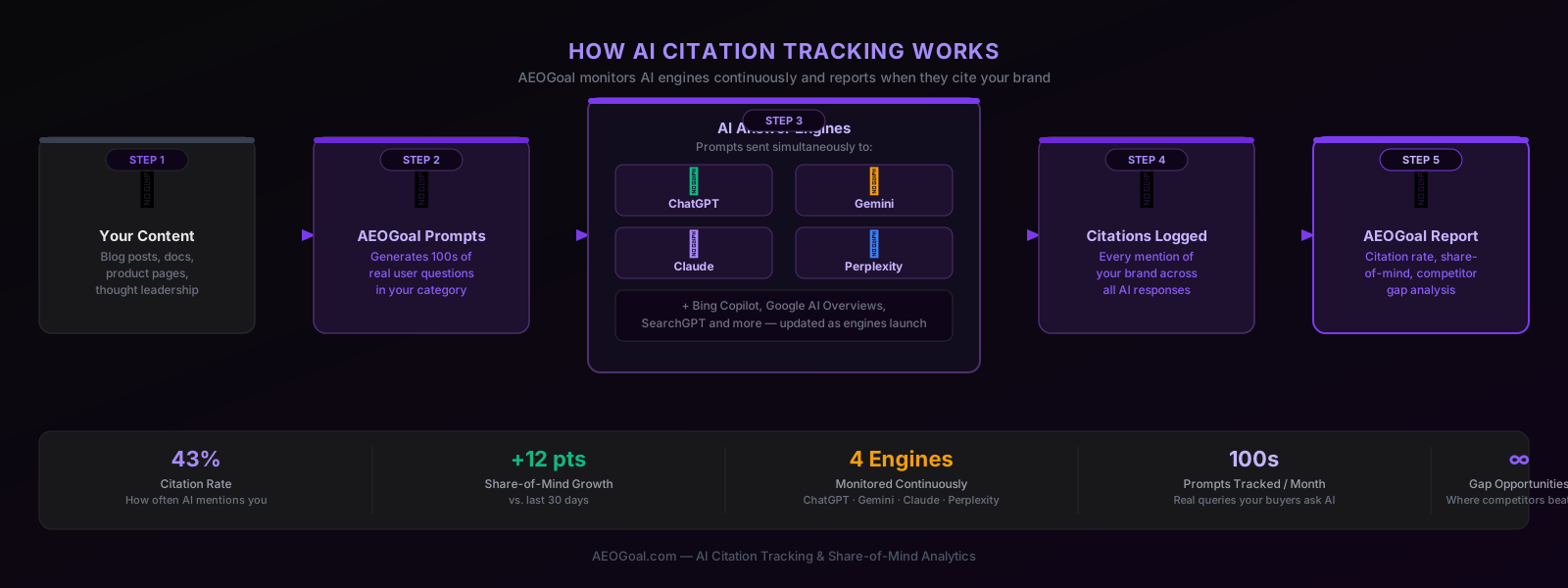
Optimize for users, crawlers, and answer engines at once
Most website-optimization tools were built for one audience - human visitors (conversion and speed) or search crawlers (technical SEO). AI answer engines add a third audience with stricter requirements: they will not click through ambiguity or wait for a slow render; they simply move to a cleaner source. The good news is that the three audiences want mostly the same things, so optimizing well serves all of them at once.
What separates AEO Goal is that it does not optimize in the dark. It connects your technical state to actual answer-engine outcomes, so instead of working a generic best-practices list, you fix the specific issues that are costing you citations on the prompts your buyers use. Optimization becomes prioritized by measured impact, not by checklist order.
This is important because website-optimization checklists are effectively infinite - there is always another audit item to chase. Without a way to connect technical work to an outcome, teams burn effort polishing scores that never move visibility, while the one blocker that is actually costing citations sits untouched. Tying each finding to a specific lost prompt reorders the whole backlog around impact: fix the blocked render that is hiding your best answer from Perplexity first, and leave the cosmetic warning that changes nothing for later. That is how a small team gets disproportionate results from limited engineering time.
What technical factors decide whether AI can cite a site
The factors fall into three buckets: accessibility (can the system reach and render the page), structure (can it parse the content cleanly), and clarity (can it identify the entity and trust the source). Weakness in any one bucket caps the value of strength in the others.
Concretely, the highest-leverage technical work usually includes:
- Crawlability and rendering. Ensure key content is reachable and not hidden behind blocked resources or client-side rendering an extractor cannot follow - including access for AI crawlers via robots.txt and llms.txt.
- Structured data. Schema markup helps machines map content to entities and answer types, reducing ambiguity about what a page is.
- Clean information architecture. Descriptive headings, logical hierarchy, and short, parseable sections give models obvious extraction boundaries.
- Performance and stability. Healthy Core Web Vitals and reliable delivery keep both users and crawlers from bouncing before content loads.
- Entity consistency. Naming a brand, product, and category the same way across pages strengthens the signal that ties your site to the topics you want to win.
These are not exotic; they are disciplined fundamentals. What changed is that AI extraction punishes their absence more sharply, because a model will simply move to a cleaner source.
How AEO Goal supports website optimization
AEO Goal connects your technical state to actual answer-engine outcomes: instead of optimizing blindly, you see which prompts you fail to appear in and can trace whether the cause is crawlability, missing structured data, weak entities, or thin content. The work becomes prioritized by impact rather than by checklist. And because it is an agent, not just a scanner, each finding comes with a specific fix and a re-check.
The workflow runs as a loop:
- Define scope. Set the market, brand, competitors, and the prompts that mirror real buyer research.
- Baseline. Capture which AI systems cite the brand, from which source URLs, and where competitors win instead.
- Diagnose. Map each gap to a cause - crawlability, structured data, entity clarity, or content depth.
- Fix and brief. Prioritize technical fixes and produce answer-first content where the page itself is the gap.
- Re-measure. Re-run the prompt set and report whether mentions and citations improved.
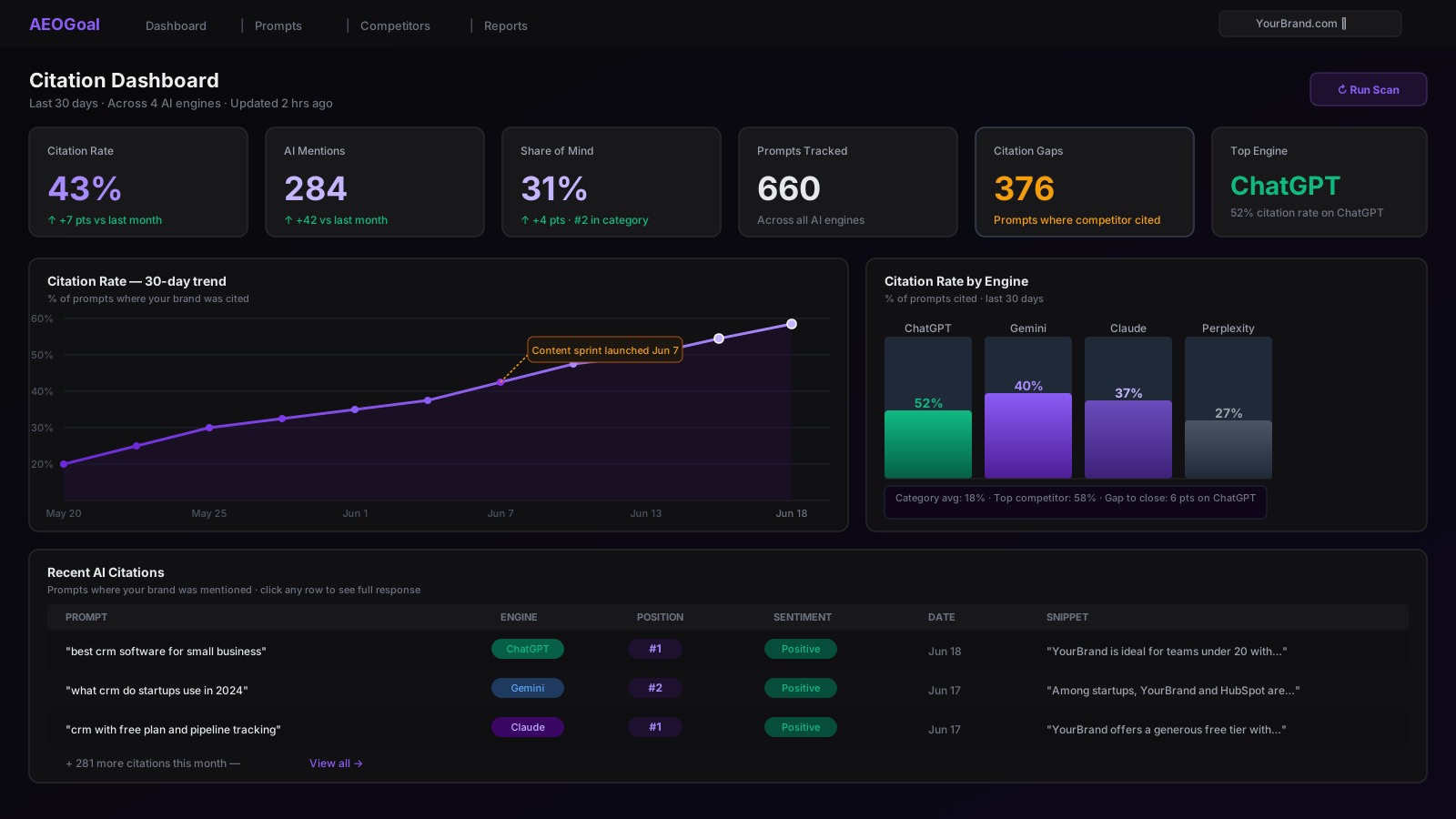
A worked example
Suppose AEO Goal shows that Perplexity cites a competitor for a high-intent prompt and never surfaces your clearly relevant page. Rather than leaving you to guess, it inspects the page and finds the cause: the key content is injected client-side where the extractor cannot follow it, and the page has no schema tying it to the target entity. The fix path is specific - render that content server-side and add the matching structured data - and after you ship it, the next scan shows whether the page became eligible and started earning the mention. You are fixing the exact obstacle between your content and the citation, not polishing a score.
The re-check is the part that keeps optimization honest. It is easy to ship a technical change and assume it helped; it is another thing to watch the same prompt on the next scan and see your page appear where a competitor used to sit. Because AEO Goal re-runs the exact prompt set on a cadence, every fix is either confirmed by real movement or flagged as not-yet-working, so engineering effort is validated by outcomes rather than by closed tickets. Over successive cycles, that discipline turns a sprawling pile of audit items into a short, ranked list of the changes that demonstrably moved answer-engine visibility - exactly the report a technical lead wants to bring to planning.
Does website optimization for AI replace traditional technical SEO?
No, it builds on it. The crawlability, structured data, and performance fundamentals that have always supported Google rankings are the same ones that make a page extractable by AI systems, so the two are largely the same investment with an expanded payoff. The divergence is in measurement and intent, which our comparison of AEO versus traditional SEO lays out in detail. In practice you optimize once and serve both the ranked result and the synthesized answer.
What website optimization can finally answer
- Can AI answer engines actually reach and render our key pages?
- Which pages are eligible to be cited, and which are blocked by a technical issue?
- Is a missing citation caused by crawlability, structure, entity clarity, or thin content?
- Which technical fix will move the most answer-engine visibility for the least effort?
- Did the last fix actually make a page eligible and earn the mention?
Traditional technical audits answer the first question at best. Tying each finding to a real lost prompt answers the rest - and turns a generic checklist into a ranked, outcome-driven plan your engineers can act on with confidence.
Who it is for
- Technical SEO and web teams who want their crawlability, schema, and performance work tied to a measurable AI-visibility outcome, not just a Lighthouse score.
- Marketing leaders who need to know whether the site is actually eligible to be cited in AI answers, and where it is not.
- Agencies who want to show clients that a technical fix moved real answer-engine presence, not just an audit grade.
If you have strong content that still is not showing up in AI answers, website optimization is usually where the blocker lives - and this is how you find and clear it.