Voice search SEO: be the one answer that gets spoken
Voice search SEO is the practice of optimizing content so it can be selected and read aloud as the single spoken answer when someone asks a question through a voice assistant like Google Assistant, Siri, or Alexa. The defining constraint is that voice typically returns one answer, not a page of links, so the goal shifts from ranking in a list to being the chosen response.
That single-answer constraint makes voice search a close cousin of answer engine optimization. Both reward content that states a clear, accurate answer the system can quote directly. The difference is the surface: voice assistants speak the result, while AI chat systems like ChatGPT, Claude, and Perplexity render it as text, often with citations. Content prepared for one tends to perform on the other, because both prize extractable, well-structured answers. AEO Goal is built around exactly that shared quality - it is an AEO agent that measures whether your content is the kind that gets selected as the answer, diagnoses why it is not, and ships the fix.
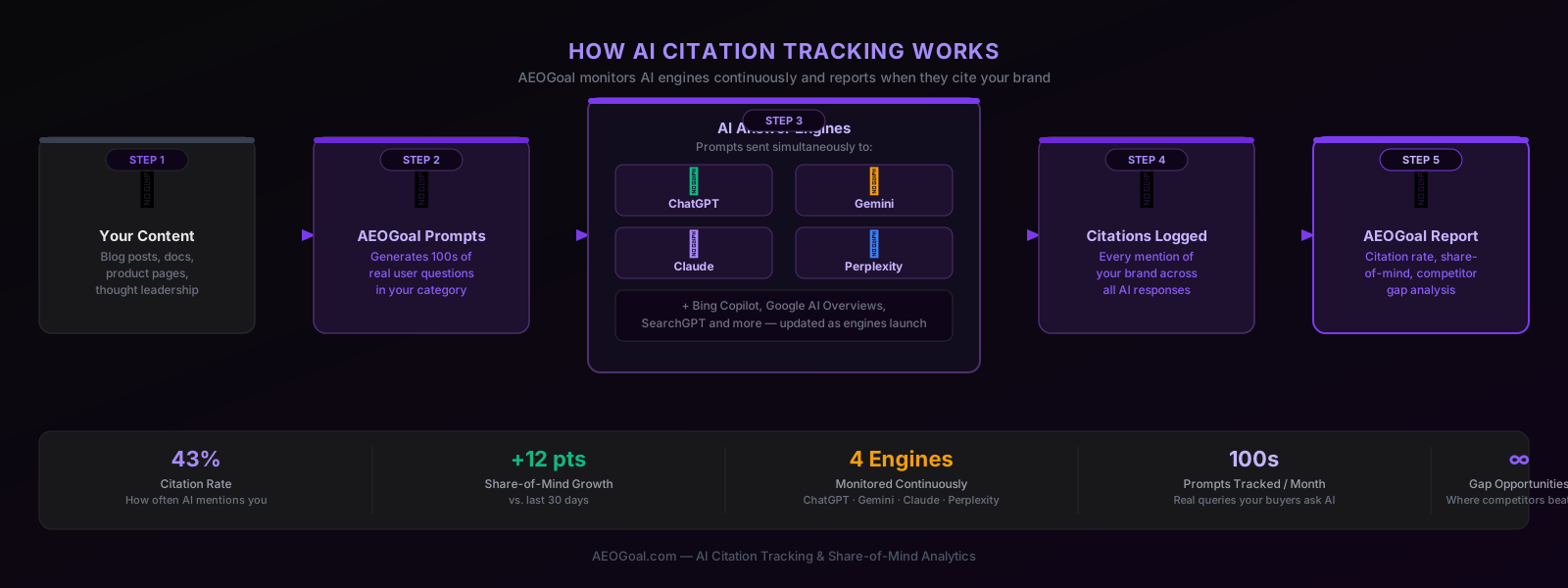
An honest scope note up front: AEO Goal currently monitors up to nine AI answer engines - ChatGPT, Claude, Gemini, Perplexity, Google AI Overviews, Microsoft Copilot, Grok, Meta AI, and DeepSeek - and does not directly track Siri or Alexa. The content-optimization principles covered here apply across all of these surfaces, and the AI-answer engines are the measurable proxy for whether your content is “answer-selected” material.
How you optimize for voice search
You optimize for voice by writing concise, direct answers to natural-language questions, structuring pages so a machine can extract a single clean response, and supporting it with the technical signals assistants rely on. In practice, voice answers are frequently drawn from the same content that wins featured snippets, so the two efforts reinforce each other.
The habits that matter most:
- Target conversational phrasing. People speak full questions (“how do I…”, “what is the best…”) rather than terse keywords, so cover the question as it is actually spoken.
- Lead with a snippet-sized answer. Open with a one- to two-sentence response that a device can read aloud in a few seconds, then expand.
- Use clean structure and schema. Clear headings, short paragraphs, and relevant structured data give assistants obvious extraction boundaries.
- Strengthen entity clarity. State what a concept is and which category it belongs to, so the assistant connects your page to the right intent.
These are the same fundamentals behind extractable AI content; our primer on what answer engine optimization is covers why structure and directness now drive selection across every spoken and generated surface.
It also helps to think about the shape of a spoken answer. A screen can show a table, a list, and three caveats at once; a voice assistant has to pick one linear response a listener can absorb in a breath or two. That favors content that resolves the core question in a single, confident sentence, then offers the nuance underneath for anyone who reads rather than listens. Writing that top sentence deliberately - accurate, self-contained, and free of hedging - is the highest-leverage habit in voice search SEO, and it is exactly the passage an AI answer engine tends to lift as well. Get it right once and you have produced content that a smart speaker can read aloud and that ChatGPT or Perplexity can quote, from the same paragraph.
Most tools optimize for the click. AEO Goal optimizes for the chosen answer.
Traditional SEO tooling is built around a click from a ranked list - impressions, positions, CTR. Voice has no list and often no click: the device reads one answer and moves on. That makes most SEO dashboards structurally blind to whether your content is the kind that gets selected as that single answer.
AEO Goal closes that blind spot by measuring the closest observable signal: whether AI answer engines select and cite your content for the natural-language questions your buyers ask. It runs those question-style prompts, captures which sources are cited, identifies where you are not the chosen answer, and briefs content built to be quotable - the same qualities a voice assistant looks for when it picks one response to speak. You optimize for “answer-selected,” and you can finally see whether you are winning it.
How AEO Goal supports voice search SEO
The workflow runs as a loop:
- Define the questions. Map the natural-language, conversational prompts your audience would speak.
- Baseline. Capture which sources AI systems cite for those questions and where the brand is absent.
- Diagnose. Tie gaps to thin answers, weak structure, missing entity proof, or crawlability issues.
- Brief and produce. Generate answer-first content sized and structured to be quoted, using AEO content generation.
- Re-measure. Re-run the prompts and report whether citations and mentions improved.
Because the same question set runs on a cadence, you are not guessing whether a rewrite helped - you watch whether the engines started selecting your answer for that exact spoken question. That feedback is what turns voice optimization from folklore (“assistants like short answers”) into a measured practice specific to your category and the questions your buyers actually ask. Over a few cycles you learn which phrasings and structures your engines reward, and that knowledge compounds into a repeatable way of writing answers that get chosen rather than a series of one-off guesses.
A worked example
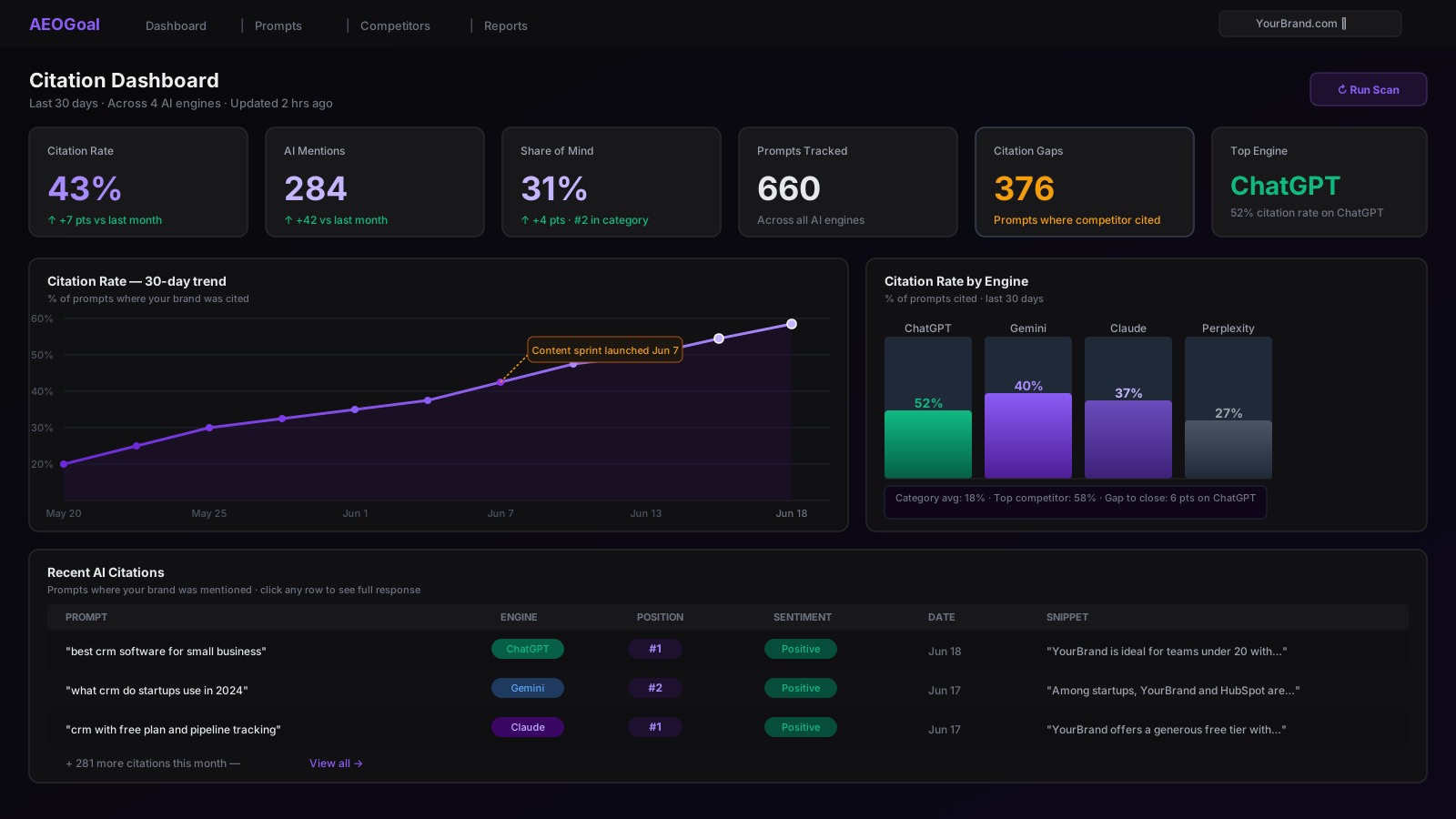
Suppose your buyers frequently ask a spoken question like “what is the best way to do [task].” AEO Goal runs that natural-language prompt across the answer engines and finds a competitor is consistently cited while you are absent. It traces the cause: your page answers the question eventually, but only after several paragraphs of preamble no assistant would read aloud. The fix is to add a crisp, snippet-sized answer at the top, mark it up cleanly, and reinforce the entity. After publishing, the next run shows whether the engines began selecting your passage - the same shape of content a voice assistant would choose to speak. That is the whole loop in miniature: find the spoken question you are losing, diagnose why your page is not selectable, rewrite the answer to be liftable, and confirm on the next run that the engines switched to you.
Is voice search SEO the same as traditional SEO?
They overlap on foundations but differ on the prize. Traditional SEO optimizes for a ranked list of links a user scans, while voice search optimizes for the one answer a device reads aloud - much closer to the winner-take-most dynamic of AI answers. The technical groundwork - fast, accessible pages, clean structure, accurate content - serves both. Our breakdown of AEO versus traditional SEO explains where the goals converge and where measurement diverges.
The one practical divergence worth planning for is measurement itself. Ranking tools can tell you your position in a list; nothing can tell you with certainty which answer Siri chose to speak in a given kitchen. That is why AEO Goal treats the AI answer engines as the measurable proxy: they expose the selection and citation behavior that voice assistants keep opaque, and the content that reliably wins one tends to win the other. You optimize once, measure where the signal is actually observable, and serve every one-answer surface - spoken or generated - from the same well-structured page.
What you can finally answer
- For the questions our buyers actually speak, are we the selected answer or is a competitor?
- Is our answer sized and structured to be read aloud, or buried under preamble?
- Which pages need a snippet-sized answer and schema to become selectable?
- Did our changes make the engines start choosing our content?
Who it is for
- Content and SEO teams who want their answer-first work measured against real question prompts, not just keyword positions.
- Local and service businesses whose customers ask spoken, high-intent questions.
- Marketing leaders who need a defensible read on whether the brand owns the one-answer surfaces.