SEO content writing for answers, not just rankings
SEO content writing is the craft of producing pages that search and answer engines can understand, trust, and surface for the queries your audience actually types or speaks. The job has shifted: instead of writing only to rank a link, you now write so that systems like ChatGPT, Claude, Gemini, Perplexity, Google AI Overviews, Microsoft Copilot, Grok, Meta AI, and DeepSeek can extract a clear, quotable answer and cite your page as the source. Content that an AI can lift verbatim into its response is content that earns citations.
This is sometimes called writing for the answer rather than for the position. A page that buries its conclusion under 800 words of preamble is hard for a model to quote. A page that opens with a direct, accurate answer, then supports it with structure and evidence, is far easier to cite. That principle sits at the heart of generative engine optimization, the discipline of shaping content so generative systems can reuse it confidently. AEO Goal is built to make that practical: it tells you which answers you are missing, briefs the exact page to write, and then confirms whether it earned the citation.
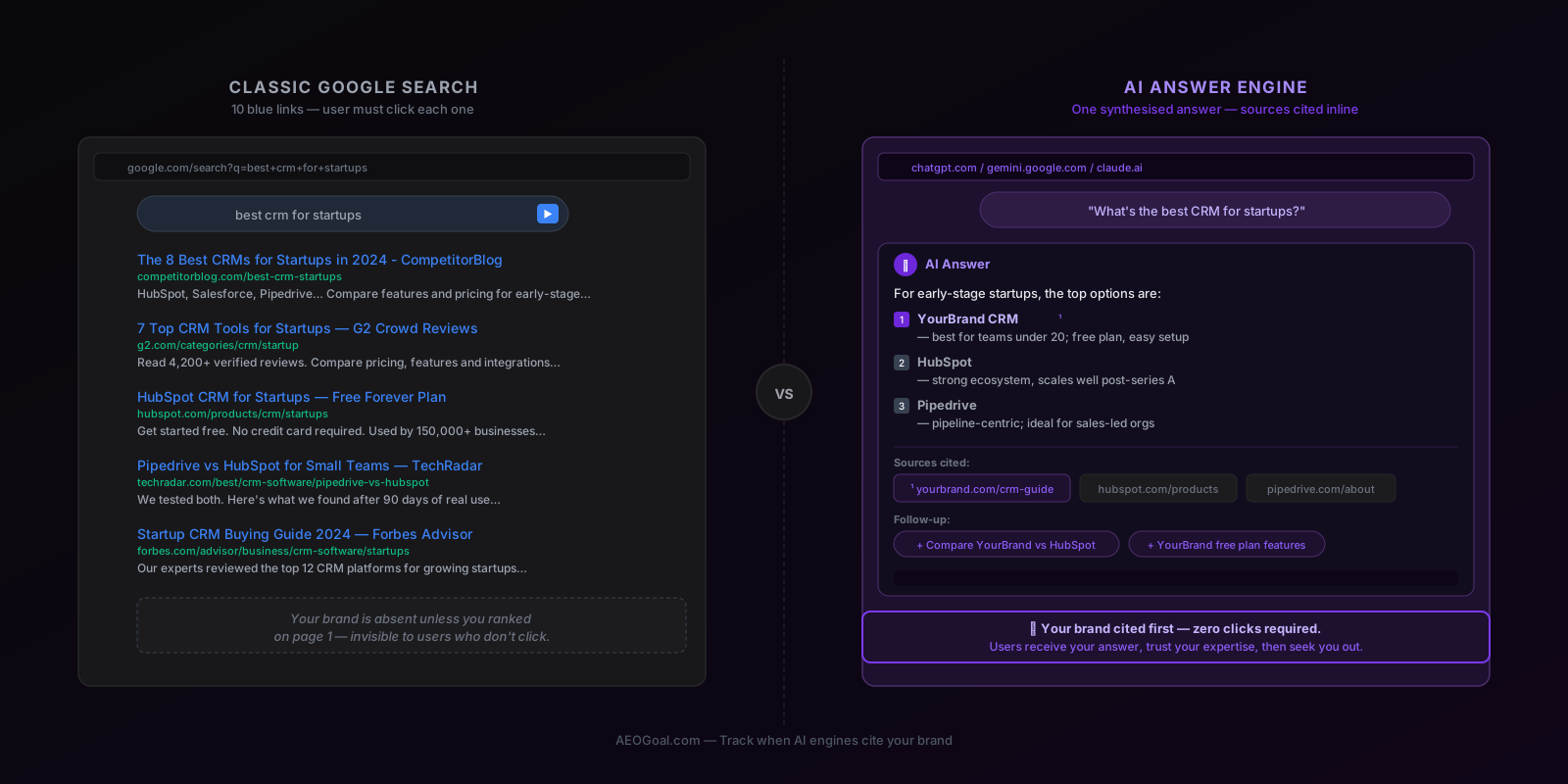
Most writing tools draft copy. AEO Goal tells you what to write and proves it worked.
Here is the gap most content workflows fall into. A writer gets a keyword, drafts a well-structured article, publishes it, and hopes. Nobody can say which buyer question it was meant to win, whether an AI engine actually cites it, or whether the next article should target something entirely different. The result is a lot of competent content that never earns a citation, because a stronger page already answers the question.
AEO Goal inverts that. It starts from measured evidence - the specific prompts where buyers research and your brand is absent or uncited - so every brief targets a real, winnable gap. Writing stops being guesswork and becomes a direct response to observed answer-engine behavior. That is the difference between a writing assistant that produces text and a system that produces citations.
It also changes how a team spends its content budget. Writing is expensive, and the costliest mistake is not a weak draft - it is a well-written page aimed at a question no engine will ever cite you for, because a stronger source already owns it. Starting from measured gaps means every brief points at a question that is genuinely winnable: one where buyers are asking, competitors are beatable, and you have something real to say. The output compounds instead of piling up, because each page is a deliberate move against a specific answer you can later confirm you won.
What makes content citable by AI
Citable content shares a few consistent traits: it answers the question early and unambiguously, it organizes information so a machine can parse the structure, and it demonstrates enough evidence and clarity that a model treats it as a reliable source. The goal is to make extraction easy and trust high.
Practically, that means writing with these habits:
- Lead with the answer. Open each section with a one- to two-sentence direct response before the supporting detail - the same pattern that wins featured snippets.
- Use clean structure. Descriptive headings, short paragraphs, and lists give models obvious extraction boundaries.
- Define your entities. State plainly what a concept is and what category it belongs to, so the model can connect your page to the right topic.
- Support claims with evidence. Specifics, sources, and accuracy raise the chance a model treats the page as authoritative rather than choosing a better-supported competitor.
These are the same fundamentals that have always helped human readers; AI extraction simply rewards them more sharply. For the broader framing of why this is important, see our primer on what answer engine optimization is.
How AEO Goal supports SEO content writing
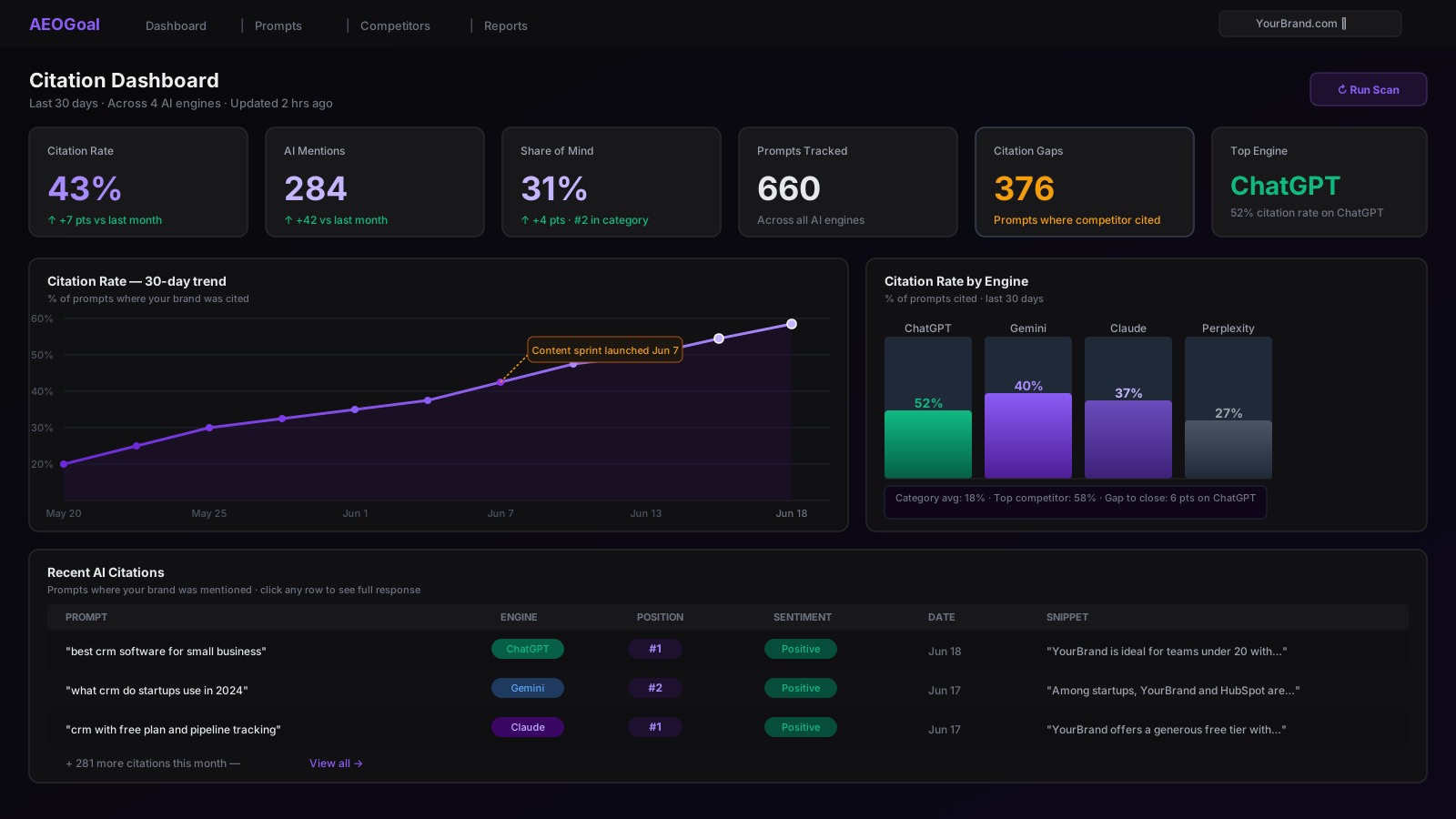
AEO Goal closes the loop between writing and measurement: it shows which buyer prompts your content is missing, briefs writers on the exact gap to fill, and then re-measures whether the new content actually earned mentions and citations. Writing stops being guesswork and becomes a response to observed answer-engine behavior.
A typical content workflow runs like this:
- Find the gap. Identify the prompts where buyers research but the brand is absent or uncited.
- Brief precisely. Translate each gap into an answer-first content brief that names the question, the entities, and the structure the page should use.
- Draft and refine. Produce the page, using AEO content generation to scale output while keeping claims accurate and brand-safe.
- Publish and instrument. Ship the page with clean structure and any relevant structured data.
- Re-measure. Re-run the prompt set and report whether the new content earned mentions and citations.
A worked example
Suppose AEO Goal shows that buyers ask “how do I choose a [category] tool” across ChatGPT and Perplexity, both engines cite a competitor’s guide, and you have nothing on the topic. It briefs the exact page: lead with a direct answer to the question, define the category and your entity clearly, include the comparison criteria the competitor covers plus the proof they lack, and structure it for clean extraction. Your writer drafts it, an editor verifies the claims, and after you publish, the next scan shows whether your page started earning the citation. The brief is grounded in a real gap, and the result is measured - not assumed.
This closed loop also solves the accountability problem that dogs most content programs. When a page is briefed from a measured gap and checked against the same prompt set after publishing, you can finally say whether a given piece of writing did its job - not by traffic alone, which lags and is noisy, but by whether the answer engines your buyers use started citing it. Writers get credit for citations earned, editors get a clear accuracy bar to hold, and leaders get a content report that ties effort to visibility instead of to output volume. It is the difference between reporting “we published twelve posts” and “we now own the AI answer for six high-intent questions we were absent from last quarter.”
Does writing for AI hurt traditional rankings?
No. The practices that make content extractable for AI - clear answers, strong structure, defined entities, credible evidence - are the same practices that have long supported traditional rankings and featured snippets. You are not choosing between the two surfaces; you are writing once and serving both. Our comparison of AEO versus traditional SEO explains where the goals overlap and where measurement diverges.
What SEO content writing can finally answer
- Which buyer questions are we absent from in AI answers, and which are winnable?
- Which existing pages should be refreshed versus which topics need a brand-new page?
- What exactly should each page say - the question, the entities, the proof, the structure?
- Did the page we just published actually earn the mention and citation it targeted?
- Is our content program compounding, or just adding pages nobody cites?
Answering these turns content from a volume game into a targeted one, where every brief is a deliberate bet on an answer you can measure.
Who it is for
- Content teams and writers who want a specific, evidence-backed brief for every page instead of a keyword and a word count.
- Content and SEO leaders who need to tie writing output to a measurable outcome - citations and share of model, not just pages published.
- Agencies who want to show clients which content gaps were closed and what actually moved in AI answers.
If your team produces good content that still is not getting cited, this workflow points that effort at the gaps that are genuinely winnable.