What a SaaS SEO agency does differently
A SaaS SEO agency runs search and answer-engine programs built specifically for subscription software businesses, where the buyer journey is long, the category is crowded, and the conversion event is a trial or demo rather than a one-time purchase. The differentiator today is that a modern SaaS agency no longer optimizes only for blue-link rankings; it also manages where the product shows up inside AI-generated answers from systems like ChatGPT, Claude, Gemini, Perplexity, Google AI Overviews, Microsoft Copilot, Grok, Meta AI, and DeepSeek.
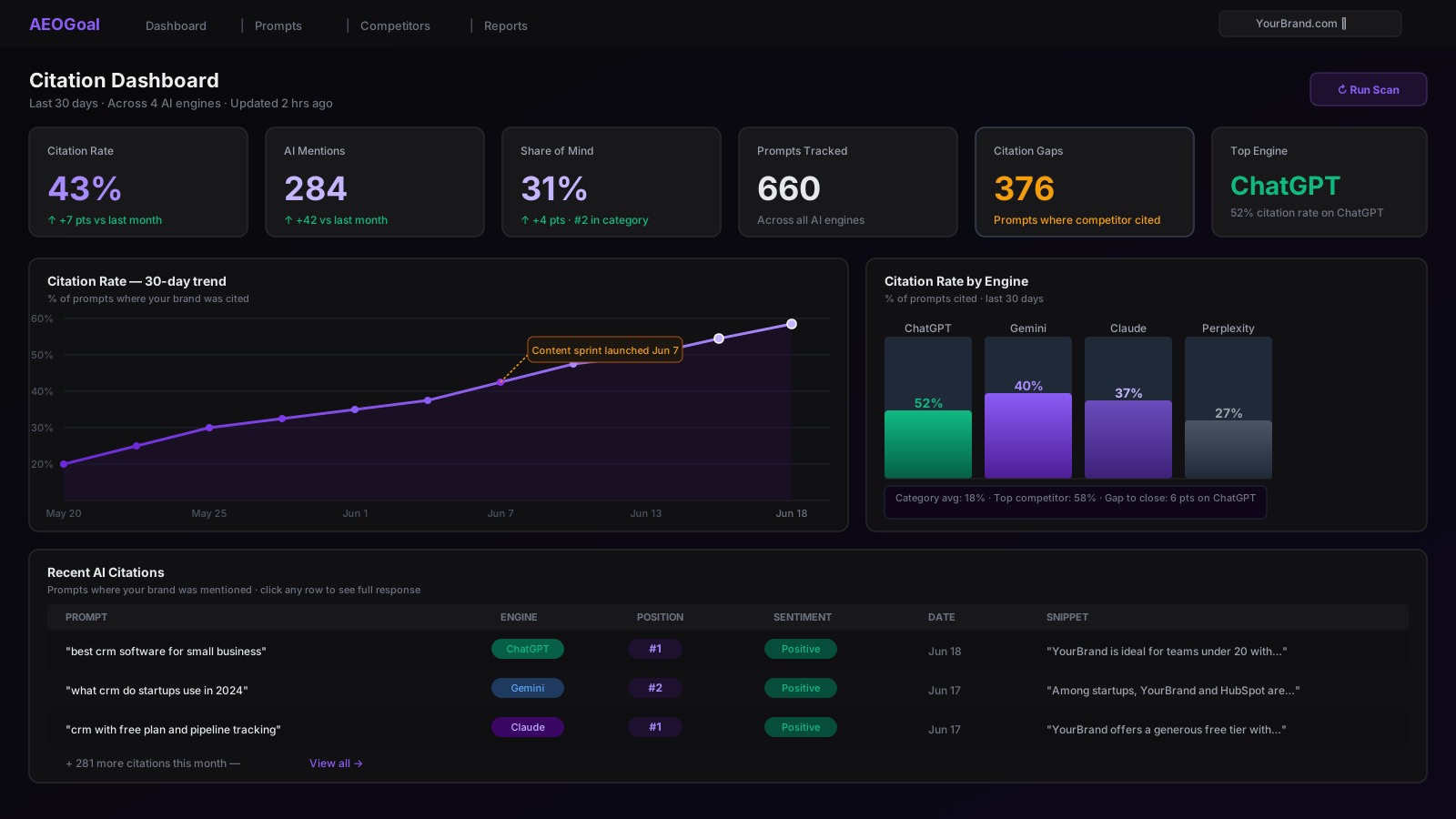
For SaaS specifically, the recurring-revenue model raises the stakes on category and comparison questions. When a prospect asks an AI assistant “what is the best tool for X” or “alternatives to [competitor],” the brands that get named and cited capture consideration before a human ever lands on a pricing page. That is why SaaS programs increasingly pair traditional technical SEO with answer engine optimization - structuring content and entities so AI systems can confidently cite a product. AEO Goal gives an agency the engine to run that work as a measured program rather than a guessing game: it is an AEO agent, so every client gap comes with a fix and a re-check.
Why SaaS companies hire an agency for AI visibility
The short answer: most in-house SaaS teams can ship content but lack a repeatable way to measure whether AI systems actually mention and cite the product. An agency brings the monitoring discipline, the prompt library, and the reporting cadence that turn scattered effort into a managed program.
Three problems push SaaS teams toward outside help:
- Category questions are owned by aggregators and competitors. Listicles and review sites are frequently cited by AI for “best of” prompts, and a new entrant rarely appears without deliberate work.
- The buying committee uses AI to shortlist. Founders, ICs, and procurement now ask assistants for comparisons. If the product is omitted from those answers, it is silently excluded from the shortlist.
- Reporting is hard to standardize. Leadership wants to know “are we showing up in AI answers,” and a guessing game does not survive a board meeting.
An agency model works only when it is grounded in real measurement. Tracking which prompts surface the brand, which competitors co-occur, and which source URLs the AI cited is the foundation. You can read how that measurement is performed in our AI citation tracking methodology.
There is also a timing argument that resonates with SaaS founders. AI-answer presence tends to compound: the products that establish clear entity signals and citable pages early become the defaults that assistants keep surfacing, which makes them harder for a late entrant to dislodge. An agency that gets a client into the category answer now is not just winning this quarter’s shortlist - it is building a position that gets more expensive for competitors to contest over time. That is a far more durable pitch than “we will publish more blog posts,” and it is one an agency can only make credibly if it can measure the position it is building.
The agency advantage: one data layer, many clients
The economics of an agency depend on running a repeatable program across a book of clients without the effort scaling linearly with headcount. That breaks down fast if every client is a pile of manual spot-checks and hand-built spreadsheets. What an agency needs is a shared data layer: the same measurement loop, the same prompt-library discipline, and the same reporting format applied per client, so the team spends its hours on strategy and content rather than assembly.
AEO Goal is built for exactly that. Each client gets its own scoped brand, competitors, and prompt set, while the agency works one consistent loop across all of them - and because every finding ships with a fix and an owner, junior team members can execute against clear briefs while senior strategists govern the program. That is how an agency turns AI visibility into a productized, marginable service instead of a bespoke project it loses money on.
The shared loop also standardizes quality across the book of business. When every client runs the same measure-diagnose-brief-remeasure cycle, a new account manager inherits a proven playbook rather than reinventing one, and the agency’s output does not swing with the seniority of whoever happens to own the account. For a growing practice, that consistency is what protects the brand: every client gets the same rigor, the same reporting format, and the same honest framing of what is and is not within the agency’s control.
How AEO Goal supports a SaaS SEO agency workflow
A typical agency engagement runs as an operational loop:
- Define the account. Map each client’s market, brand, priority competitors, and the prompts that mirror how their buyers research.
- Baseline the answer landscape. Capture which AI systems mention the client, which sources they cite, what sentiment appears, and where competitors dominate.
- Diagnose the gap. Tie missing answers to specific causes: thin or missing owned pages, weak entity proof, crawlability issues, or absent structured data.
- Brief and produce. Generate answer-first content that resolves the exact informational gap, using AEO content generation to scale output without losing accuracy.
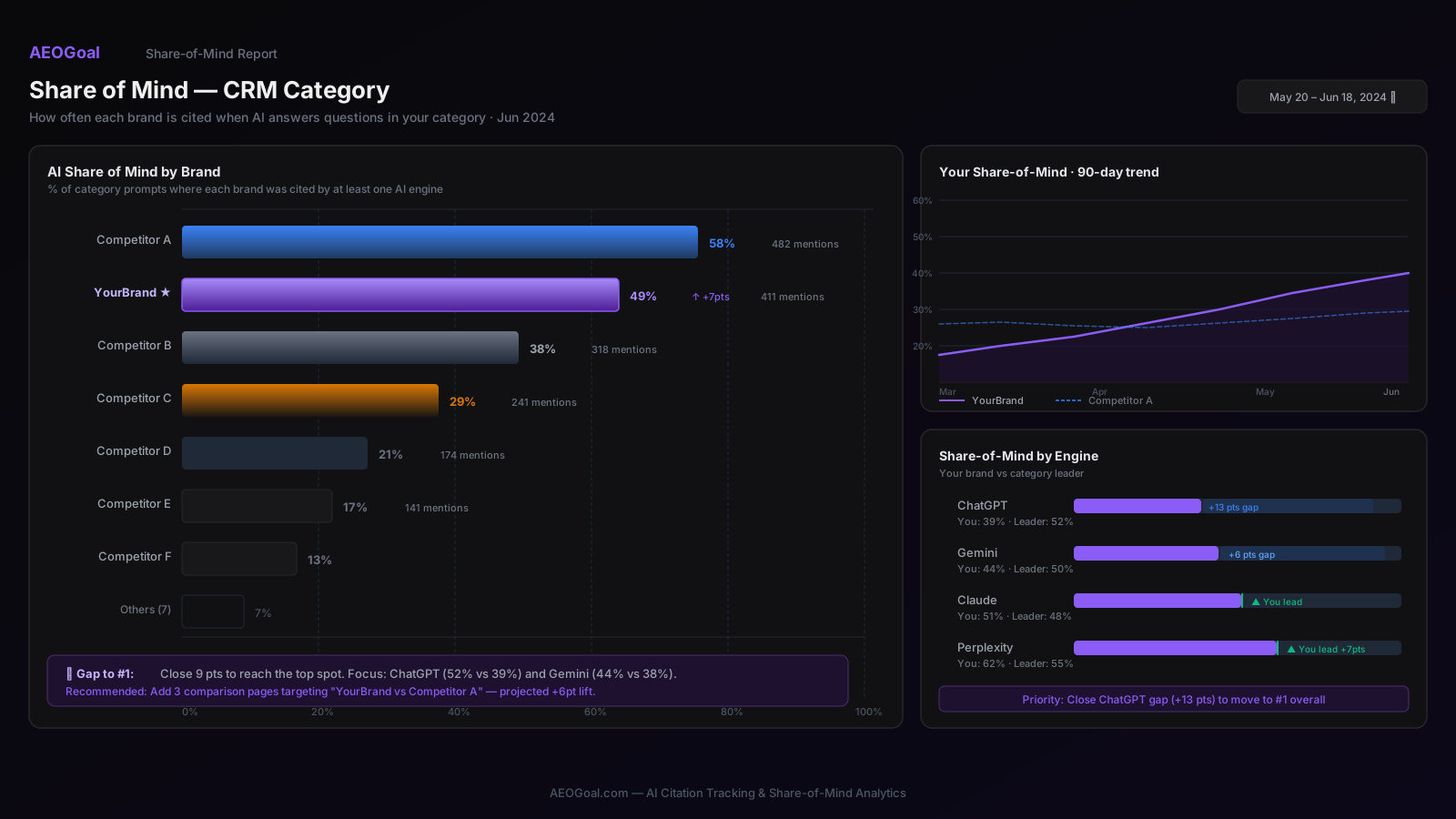
- Re-measure and report. Re-run the prompt set on a schedule and report whether mentions, citations, and share of model moved.
A worked example
Suppose a client sells a project-management SaaS and is absent from the “best project management tools for agencies” answer that three competitors own across ChatGPT and Perplexity. The agency uses AEO Goal to surface the cited competitor pages, diagnose that the client has no dedicated page for the agency use case and thin entity signals tying the product to that niche, and brief an answer-first page plus the entity fixes. On the next monitoring window, the agency reports to the client whether the product started appearing for that specific high-intent prompt - a concrete, defensible result rather than “we published some content.” Multiply that across a client roster and the agency has a repeatable, reportable service: each account gets specific wins tied to specific prompts, and every renewal conversation opens with evidence of movement instead of a list of activity. That is the kind of result that keeps SaaS clients past the first contract.
How agencies prove ROI for AI SEO
Agencies prove value by reporting movement on metrics the client cares about: the percentage of priority prompts where the brand is mentioned, the count and quality of citations earned, and share of model relative to named competitors. Because AI answers shift over time, the credible report shows direction across repeated measurement windows rather than a single snapshot.
It also helps to be explicit about what is and is not within an agency’s control. The work that can be controlled is content quality, entity clarity, technical accessibility, and the cadence of measurement. Whether a given AI system cites the result is influenced but never guaranteed. Setting that expectation up front is what separates a durable agency relationship from a churned one. If you are weighing the AI-era approach against classic tactics, our breakdown of AEO versus traditional SEO is a useful primer for client education.
What you can finally answer
- For each client, do AI assistants mention and cite the product for its highest-intent prompts?
- Which competitors own the answers a client wants, and what specifically must change to contest them?
- Did last month’s content and technical work move the client’s mentions, citations, and share of model?
- Can we show every client a trend, not a one-time snapshot, in a format leadership trusts?
Who it is for
- SaaS-focused SEO and growth agencies productizing AI visibility as a repeatable, marginable service.
- Full-service agencies adding an answer-engine offering to an existing SEO practice.
- Fractional and boutique consultants who need enterprise-grade measurement without building it themselves.