What Is Answer Engine Optimization?
Answer Engine Optimization (AEO) is the practice of structuring content so AI answer engines — including ChatGPT, Perplexity, Google AI Overviews, and Claude — can retrieve, understand, summarize, and cite it in generated answers.
AEO focuses on the signals that AI systems use to decide what to include in a generated response: entity clarity, answer-first formatting, structured data accuracy, source freshness, internal link structure, and crawler access. These overlap with traditional SEO fundamentals but add AEO-specific requirements around how content is parsed, attributed, and cited.
AEO vs SEO: Key Differences
| Area | Traditional SEO | Answer Engine Optimization |
|---|---|---|
| Primary surface | Ranked search result pages | AI-generated answers, citations, and summaries |
| Content goal | Match query intent, earn click-through | Answer the question clearly enough to be cited |
| Technical focus | Crawlability, indexation, page speed, canonicalization | Crawlability, entity clarity, answer extraction, schema accuracy |
| Measurement | Rankings, impressions, clicks, assisted conversions | AI mentions, cited URLs, competitor citations, share of mind |
| Workflow | Keyword research → content → links → technical fixes | Prompt research → citation gaps → content briefs → re-checks |
| Key artifacts | Title tags, meta descriptions, backlink profile | llms.txt, structured data, answer-first sections, FAQ schema |
Both disciplines require crawlable, well-structured, internally linked content. AEO adds a layer of prompt-level measurement and entity-focused formatting on top. For a deeper, side-by-side breakdown of AEO vs traditional SEO — including whether you need both and how to run them as one program — see our dedicated comparison.
Why AEO Matters Now
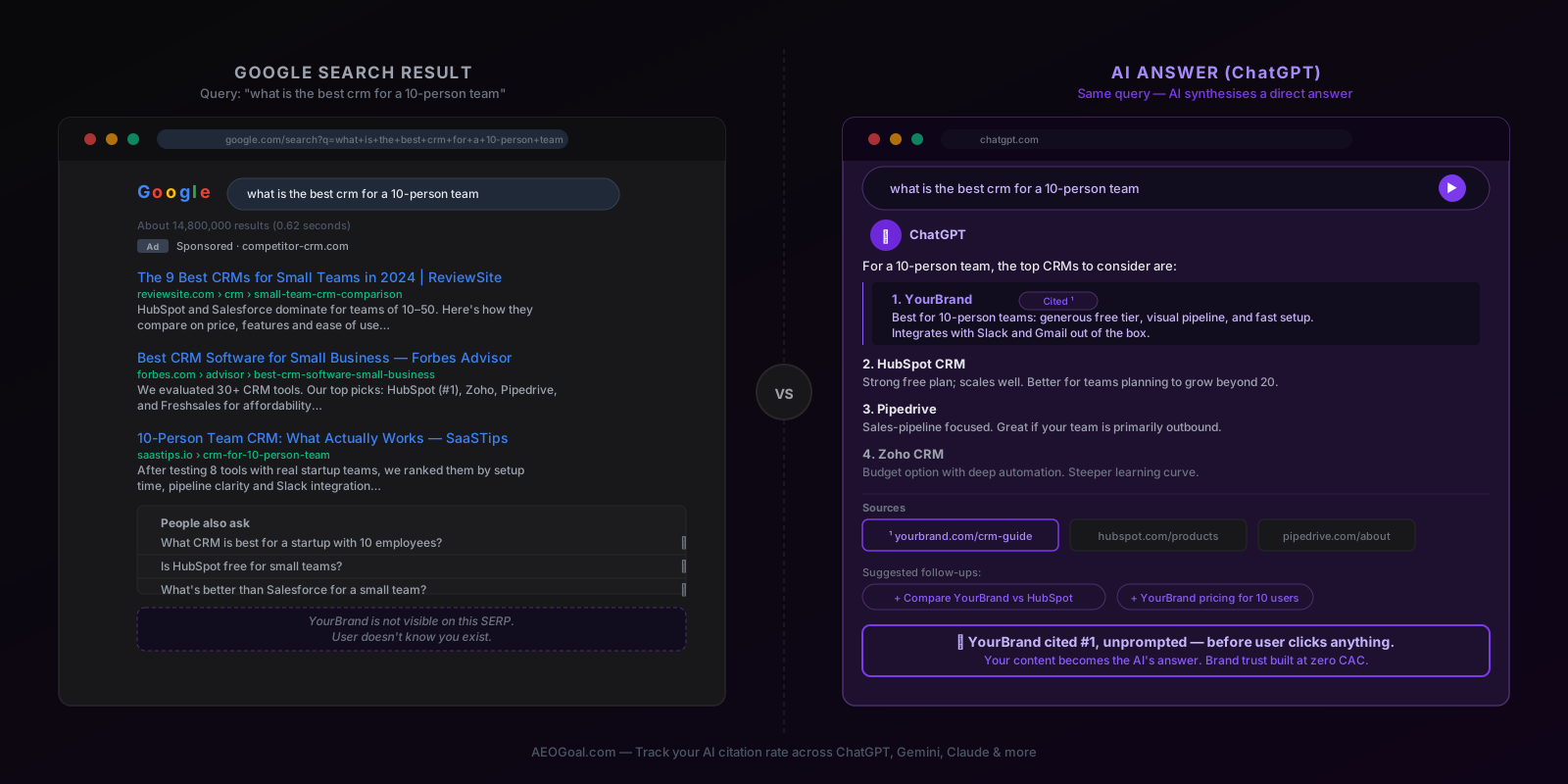
Buyers increasingly ask AI systems for recommendations, comparisons, definitions, and vendor shortlists before visiting a website. If a brand is not retrievable, understandable, or citable by those systems, it may be absent from answers even when it is the right answer for the query.
This affects:
- Brand discovery: AI-generated answers can introduce or omit brands from consideration entirely.
- Competitor gaps: Competitors who invest in AEO show up in answers your brand does not appear in.
- Content strategy: Pages optimized only for keyword rankings may not answer questions in the format AI systems prefer.
- Measurement: Traditional rank tracking does not capture AI visibility, citations, or share of mind.
Core AEO Signals
1. Crawler Access
AI systems need to be able to crawl your site. Check that your robots.txt does not block major AI crawlers (GPTBot, ClaudeBot, PerplexityBot, Google-Extended). Add an llms.txt file to help AI agents understand your site’s structure and purpose. Ensure your sitemap is up to date and linked from robots.txt.
2. Entity Clarity
AI systems reason over knowledge graphs. For a brand to be cited confidently, the content needs to make clear: what the brand is, what category it belongs to, who it serves, what problem it solves, and how it differs from alternatives. Entity signals come from consistent use of the brand name, Organization and SoftwareApplication JSON-LD schema, and cross-page consistency in how the product is described.
3. Answer-First Formatting
AI systems extract answers from pages. A page that buries the key point in paragraph five is harder to cite than a page that states the answer in the first 40–60 words. Prioritize:
- Direct answer in the first paragraph or a summary box
- Clear H1 with the primary question or topic
- Short paragraphs and descriptive H2/H3 headings
- FAQ sections with question/answer pairs
4. Structured Data
Valid JSON-LD schema helps AI systems confirm what a page is about and what type of information it contains. Useful types for AEO include:
FAQPage— for question/answer sectionsArticleorBlogPosting— for guides and explainersSoftwareApplicationorProduct— for product pagesBreadcrumbList— for page hierarchyOrganization— with a logo, contact point, and sameAs social linksDefinedTerm— for glossary entries
Schema is only useful when it accurately represents visible page content. Do not add ratings, reviews, or claims that are not present on the page.
5. Source Quality Signals
AI systems prefer sources that are fresh, authoritative, and crawlable. This includes:
- Accurate
lastmoddates in sitemap entries - Internal links from supporting content (glossary pages, methodology pages, comparison pages)
- Descriptive anchor text that names the destination topic
- No broken internal links or canonicalization issues
AEO Self-Assessment Checklist
- Does the page answer one primary question directly in the first paragraph?
- Is the answer visible in static HTML without requiring JavaScript or user interaction?
- Does the page have a clear H1, short paragraphs, and descriptive H2/H3 headings?
- Are definitions, examples, caveats, and next steps included?
- Are key product, glossary, comparison, and methodology pages linked with descriptive anchor text?
- Does the JSON-LD schema match the visible page content?
- Is the page included in the sitemap with an accurate
lastmoddate? - Are AI crawlers allowed in robots.txt?
- Does the site have a current llms.txt file?
- Can the team re-check AI citations after publishing?
How Teams Measure AEO Progress
AEO progress is measured differently from traditional SEO. Instead of tracking keyword rankings, teams track:
- AI mention rate: How often the brand appears in AI-generated answers for target prompts
- Citation URLs: Which owned pages are cited as sources
- Competitor citations: Which prompts mention competitors but not the brand
- Share of mind: Brand mention percentage across answers in a category
- Citation gap: Prompts where the category is mentioned but the brand is absent
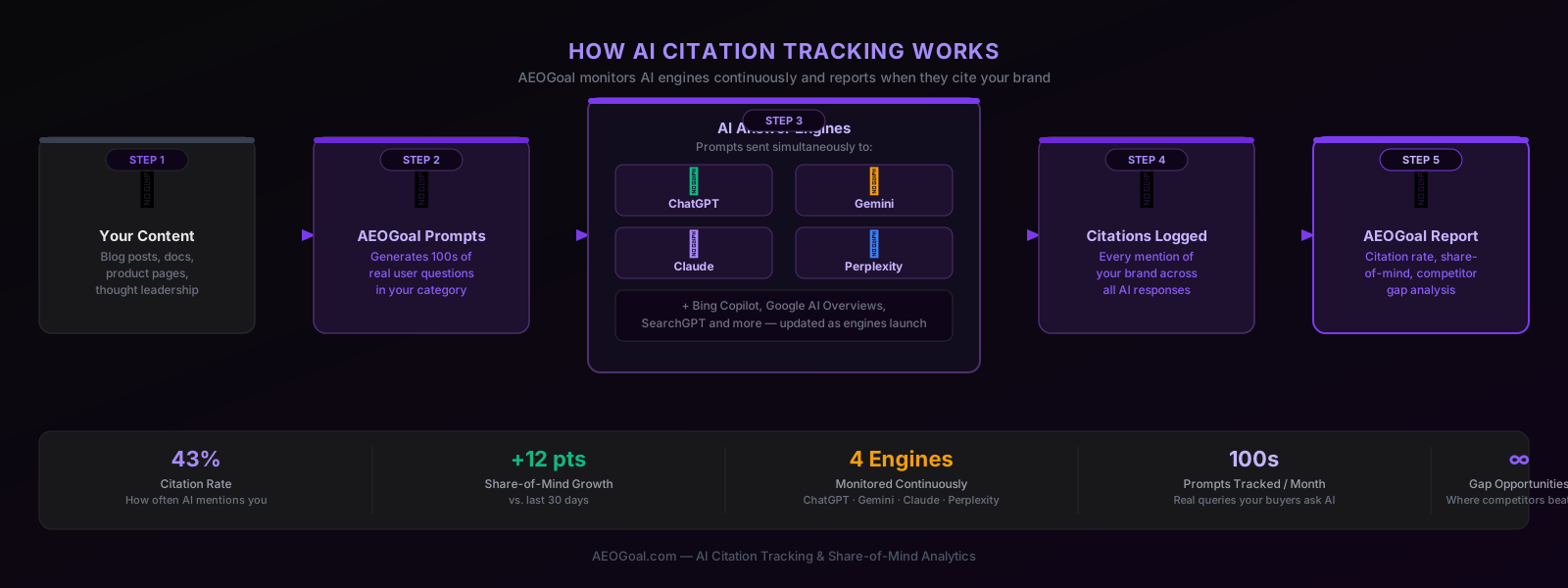
Tools like AEO Goal’s AI visibility tracking and AI citation tracking monitor these metrics across ChatGPT, Perplexity, Claude, and Gemini.
Getting Started with AEO
- Audit crawler access: Verify robots.txt, sitemap, and llms.txt are correctly configured.
- Run an AI visibility baseline: Identify which prompts mention your brand and which mention competitors.
- Map citation gaps: Find prompts where the category is mentioned but your brand is absent.
- Prioritize answer-first pages: Rewrite the canonical page for each gap so it answers the question directly.
- Add or fix structured data: Ensure Organization, SoftwareApplication, FAQPage, and Article schema are accurate.
- Track citations after changes: Re-run the prompt set after each update to measure whether citation coverage improved.
For a detailed breakdown of what the AEO citation tracking methodology checks, see the methodology page.